

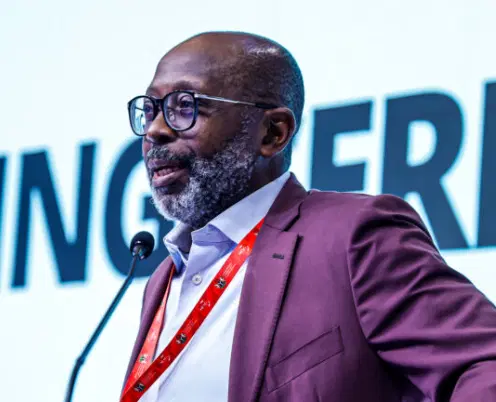
The Chairman of the Nigerian Economic Summit Group (NESG), Omoboyede Olusanya, has called for a shift in how Nigeria measures economic progress, insisting that growth should be reflected in better jobs, increased incomes, improved productivity and higher living standards.
Olusanya made the call during the closing session of the 32nd Nigerian Economic Summit (NES#32) in Abuja, where he stressed that economic growth should produce measurable improvements in the everyday lives of Nigerians.
He explained that meaningful growth should enable farmers to earn more through improved productivity, manufacturers to reduce production costs, graduates to secure decent employment and businesses to access affordable financing.
He also identified improved access to nutrition and healthcare, particularly for children, as important indicators of economic development.
Introducing the concept of Growth that Delivers as the guiding principle of his tenure as NESG chairman, Olusanya acknowledged that recent economic reforms had helped restore macroeconomic stability.
However, he maintained that stabilising the economy was only the beginning, adding that the major responsibility was to translate that progress into faster economic expansion and better living conditions for citizens.
Outlining his priorities, the NESG chairman pledged to strengthen accountability in the organisation’s engagement with government and other stakeholders.
He said every major commitment made at the summit would have an identified person or institution responsible for its implementation, a specific timeline and measurable performance indicators.
Olusanya added that the organisation would build on its existing NES Accountability Framework and publish progress reports ahead of the 33rd Nigerian Economic Summit.
On research and policy development, he promised to strengthen the NESG’s capacity to provide evidence-based recommendations that are practical, properly costed and aligned with the National Development Plan 2026–2030.
He also highlighted investment mobilisation as a major priority, saying the organisation would collaborate with government, financial institutions and development partners to transform policy proposals into viable investment projects.
The targeted sectors include agriculture, manufacturing, infrastructure, technology, entrepreneurship and skills development.
Olusanya further pledged to promote economic opportunities across Nigeria’s different regions and states, with particular attention to micro, small and medium enterprises (MSMEs) and businesses operating within the informal economy.
On institutional development, he said the NESG would expand its membership base, encourage greater participation by women and young people, maintain its independence and strengthen its long-term sustainability.
Calling for cooperation among stakeholders, Olusanya urged governments at all levels to sustain ongoing reforms while addressing the high costs of electricity, logistics and doing business.
He also called for predictable economic policies supported by clear and measurable commitments.
The NESG chairman challenged private-sector operators to increase investments, embrace innovation, improve workforce skills, provide fair remuneration and create productive employment opportunities.
He equally encouraged young Nigerians to establish businesses, acquire relevant skills and demand accountability from public institutions.
Olusanya also called on civil society organisations to monitor government commitments and ensure that the concerns of underserved communities receive adequate attention.
Source: Vanguard
