

The proposed establishment of state police in Nigeria has moved closer to becoming law, following approval by 28 State Houses of Assembly, exceeding the constitutional requirement for the passage of a constitutional amendment.
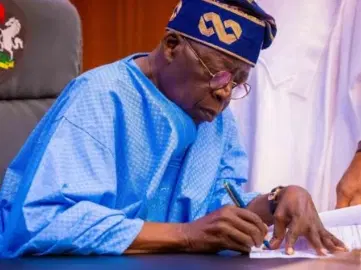
The National Assembly is expected to transmit the State Police Bill to President Bola Tinubu for assent between now and next week, following the completion of the required legislative process.
According to Vanguard, at least 30 of Nigeria’s 36 state legislatures had indicated support for the proposal, while the Clerk to the National Assembly, Kamoru Ogunlana, confirmed that his office had received and verified reports from 28 state assemblies.
Ogunlana explained that the Constitution of the Federal Republic of Nigeria, 1999 (Sixth Alteration) Bill, which seeks to establish State Police Services and address related matters, was forwarded to all 36 State Houses of Assembly on September 16, 2026, for consideration and approval.
The state legislatures were initially given 30 days, ending October 15, to communicate their decisions to the National Assembly.
However, Ogunlana said his office would continue receiving reports from other state assemblies until the bill is formally transmitted for presidential assent.
He confirmed that the 28 approvals already received exceeded the constitutional requirement of at least two-thirds of the 36 state legislatures, equivalent to 24 states, as stipulated under Section 9 of the 1999 Constitution.
The National Assembly clerk added that his office had carried out administrative checks on the reports, including the votes and proceedings submitted by the state legislatures, to confirm their authenticity.
He also clarified that Section 9 of the Constitution does not specifically require a Third Reading for a constitutional amendment bill, unlike the procedure for ordinary legislation.
Presidency asks private sector to develop state police financing framework
Meanwhile, the Presidency has called on the Organised Private Sector (OPS) to develop a financing and implementation framework for the proposed state police system.
The request followed the establishment of a committee headed by the Chief of Staff to the President, Femi Gbajabiamila, to coordinate aspects of the proposed reform.
The Presidency argued that businesses have a strong interest in supporting the initiative because insecurity affects commercial activities beyond the direct cost of private security.
It identified abandoned investments, delayed business expansion and disruptions to economic activities as some of the consequences of insecurity.
Speaking during a plenary session on security, stability and economic resilience at the 32nd Nigerian Economic Summit in Abuja, Gbajabiamila said insecurity was discouraging investors, disrupting supply chains, delaying factory expansions and limiting employment opportunities.
He urged business leaders to engage governors and lawmakers, contribute their expertise in institutional management, expenditure control and risk assessment, and identify security challenges preventing viable investments.
28 states that have approved state police
The states listed as having approved the proposed establishment of state police are Adamawa, Delta, Edo, Kwara, Ogun, Osun, Oyo, Plateau, Rivers, Taraba, Zamfara, Imo, Ekiti, Kebbi, Akwa Ibom, Bayelsa, Enugu, Anambra, Benue, Cross River, Abia, Yobe, Kaduna, Lagos, Kano, Sokoto and Ebonyi.
Okiro calls for safeguards against possible abuse
Former Inspector-General of Police and former Chairman of the Police Service Commission, Sir Mike Okiro, has called for adequate safeguards to prevent state governors from abusing the proposed state police structure.
Okiro said the establishment of state police would require state governments to take responsibility for funding police operations within their jurisdictions, noting that many states had already been providing significant financial and operational support to the Nigeria Police Force.
Drawing from his experience as Commissioner of Police in Lagos and Benue states and later as Inspector-General of Police, he said several state governments had consistently provided patrol vehicles and other operational equipment to police commands and divisions.
He cited Lagos State as an example, highlighting its establishment of the Lagos State Security Trust Fund, modern surveillance infrastructure and a forensic analysis centre.
He also pointed to Operation Sweep, established in Lagos about 30 years ago and later developed into the Rapid Response Squad, which he said had benefited from modern vehicles, communication equipment, drones and other security resources.
Okiro equally identified Enugu State’s Digital Surveillance Control Centre as an example of how technology could strengthen policing and crime prevention.
He stressed that security remained essential to economic and social development, arguing that investors would be reluctant to commit resources to areas where their businesses and investments were not adequately protected.
He further referenced Chapter Two of the Nigerian Constitution, which identifies the security and welfare of citizens as the primary responsibility of government.
On concerns about the financial capacity of some states, particularly those struggling to pay salaries of teachers and healthcare workers, Okiro argued that state police should be treated as an essential public service.
He suggested that the Federal Government could provide assistance to states facing difficulties in meeting police salary obligations and other financial responsibilities.
On recruitment and training, the former police chief recommended harmonising the existing police training curriculum across federal and state institutions.
He said individual states could establish their own police colleges while retaining the existing standards used by police colleges, the Police Academy and specialised training institutions.
Okiro also maintained that decentralised policing could help address Nigeria’s manpower shortage by creating opportunities for qualified unemployed graduates and school leavers, particularly those with backgrounds in criminology, sociology, psychology and law.
He added that experienced lecturers and retired police officers could be engaged to manage and teach at the proposed state police colleges.
According to him, the proposed State Police Council would be responsible for developing policing policies, overseeing recruitment and training, and ensuring accountability to residents.
Okiro recommends protection for IGP, commissioners
Addressing concerns about possible political interference, particularly during elections, Okiro called for constitutional provisions that would protect the offices of the Inspector-General of Police and state Commissioners of Police from arbitrary removal or manipulation.
He recalled recommending a fixed tenure for the IGP, a provision now contained in the Police Act Amendment 2024.
Under the arrangement, the Inspector-General is entitled to complete a four-year tenure rather than retire upon reaching 60 years of age or after 35 years in service.
Okiro proposed extending similar protection to state Commissioners of Police, recommending that their removal should require the approval of a two-thirds majority of the relevant State House of Assembly, while the IGP’s removal should require a two-thirds Senate majority.
He also proposed that state Commissioners of Police should serve a single four-year term, with the State Police Council exercising direct oversight over their activities.
Okiro warned against a situation where governors would have unrestricted control over state police, recalling how regional political leaders allegedly used police institutions against opposition groups during the First Republic.
He therefore called for strong checks and balances, including clearly defined legal consequences for governors who attempt to deploy police officers for partisan, ethnic, religious, sectional or personal interests.
He noted that the proposed legislation already contains restrictions against such practices, including provisions requiring presidential and gubernatorial policy directives to be lawful, general and issued in writing.
The proposed framework also prohibits instructions targeting specific individuals, political parties or groups, or directives requiring officers to violate citizens’ rights.
Okiro further highlighted restrictions on the deployment and removal of police chiefs, alongside the proposed establishment of Complaints Response Units in every state to receive and address public complaints against police officers.
He added that the National Assembly would establish minimum national standards covering recruitment, training, vetting, promotions, discipline, use of force, firearms, complaints procedures, accountability, data management and professional conduct.
States would be permitted to adopt higher standards but would not be allowed to fall below the national requirements.
Source: Vanguard
