

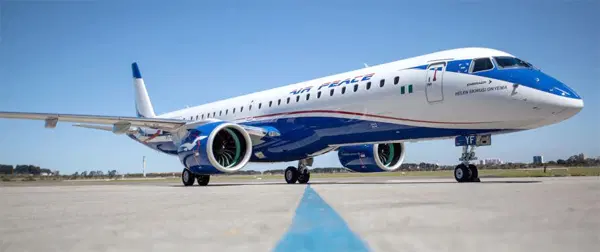
Air Peace and United Nigeria Airlines, UNA, have challenged the accuracy of a report by the Nigeria Civil Aviation Authority, NCAA, on flight delays and cancellations recorded by domestic airlines in August 2026.
The NCAA’s Summary of Domestic Airline Flight Disruptions Operations in August stated that airlines recorded 4,801 disruptions out of 7,961 flights operated during the month.
According to the report, Air Peace recorded the highest number, with 1,337 disruptions out of 1,864 flights. United Nigeria Airlines recorded 951 disruptions out of 1,231 flights, while Enugu Air reported 586 disruptions out of 878 flights.
ValueJet had 438 disruptions from 767 flights, while Ibom Air recorded 257 disruptions from 560 flights. Arik operated 301 flights, of which 188 were delayed and one was cancelled.
Air Peace questions NCAA figures
Reacting to the report, the Chief Operating Officer of Air Peace Limited, Oluwatoyin Olajide, said the figures did not accurately represent the airline’s August operations or explain the causes of the disruptions.
Olajide said an internal review of Air Peace’s August 2026 flight data showed that only 391 flights, representing about 15 per cent of the disruptions, were linked to factors within the airline’s control.
She said the remaining disruptions were caused by external factors, including airport congestion, bird strikes, airport facilities, bad weather, union picketing and ground-handling damage.
Olajide also disputed the NCAA’s flight-volume figure, saying Air Peace actually operated 2,564 flights in August 2026, rather than the 1,864 flights contained in the NCAA report.
She argued that leaving out more than 700 flights affected the calculation of the airline’s performance and resulted in an inflated delay percentage.
The Air Peace executive also questioned why the NCAA’s monthly series began with August rather than July, particularly after the publication of the first- and second-quarter reports on July 31.
She further raised concerns over the timing of the August report, saying the NCAA released it only 13 days after the end of the month, while there was still no equivalent monthly data for July.
According to Olajide, the report should have explained the exceptional operational challenges affecting airlines during August, including the union disruption that began on August 11.
She said the industrial action affected Air Peace operations for more than 14 days, resulting in rescheduling, delays and cancellations.
Olajide maintained that the NCAA should distinguish between delays caused by airlines and those resulting from wider challenges within the aviation sector.
She said the 391 flights attributed to internal factors were mainly connected to technical problems that required unscheduled aircraft maintenance and fuel-related issues.
UNA says several factors are beyond airlines’ control
The Chief Commercial Officer of United Nigeria Airlines, Adedayo Olawuyi, also criticised the way the NCAA data was presented.
Olawuyi spoke during the Aviation Day of the 23rd Akwaaba African Travel Market in Lagos. The session was themed, “Delayed and Cancelled Flights: The Rules and the Rights of Passengers — The Airline Perspective.”
He argued that the figures should separate controllable and uncontrollable delays before responsibility is assigned to airlines.
According to Olawuyi, delays can result from several factors across the aviation ecosystem, including airports, regulators, infrastructure and other service providers.
He cited airport congestion as one example, explaining that an aircraft scheduled to push back at 6:59 a.m. could remain on the ground until 7:38 a.m. because of congestion on the ramp.
Olawuyi also noted that airlines operate complex machinery and can experience technical problems unexpectedly.
He said when technical faults occur, airlines have a responsibility to prioritise passenger safety by carrying out the necessary maintenance before an aircraft is returned to service.
Weather was another factor he identified. Olawuyi said many Nigerian airports operate on a dusk-to-dawn basis because they lack facilities for night operations.
As a result, he explained that delays caused by other factors can extend into the night, sometimes forcing airlines to cancel affected flights.
Source: Vanguard
