

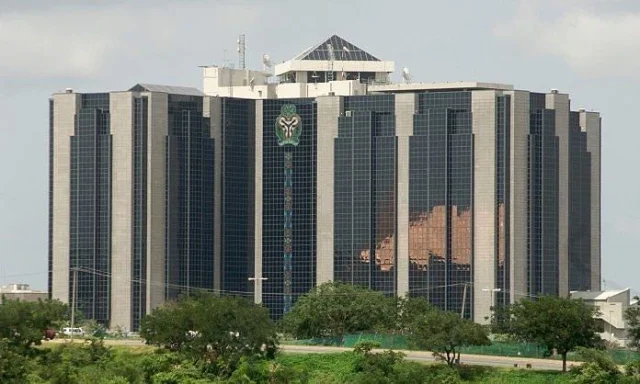
ACCORDING TO VANGUARD NEWSPAPER Despite interest rate reductions by the Central Bank of Nigeria (CBN), banks have raised average prime lending rates in several key sectors of the economy, defying expectations of cheaper loans for businesses across the country.
The CBN in September 2025 announced the first reduction in the Monetary Policy Rate (MPR), the financial market interest rate benchmark, to 27 per cent from 27.5 per cent, followed by another 50 basis points (bpts) reduction to 26.5 per cent in February 2026, and a massive 350 bpts cut to 23 per cent in September 2026. The latest reduction in the MPR followed a three consecutive month downward trend in the inflation rate to 15.39 per cent in August 2026 from 15.93 per cent in May 2026.
This moderation continued in September when the inflation rate dropped to 14.63 per cent.
The 450bpts reduction in the MPR in the 13 months to September 2026 had fuelled expectations that banks will reduce lending rates thus providing relief for businesses and households.
However, Financial Vanguard findings from the CBN’s published interest rate schedules for August 2025 and October 2026 show that average prime lending rates — the preferential rates extended to creditworthy corporate borrowers — increased in eight of 11 key economic sectors.
The eight sectors are agriculture, forestry and fishing; construction; government; human health and social work; real estate; manufacturing; education; and finance and insurance. The increases ranged from 0.33 percentage points in finance and insurance to 1.33 percentage points in agriculture, forestry and fishing.
Average prime lending rates in agriculture, forestry and fishing rose to 24.77 per cent from 23.44 per cent, while construction increased to 26.40 per cent from 25.25 per cent.
Government borrowing rates rose to 26.49 per cent from 25.52 per cent, while human health and social work advanced to 26.96 per cent from 26.11 per cent.
In real estate, the average prime rate increased to 26.57 per cent from 25.82 per cent, while manufacturing rose to 24.36 per cent from 23.79 per cent.
Education increased to 26.85 per cent from 26.33 per cent, and finance and insurance rose to 25.88 per cent from 25.55 per cent.
However, prime lending rates declined marginally in arts, entertainment and recreation, oil and gas, and information and communication, falling by 0.66, 0.24 and 0.08 percentage points, respectively.
The development contrasts with a decline in average maximum lending rates across 10 sectors — arts and entertainment, government, education, human health, finance and insurance, manufacturing, oil and gas, agriculture, information and communication, and construction — from 33.78 per cent to 32.58 per cent, representing a reduction of 1.20 percentage points.
