

A new United States government report has identified corruption, regulatory uncertainty, disputes among government agencies and difficulties within the customs system as major obstacles to trade and investment in Nigeria.
The assessment is contained in the 2026 National Estimate Report on Foreign Trade Barriers, which examined challenges facing American businesses operating in Nigeria.
The report said US exports of goods to Nigeria rose to $6.8 billion in 2025, giving the United States a $1.8 billion trade surplus. However, it noted that American companies still encounter significant barriers that affect their ability to compete and access the Nigerian market.
The report identified foreign exchange restrictions as one of the major challenges, particularly the continued controls on the repatriation of funds, with some requests facing delays or being denied.
It also raised concerns about piracy in Nigerian waters. According to the report, 15 piracy incidents were recorded in the first nine months of 2025, compared with 12 during the same period in 2024.
Despite the concerns, the US acknowledged some reforms by the Central Bank of Nigeria, CBN, including the consolidation of multiple exchange rates in June 2023 and the removal, in October 2023, of an eight-year restriction on dollar access for 43 categories of goods, including rice, poultry and steel.
The report also recognised maritime reforms under the administration of President Bola Tinubu.
US raises concerns over corruption
The US report described corruption as a significant obstacle to trade and investment in Nigeria.
It said American companies had expressed concerns about a lack of transparency in tender processes and alleged demands by some officials for unofficial payments in the course of daily business operations.
Washington also said efforts to strengthen anti-corruption measures had been affected by inter-ministerial disputes and partisan politics.
On public procurement, the report said US businesses remained concerned about transparency and alleged that some government agencies did not consistently follow the Public Procurement Act or submit to the oversight of the Bureau of Public Procurement, BPP.
It also noted that procurement by the National Assembly operates separately from BPP oversight, which the report described as lacking transparency.
Regulatory uncertainty and agency disputes
The report also highlighted concerns about Nigeria’s regulatory environment.
According to the assessment, US companies complained that some regulations were introduced as final decisions without adequate opportunities for public consultation.
It added that disagreements between government agencies over the interpretation of regulations often resulted in delays, while frequent changes to customs guidelines affected the movement of goods.
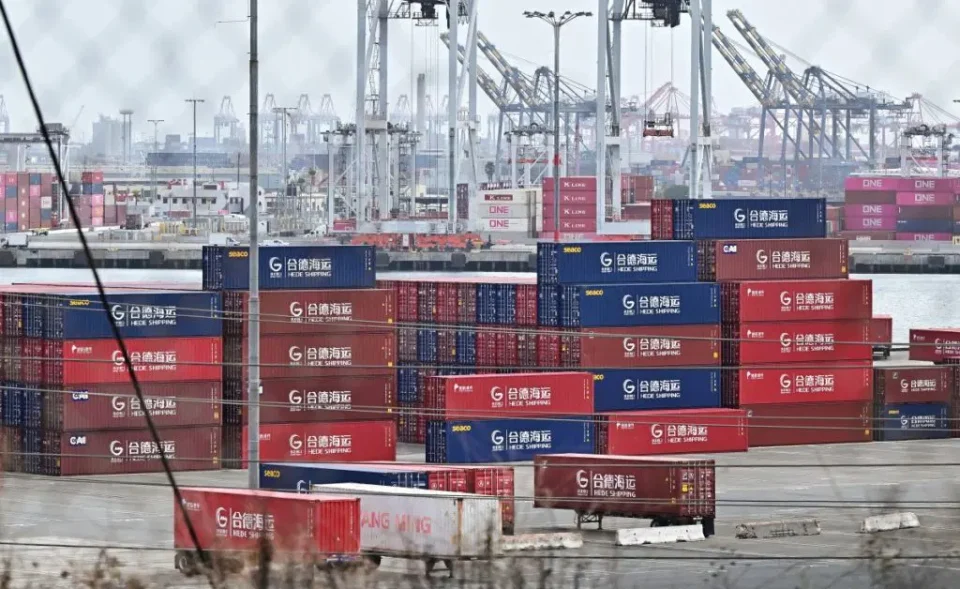
The report linked these challenges to delays at Apapa Port in Lagos, describing it as one of the most expensive ports globally and putting the average time to clear a container ship at about 30 days.
It also noted that the $1.5 billion Lekki Deep Sea Port, commissioned in 2023, had not yet attracted sufficient traffic to significantly ease the pressure.
Other concerns identified include intellectual property violations, counterfeit medicines and vehicle parts, software piracy, and weak enforcement, with the report pointing to corruption and porous borders as contributing factors.
Customs procedures criticised
The Nigerian Customs Service, NCS, also came under scrutiny in the US assessment.
The report cited complaints from importers over inconsistent application of customs regulations and lengthy clearance processes. It attributed some of the delays to outdated manual systems and alleged corruption.
According to the report, these difficulties can contribute to the deterioration of perishable goods, causing losses for importers and encouraging some shipments to move through informal channels.
The US also highlighted the controversy surrounding the 4 per cent Free-On-Board, FOB, charge introduced by Customs in February 2025.
The fee was suspended following public criticism, brought back in August 2025, and suspended again in September 2025.
The report alleged that Customs continued collecting the charge despite the suspension, while the NCS maintained that the fee had never actually been suspended and cited the Nigeria Customs Service Act 2023 as its legal basis.
Forex restrictions remain a concern
The report said foreign exchange limitations continued to affect both trade and investment, despite reforms introduced by the CBN.
It stated that US companies sometimes struggled to obtain foreign currency to import raw materials, while businesses with dollar-denominated loans faced difficulties securing forex to service their debts.
The report also said some importers were required to commit to domestic production in order to obtain import permits and gain access to foreign exchange.
However, it acknowledged the CBN’s reforms under President Tinubu.
In June 2023, the CBN consolidated multiple official exchange rates into the Nigerian Foreign Exchange Market, while in October 2023, it removed the eight-year restriction on dollar access for 43 categories of products, including rice, meat, poultry, vegetable oil and steel products.
The US report said that despite these changes, strict controls on the repatriation of funds remained in place. It said approvals were subject to regulatory procedures and fluctuations in dollar supply, which could result in delays and denials.
US highlights trade and digital reforms
The report also identified several developments it considered positive.
It welcomed Nigeria’s ratification of the WTO Trade Facilitation Agreement in 2017 and efforts to automate customs processes, although it noted that many procedures were still handled manually.
On intellectual property, the report said Nigeria had taken steps to strengthen its legal framework. These included joining the International Union for the Protection of New Varieties of Plants in March 2025, launching a National IP Policy and Strategy in December 2025, and implementing the Copyright Act 2022, which contains penalties for piracy.
The report also highlighted Nigeria’s National Single Window, NSW, project announced in April 2024.
The digital platform is designed to bring import and export documentation together in one system. The report said that once operational in Q1 2026, it was expected to reduce cargo clearance times from 18–21 days to less than seven days.
Washington also noted the establishment of the Ministry of Marine and Blue Economy in August 2023, which moved the Nigerian Maritime Administration and Safety Agency, NIMASA, and the Nigerian Ports Authority, NPA, from the Ministry of Transportation.
The ministry’s efforts to promote cargo-tracking technology were also highlighted.
Other measures mentioned positively include zero-rated VAT for Nigerian exporters and VAT exemptions covering basic food, healthcare and education.
Source: Vanguard
