

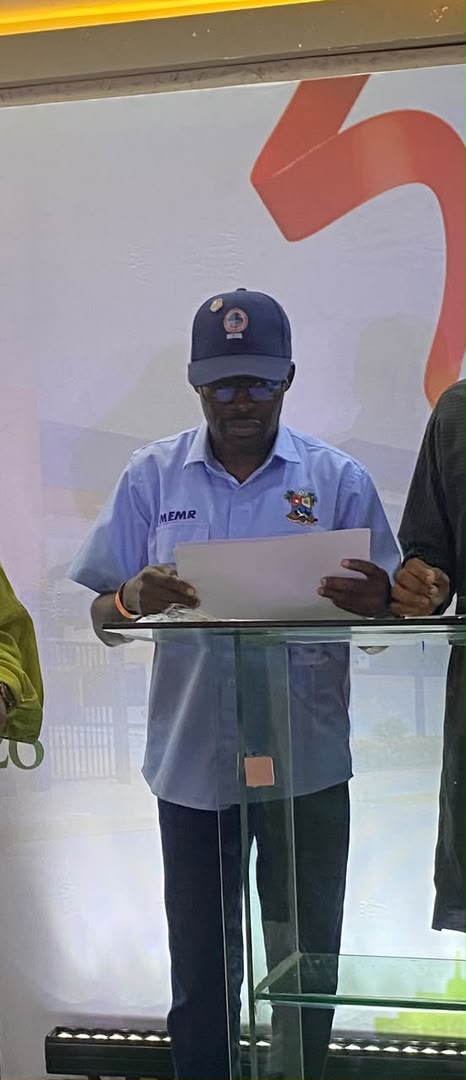
The Project Lead of the Lagos Clean Energy Schools Innovation Challenge (LCESIC) 2026, Engr. Iyaniwura Taofik, has outlined the technical and operational framework guiding the implementation of the initiative across Lagos State public secondary schools.
Taofik gave the briefing at the LCESIC 2026 event, explaining that the framework is designed to provide students, teachers, mentors and school administrators with the tools and guidance required to develop practical clean-energy innovations.
He said the programme, organised and sponsored by the Lagos State Ministry of Energy and Mineral Resources, is structured around four major toolkits: the Student Innovation Toolkit, Teachers Facilitation Toolkit, Mentors Technical Toolkit and School Administration Toolkit.
According to him, the toolkit system serves as the operational backbone of the challenge, providing learning materials, technical resources, implementation guidelines and monitoring instruments.
He said the framework is intended to promote hands-on learning, encourage experimentation, standardise implementation, improve technical understanding, facilitate monitoring and evaluation, and ensure safety and accountability throughout the project.
Taofik noted that teachers would play a central role in supervising students, monitoring their progress, ensuring the safe use of electrical equipment, coordinating with mentors and school administrators, and documenting team participation on a weekly basis.
He added that mentors would guide students through research, problem definition, prototype development, energy calculations, data analysis, troubleshooting and environmental impact assessment.
However, he stressed that mentors must not build projects on behalf of students, influence competition outcomes or replace students’ efforts.
The project lead also emphasised the importance of inclusion, saying all five members of each student team should participate actively in the project.
He urged mentors and teachers to use clear and accessible communication, respect diversity, maintain gender balance, encourage the participation of students with disabilities and avoid intimidation or pressure.
On safety, Taofik said mentors and teachers must ensure proper handling of electrical materials and equipment, enforce the use of protective equipment, provide adult supervision during experiments and immediately stop any unsafe activity.
He also highlighted the need for weekly progress reports, attendance and engagement records, technical observation logs, risk assessments and improvement recommendations.
Taofik said mentors were expected to uphold integrity, encourage originality and avoid conflicts of interest by declaring relationships that could compromise their impartiality.
Turning to teachers’ responsibilities, he described them as the “school-level backbone” of the challenge, with duties covering team coordination, administrative support, student motivation, communication and project monitoring.
He said each participating team should have a Team Lead, Technical Lead, Documentation Officer, Research Coordinator and Presentation Coordinator to ensure balanced responsibilities throughout the project.
The project lead also identified weak student participation and delays as potential challenges, recommending the use of school assemblies and STEM clubs for awareness, peer motivation and recognition schemes, as well as clear milestone-based timelines and weekly progress reviews.
On documentation, Taofik described the project journal as a critical component of the initiative, saying it would track project activities, milestones, materials and costs, prototype testing, sustainability assessments, reflections and lessons learned.
He said the journal would also provide operational support, strengthen team accountability, promote reflective learning and create institutional records that could support future editions of the challenge.
In his concluding remarks, Taofik said LCESIC was “more than a competition”, stressing that the initiative was aimed at preparing young people to develop solutions to future energy challenges in Lagos State and Nigeria.
He said the challenge would serve as a strategic platform for developing energy literacy, climate awareness, innovation culture and practical STEM and STEAM education among students in Lagos State public secondary schools.
Taofik added that the programme’s frameworks, judging criteria, technical guides and project journals were designed to establish the operational, technical and governance structures needed for effective implementation.
He said the initiative would strengthen students’ innovation capacity and sustainable energy awareness while promoting collaboration among government, schools and industry and supporting Lagos State’s clean-energy transition and climate-action objectives.
