

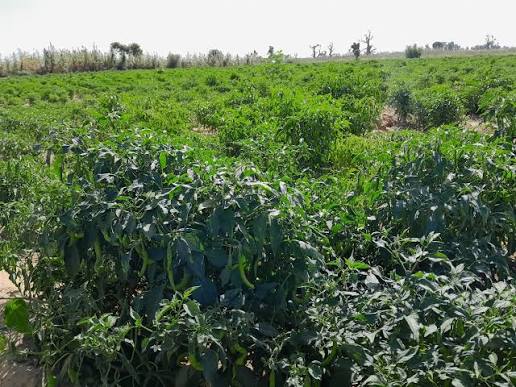
Nigeria’s agricultural exports declined by 31.2 per cent in the first quarter of 2026 (Q1 2026) as persistent port delays, excessive pesticide use, outdated chemical preservatives and failure to meet international phytosanitary standards led to increased rejection of the country’s farm produce in overseas markets.
According to the National Bureau of Statistics (NBS), agricultural exports dropped to N1.172 trillion in Q1 2026, down from N1.704 trillion recorded in the same period of 2025. The figure also represents an 11.39 per cent decline from the N1.323 trillion posted in the fourth quarter of 2025.
Experts in the agricultural sector say weak post-harvest handling practices, poor quality control and inefficient export logistics are undermining the competitiveness of Nigerian farm products and limiting access to premium international markets.
The NBS data identified Superior Quality Cocoa Beans as Nigeria’s leading agricultural export, valued at N596.90 billion, followed by Sesame Seeds (N153.78 billion), Soya Beans (excluding seeds) (N129.27 billion), Cashew Nuts in Shell (N119.76 billion) and Flours and Meals of Soya Beans (N53.20 billion).
Asia remained the largest destination for Nigeria’s agricultural exports with N529.45 billion, followed by Europe with N500.34 billion. Other major export destinations included the Netherlands, Belgium, India and Canada.
Speaking at the opening of the 49th Session of the Codex Alimentarius Commission in Geneva on July 6, 2026, FAO Director-General Qu Dongyu announced an additional 500,000 US dollars to support digital infrastructure and capacity building for developing countries implementing international food safety standards.
Qu stressed that global confidence in food trade depends on the effective implementation of food safety regulations, noting that such standards help improve market access, reduce waste and strengthen food systems.
In Nigeria, Minister of Agriculture and Food Security, Senator Abubakar Kyari, recently inaugurated a Technical Working Group to investigate the recurring rejection of Nigerian agricultural exports. The committee has been given two months to submit its findings.
Kyari said Nigeria has recorded repeated export rejections due to failure to comply with Maximum Residue Limits (MRLs) and other sanitary and phytosanitary requirements, resulting in substantial financial losses for exporters.
At the 2026 SheExport Conference, Dr. Queen Okpa, Founder of Women in Agribusiness, Trade and Export (WATEX), revealed that 15 containers of hibiscus flower (zobo) were rejected at the Mexican border after tests detected residues of chemical preservatives that have long been banned in many countries.
She also warned that poor post-harvest handling continues to expose produce to contamination. According to her, while the European Union permits a maximum aflatoxin level of 4 per cent, the ECOWAS standard is 20 per cent, yet tests on commodities in Nigerian markets have recorded contamination levels ranging from 65 to 95 per cent.
Okpa called for greater investment in rural processing infrastructure, including solar-powered dehydrators, to improve product quality before export.
Also speaking on the issue, Dr. Adelaja Adesina, Managing Consultant at Bdelium Limited, blamed inefficient port operations for reducing the quality of Nigeria’s agricultural exports.
He said export processing that takes about 48 hours in Benin Republic and Ghana often takes two to three weeks in Nigerian ports, reducing the shelf life of perishable products before they reach international buyers.
Meanwhile, Joyce Brown, Programme Director at the Health of Mother Earth Foundation (HOMEF), expressed concern over the widespread misuse of agrochemicals by farmers.
Citing research by the Amalgamated Agric Practitioners of Nigeria (AAPN), she said 65 per cent of the active ingredients in pesticides used by Nigerian farmers are classified as highly hazardous, while more than 80 per cent of farmers reportedly apply such chemicals to their produce, contributing to export rejections.
