

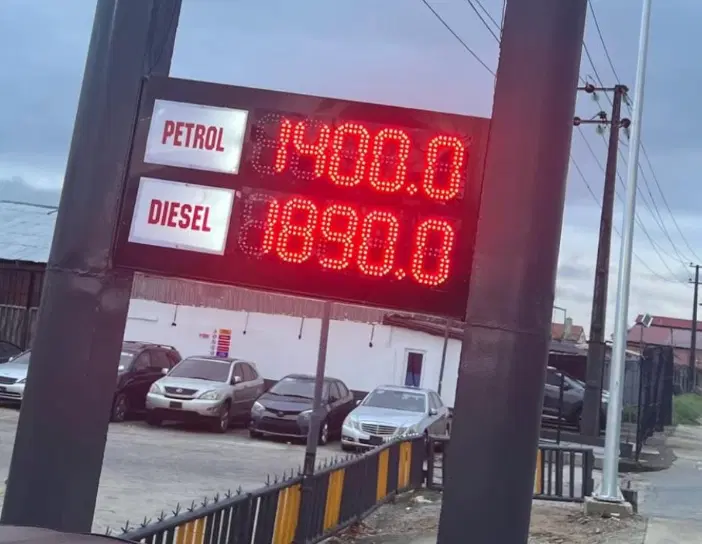
The recent increase in petrol prices across Nigeria is raising concerns over higher transportation, household and business costs, following a surge in international crude oil prices above $100 per barrel.
MRS filling stations have increased the price of petrol from N1,300 to N1,400 per litre in Lagos and surrounding areas. The N100 increase represents a 7.7 per cent rise.
NNPC Limited stations have also adjusted their pump price from N1,275 to N1,375 per litre, while some independent marketers are now selling petrol at about N1,400 per litre, compared with approximately N1,360 previously.
The latest adjustments came after Dangote Petroleum Refinery raised its petrol gantry price to N1,350 per litre, amid higher crude oil prices and increased costs across the petroleum supply chain.
The development is expected to increase the operating expenses of transporters and could lead to higher fares for passengers using commercial buses, taxis and tricycles.
Workers, students, traders and other commuters who travel daily are likely to feel the effect as transportation takes up a significant share of household spending.
Higher transport and logistics costs could also affect the prices of food, raw materials and finished products, as distributors and retailers may transfer additional expenses to consumers.
Households that depend on petrol-powered generators are also expected to spend more on electricity generation.
Small and medium-sized businesses could face further pressure as fuel, transportation and power expenses rise. Manufacturers, retailers, logistics companies, restaurants and other fuel-dependent businesses may have to absorb higher costs, reduce profit margins or increase the prices of their goods and services.
Speaking with Vanguard, the National President of the Oil and Gas Services Providers Association of Nigeria, OGSPAN, Mazi Colman Obasi, attributed the immediate pressure to the sharp rise in international crude oil prices.
Obasi explained that Nigeria’s largely deregulated downstream petroleum market means pump prices are increasingly affected by crude oil prices, refined-product costs, freight, exchange rates and other supply-chain expenses.
He warned that if crude oil prices remain above $100 per barrel or increase further, petrol prices in Nigeria could come under additional pressure.
According to him, transporters would face higher vehicle operating costs, while commuters could experience increased fares. Households could also spend more on transportation, food and electricity, while businesses would contend with higher logistics, production and energy expenses.
Obasi added that a prolonged rise in crude prices could increase cost-of-living pressures and make it more expensive to operate businesses across the country.
Also commenting on the situation, Executive Director of Spaces for Change, Victoria Ibezim-Ohaeri, said households were likely to experience the impact through higher transportation and food costs.
She noted that increased fuel and logistics expenses could raise the cost of moving people and goods, while households and businesses using petrol or diesel generators would face additional energy costs.
Ibezim-Ohaeri said the pressures could further weaken the purchasing power of low- and middle-income households.
She cited National Bureau of Statistics, NBS, figures showing Nigeria’s headline inflation at 15.43 per cent and food inflation at 20.31 per cent.
She added that businesses in manufacturing, agriculture, construction, retail and logistics were also vulnerable to rising energy, transportation and input costs.
According to her, companies facing sustained cost increases may transfer some of the burden to consumers, accept lower profit margins, delay investments or reduce employment.
Ibezim-Ohaeri further warned that a prolonged oil-price shock could slow the recovery of the non-oil economy, even as higher crude prices benefit the oil sector.
She said uncertainty would remain a major concern in the coming weeks, particularly if conflicts and disruptions along major shipping routes continue to keep crude and refined petroleum prices elevated.
Recent disruptions to oil flows through the Strait of Hormuz have already contributed to increased shipping and fuel costs.
Source: Vanguard News
