

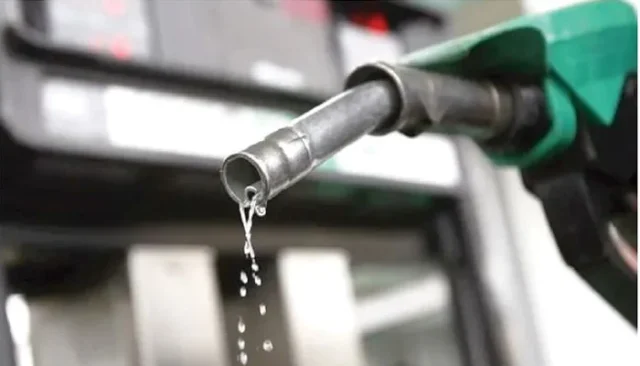
The Nigeria Labour Congress, NLC, and Civil Society Organisations, CSOs, have criticised the latest increase in petrol prices, accusing the Federal Government and petroleum industry operators of worsening the economic hardship faced by Nigerians.
The groups also faulted the government for what they described as weak regulatory oversight of the downstream petroleum sector.
The development followed a fresh increase in petrol prices recorded at filling stations across the country on Wednesday.
The NLC Assistant General Secretary, Chris Onyeka, questioned the justification for the hike, noting that international crude oil prices had remained relatively stable while the foreign exchange environment had recently improved for local businesses.
Onyeka alleged that Nigerians were being subjected to exploitation by a small number of dominant players in the petroleum market.
He warned that the situation demonstrated the dangers of allowing monopolies to gain excessive control over essential commodities and called on the government and its regulatory agencies to take action.
The NLC official also renewed calls for Nigeria’s public refineries to return to full operation, arguing that increased domestic refining would reduce the excessive influence of dominant suppliers in the downstream sector.
CSOs Back Labour
The Human Rights Writers Association of Nigeria, HURIWA, supported the NLC’s position, alleging that the government appeared more concerned about protecting oil-sector business interests than the welfare of citizens.
HURIWA National Coordinator, Emmanuel Onwubiko, questioned why locally refined petrol and imported products were being sold at almost similar prices.
He argued that Nigerians should benefit from lower prices if competition and deregulation were functioning effectively.
Meanwhile, the Civil Society Legislative Advocacy Centre, CISLAC, called for greater intervention by consumer protection and competition regulators.
Its Executive Director, Auwal Musa Rafsanjani, said the latest PMS price increase was particularly concerning because Nigerians were already dealing with high transportation costs, food inflation and declining purchasing power.
Rafsanjani said deregulation should promote competition, efficiency, transparency and better value for consumers, rather than become a pathway to exploitation.
He urged the Nigerian Midstream and Downstream Petroleum Regulatory Authority, NMDPRA, the Federal Competition and Consumer Protection Commission, FCCPC, the Ministry of Petroleum Resources and other relevant agencies to conduct an evidence-based review of the latest petrol pricing.
He also called for greater disclosure of the factors behind price adjustments, including ex-refinery or ex-depot prices, exchange-rate exposure, transportation, financing, storage, insurance, distribution margins and applicable taxes or levies.
CISLAC further urged regulators to investigate possible price fixing, coordinated pricing, market dominance, artificial scarcity and other anti-competitive practices.
ActionAid Demands Urgent Government Response
ActionAid Nigeria Country Director, Dr Andrew Mamedu, also expressed concern about the impact of the latest fuel increase on households and businesses.
Mamedu said increases in petrol prices quickly translate into higher transportation costs, food prices and operating expenses for businesses.
He questioned what was driving the latest increase, given the relative stability in some of the factors commonly cited by marketers, particularly global crude prices and exchange rates.
The ActionAid director acknowledged that Nigeria operates a deregulated petroleum market but stressed that deregulation should not be interpreted as permission for arbitrary pricing or excessive profiteering.
He urged the NMDPRA and FCCPC to examine the entire pricing chain from refineries to filling stations and explain the factors responsible for the latest increases.
Mamedu said regulators should take action where there is evidence of collusion, price fixing, artificial scarcity or excessive profiteering.
He also called for targeted government support for vulnerable Nigerians, particularly if the administration maintains that a universal petrol subsidy is unsustainable.
According to him, such assistance could include affordable public transportation, targeted social protection, support for smallholder farmers, energy assistance for low-income households and measures to reduce the cost of transporting food and essential goods.
He maintained that removing a general subsidy should not mean abandoning the government’s responsibility to protect vulnerable citizens from economic shocks.
IPMAN Explains Latest Price Increase
The Independent Petroleum Marketers Association of Nigeria, IPMAN, meanwhile, attributed the latest petrol price increase to repeated adjustments in the price of products supplied by the Dangote Refinery.
IPMAN Public Relations Officer, Chief Chinedu Ukadike, said marketers had experienced several gantry price changes within the past week.
According to him, Dangote Refinery increased its gantry price from N1,165 per litre to N1,185 and later to N1,200 per litre within seven days.
Ukadike explained that independent marketers had little choice but to adjust their pump prices because continuing to sell below their purchase cost would result in losses.
The price changes have also been reflected in Abuja.
Checks on Thursday showed that NNPC Retail stations increased their price from N1,250 to N1,270 per litre, while TotalEnergies moved from N1,250 to N1,275.
At Bovas stations, petrol prices rose from N1,253 to about N1,275 per litre.
Ukadike said the frequent price changes were creating uncertainty for marketers and consumers, as replacement costs could change considerably within a short period.
He identified international crude prices, foreign exchange movements and geopolitical developments affecting global oil supplies among the factors influencing petrol prices.
The IPMAN spokesperson, however, expressed optimism that Dangote Refinery’s free transportation initiative for marketers could help reduce distribution costs and eventually bring down pump prices if sustained.
He said some trucks operating under the programme had been delayed by poor road conditions, while more marketers were continuing to register for the initiative.
Ukadike also welcomed the inclusion of Imo and Anambra states in the scheme, describing the two states as strategic markets and gateways to the South-East.
He said wider access to locally refined products could increase competition, reduce transportation challenges and free up funds currently tied down in depot operations.
On petrol imports by some major marketers despite increased domestic refining capacity, Ukadike said imports could support competition under deregulation but questioned the economic rationale of bringing in products at prices higher than locally refined petrol.
He called for stronger government support for domestic refineries, particularly improved access to crude oil.
According to him, expanding local refining capacity could eventually position Nigeria to export refined petroleum products, rather than depend on imports.
