

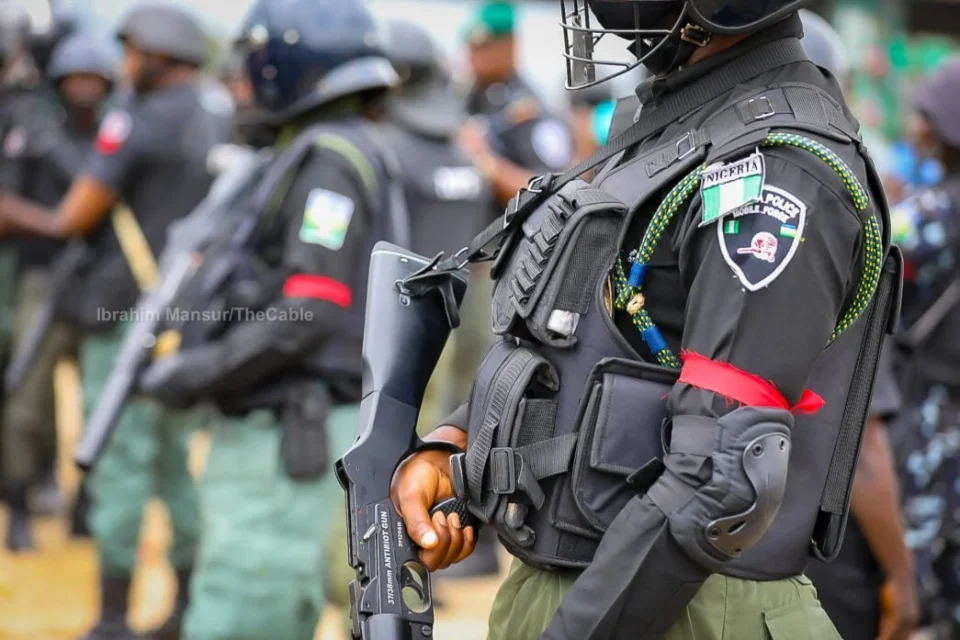
At least 31 state governments spent an estimated N252.26bn on security-related activities between January and June 2026, as authorities sought to tackle killings, kidnappings, banditry and other criminal activities across the country.
An analysis of Q1 and Q2 budget performance reports obtained from Open Nigerian States, a BudgIT-backed repository of government budget data, showed that Kogi recorded the highest expenditure at N34.67bn, representing 13.74 per cent of the total.
Plateau followed with N23.69bn, or 9.39 per cent, while Bauchi spent N22.35bn, representing 8.86 per cent.
Other states with recorded security-related spending include Abia, Adamawa, Anambra, Bayelsa, Benue, Borno, Cross River, Delta, Ebonyi, Ekiti, Enugu, Gombe, Imo, Jigawa, Kaduna, Kano, Katsina, Kebbi, Kwara, Lagos, Nasarawa, Niger, Ogun, Ondo, Oyo, Sokoto, Taraba and Zamfara.
Akwa Ibom, Edo, Osun, Rivers and Yobe had no expenditure recorded under the listed categories, while the supplied data contained no separate entry for the Federal Capital Territory.
The expenditure covered security equipment, homeland security personnel, security votes and operations, ministries of security and special advisers, as well as security trust funds.
Overall spending in the states covered rose by N176.42bn, or 232.6 per cent, from N75.84bn in 2025 to N252.26bn in 2026. However, a like-for-like comparison involving only 22 states with available figures shows that expenditure increased from N75.84bn in 2025 to approximately N144.44bn in 2026, representing a rise of N68.61bn, or 90.5 per cent.
By spending category, N37.08bn went to security equipment, while N26.89bn was spent on homeland security personnel.
Security votes and related homeland security expenditure increased from N47.67bn to N135.61bn, a rise of N87.94bn or 184.5 per cent.
Spending by ministries of security and special advisers also increased from N14.95bn to N42.15bn, representing a rise of N27.20bn or 181.9 per cent.
Security trust fund expenditure climbed from N6.82bn to N10.53bn, an increase of N3.71bn or 54.4 per cent.
The spending occurred amid continuing security challenges nationwide. The National Human Rights Commission reported 651 kidnapping incidents and 492 killings between January and March 2026, with the North-Central, North-West and North-East among the most affected regions.
A SARI Global report also indicated that 792 people were killed in 882 security incidents across the 36 states and the Federal Capital Territory in June alone.
Official mid-year operational figures showed that the military and other security agencies conducted about 14,000 operations during the first half of the year, killing 1,597 terrorists and insurgents and rescuing 1,516 kidnapped victims.
The figures have renewed questions about the effectiveness, transparency and coordination of security spending at the state and federal levels.
Kogi’s N34.67bn was N10.98bn higher than Plateau’s expenditure and N12.31bn above Bauchi’s. Together, Kogi, Plateau and Bauchi spent about N80.70bn, accounting for 32 per cent of the total captured.
Bayelsa ranked fourth with N17.49bn, followed by Ekiti with N14.83bn and Anambra with N13.40bn.
Sokoto spent N11.27bn, while Ondo and Kaduna recorded N10.54bn and N10.37bn respectively. Kebbi spent N10.14bn, while Adamawa recorded N9.95bn.
Zamfara, which remains one of the states heavily affected by banditry, spent N9.07bn, while Borno, a major centre of insurgency, recorded N8.29bn.
Kano spent N8.26bn, Katsina N7.21bn, Niger N5.36bn and Nasarawa N5.18bn.
Ebonyi recorded N4.72bn, Kwara N4.69bn, Delta N4.63bn and Oyo N3.82bn. Enugu spent N3.46bn, while Cross River recorded N2.43bn.
Ogun spent N1.73bn, Imo N1.52bn and Taraba N1.38bn. Abia recorded N766.72m, Lagos N615.12m and Jigawa N395.33m.
Gombe spent N48.02m, while Benue recorded N1.58m across the categories captured in the supplied data.
The analysis also showed significant year-on-year increases in several states. Anambra recorded the largest percentage increase, with expenditure rising from N22.10m in 2025 to N13.40bn in 2026, representing a 60,544.5 per cent increase.
Plateau’s spending rose by N11.46bn or 93.7 per cent, while Sokoto increased by N9.23bn or 452.3 per cent.
Bayelsa’s expenditure rose by N8.35bn or 91.4 per cent, while Zamfara recorded an increase of N8.28bn or 1,054.1 per cent.
Kaduna’s spending increased by N6.03bn or 139 per cent, while Ondo rose by N5.38bn or 104.3 per cent.
Kwara increased by N4.37bn or 1,385.1 per cent, from N315.79m to N4.69bn, while Adamawa’s spending rose by N4.20bn or 73.1 per cent.
Delta increased by N3.59bn or 348.9 per cent, while Jigawa rose by N367.7m or 62.6 per cent. Gombe’s expenditure increased by N27.6m or 129.9 per cent.
Oyo, however, recorded a decline, falling from N6.76bn in 2025 to N3.82bn in 2026, a reduction of about N2.94bn or 43.5 per cent. Ebonyi remained broadly unchanged, with its security vote allocation at N3bn.
Kano’s expenditure increased from N5.35bn to N8.26bn, while Taraba’s declined from N2.58bn to N1.38bn. Borno also fell from N9.56bn to N8.29bn.
Security spending was heavily concentrated in a relatively small number of states. The top five spenders — Kogi, Plateau, Bauchi, Bayelsa and Ekiti — accounted for about N112.15bn, or 44.8 per cent of the total.
The top 10 states accounted for approximately N157.65bn, representing 66.9 per cent.
However, the level of spending did not always correspond directly with the intensity of insecurity. Zamfara, Borno, Katsina, Kaduna, Sokoto and Kebbi, which have experienced serious banditry and insurgency, collectively recorded about N56.04bn, or 22.2 per cent of the total.
Kogi alone spent more than N34.67bn, exceeding the combined expenditure of several states facing major security challenges.
Experts Call for Result-Based Security Spending
Retired Brigadier General Bashir Adewinbi commended the authorities for dedicating resources to security but urged Nigerians to wait and assess how the funds are eventually deployed.
He said the initiative could help government acquire technology and other resources needed to combat terrorism and insecurity more effectively, but stressed that implementation would determine its success.
Former Assistant Inspector-General of Police, Wilson Inalegwu, called on governors to abandon large, lump-sum security allocations without clearly defined objectives.
Inalegwu advocated result-based budgeting, with state Commissioners of Police preparing annual policing plans that identify specific security challenges and the resources required to address them.
He said the plans should cover threats such as kidnapping, banditry, farmers-herders clashes, insurgency, separatist activities, cultism and election-related violence.
According to him, governors should periodically review the plans with police commissioners and assess whether spending is producing measurable reductions in crime.
Inalegwu also urged governors to strengthen community policing, noting that the amended Police Act 2020 provides for Community Policing Committees at various levels of the police structure.
He stressed that technology should only be acquired where it responds to an identified security need rather than being purchased simply to demonstrate expenditure.
Retired Brigadier General George Emdin also noted that security spending goes beyond banditry and kidnapping, describing insecurity in Nigeria as multidimensional and requiring different strategies.
CSOs Demand Accountability
Executive Chairman of the Centre for Anti-Corruption and Open Leadership, Debo Adeniran, said Nigerians have the right to demand accountability for security funds and assess expenditure based on its impact on citizens’ lives and property.
He questioned whether security allocations were reaching personnel and agencies that require funding, particularly in view of complaints about poor welfare and inadequate equipment.
Similarly, the Executive Director of the Civil Society Legislative Advocacy Centre, Auwal Musa Rafsanjani, questioned how the N252bn was spent and called for details of procurements and equipment acquired with the funds.
Rafsanjani said the reported figure did not include security votes controlled by state governors and local governments, suggesting that actual security expenditure could be significantly higher.
He warned against using security spending as a means of diverting public funds and called on government officials to ensure that allocations genuinely improve the safety of Nigerians.
Rafsanjani also urged the Auditor-General for the Federation to provide a detailed breakdown of security expenditure, including projects and procurements, while criticising the National Assembly for what he described as inadequate oversight of security spending.
The huge increase in state-level security financing therefore comes with growing calls for transparency, measurable results and stronger accountability to ensure that increased expenditure translates into improved security across the country.
