

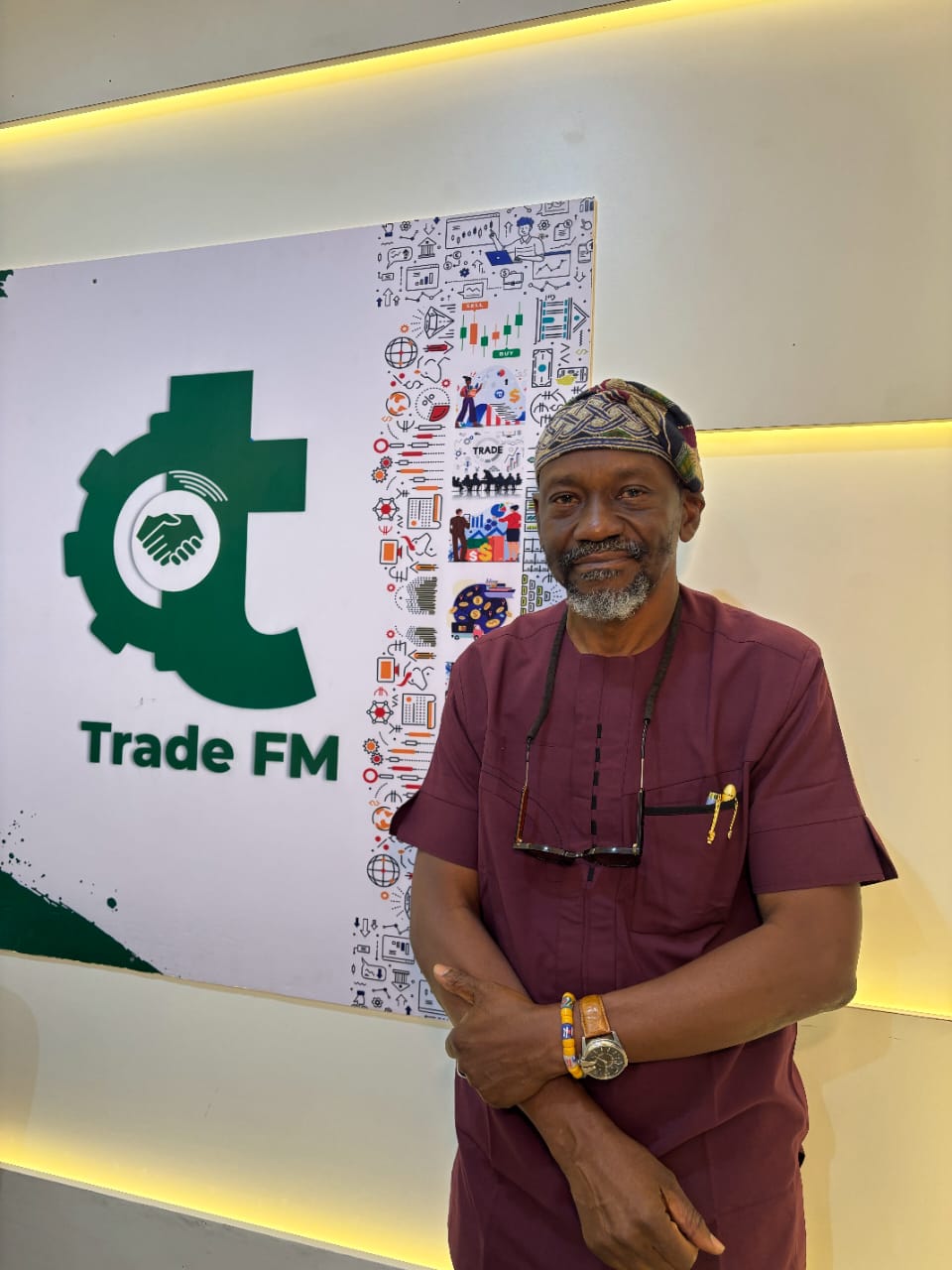
A financial and economic analyst, Mr. Adegboyega Adebajo, has urged Nigerians to look beyond the country’s debt-to-GDP ratio when assessing the nation’s fiscal health, arguing that the more important indicator is the debt service-to-revenue ratio, which measures the government’s ability to repay its obligations from the revenue it generates.
Speaking on the topic, “Presidency Defends Nigeria’s Debt Profile: Is the Economy on a Sustainable Path?” on Trade FM, Adebajo explained that while Nigeria’s debt-to-GDP ratio compares favourably with many countries, it does not provide a complete picture of the country’s economic realities. According to him, the ratio is primarily an international benchmark used to compare the size of a country’s debt with the size of its economy, but Nigeria’s real concern should be whether government revenue is sufficient to sustain debt repayments without placing excessive pressure on public finances.
The analyst described the current period as a “consequential moment” for the Nigerian economy, pointing to recent improvements in macroeconomic indicators such as declining inflation, improved international credit ratings, a more stable naira and stronger foreign reserves. He noted that these developments have strengthened investor confidence and created a more stable economic environment. However, he warned that the country is also entering an election cycle, a period traditionally associated with increased public spending, higher cash circulation and fiscal pressures that could test the sustainability of recent gains.
Adebajo stated that one of the most significant improvements recorded in recent years is the reduction in Nigeria’s debt service-to-revenue ratio, which he said has fallen from almost 100 per cent in early 2023 to about 60 per cent. He described the decline as evidence of improved fiscal management by the Federal Government, the Central Bank of Nigeria and the Ministry of Finance. Nevertheless, he stressed that although the ratio has improved considerably, it remains above desirable levels and highlights the need to continue expanding government revenue.
According to him, Nigeria’s revenue base remains too narrow because the economy is still heavily dependent on crude oil. While improved oil prices, tax reforms and stronger corporate tax collections have boosted government earnings, he argued that the country’s tax-to-GDP ratio remains relatively low compared with many other economies. He warned that the current improvement could prove temporary if oil prices weaken, underscoring the need to diversify revenue sources and strengthen domestic tax collection.
The analyst also observed that the recent rebasing of Nigeria’s Gross Domestic Product increased the size of the economy by about 32 per cent. However, he cautioned against celebrating the development prematurely, noting that Nigeria remains the fourth-largest economy in Africa behind South Africa, Egypt and Algeria. He added that projected economic growth of between 3.5 and 4 per cent remains modest for a country with Nigeria’s large and rapidly growing population.
On the impact of ongoing reforms, Adebajo said economic policies should be assessed over time rather than judged by their immediate effects. He explained that reforms typically produce results gradually, beginning with improvements in macroeconomic stability before filtering down to businesses and households. While commending the monetary and fiscal authorities for restoring a measure of stability to the economy, he acknowledged that many Nigerians are yet to experience the benefits directly because businesses continue to operate under high interest rates and tight monetary conditions.
He explained that businesses remain cautious about borrowing for expansion due to the high cost of credit, limiting their ability to employ more workers or increase salaries. According to him, meaningful improvements in household incomes will only occur when businesses become more profitable and expand their operations. He also cautioned that widespread salary increases introduced too quickly could trigger another round of inflation by increasing consumer demand and pushing up prices.
Speaking on public borrowing, Adebajo maintained that Nigerians are increasingly concerned about whether government loans are translating into visible development. While acknowledging that government has stated that much of the borrowing is intended for capital projects and infrastructure, he argued that citizens should be able to see clear evidence of those investments through improved electricity supply, better roads, efficient transportation systems and other public infrastructure. He added that successful capital spending should be evident in the daily lives of citizens rather than through official announcements alone.
The economist further examined the impact of petrol subsidy removal, noting that although states and local governments now receive higher allocations, many Nigerians are yet to witness corresponding improvements in public services. He urged state governments to prioritise projects that directly improve living standards, create economic opportunities and address the needs of residents through effective planning and accountability. He also stressed that governments should engage more closely with citizens to understand their priorities before committing public funds.
Adebajo added that citizens also have a responsibility to support development through responsible behaviour, observing that environmental challenges such as blocked drainage systems and poor sanitation are often worsened by public actions. He argued that sustainable development requires both effective governance and greater civic responsibility.
Looking ahead, the analyst warned that continued borrowing without expanding productive sectors of the economy could expose Nigeria to greater fiscal risks. He advocated broadening government revenue sources, encouraging productive investments and attracting long-term foreign direct investment capable of establishing industries, creating employment and increasing domestic production. He distinguished such investments from short-term portfolio inflows, which he described as “hot money” that can quickly leave the country during periods of political or economic uncertainty.
While noting that Nigeria can learn from the experiences of other countries, Adebajo maintained that lasting solutions must reflect the country’s unique economic realities. He concluded that sustaining recent macroeconomic gains will depend on stronger revenue diversification, disciplined public finance management, productive investment, transparent governance and policies that ultimately improve the welfare of ordinary Nigerians.
