

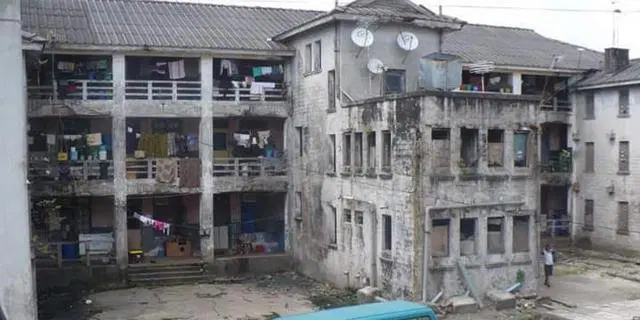
The poor condition of police barracks across Nigeria has become a growing welfare and security concern, with officers and their families in several states living in dilapidated buildings, overcrowded apartments and facilities lacking basic amenities.
The crisis gained national attention after more than 1,000 police officers and their families were displaced from the Central Police Station Barracks in Onitsha in 2013 following a land dispute.
Thirteen years later, the incident has come to represent a wider problem affecting police accommodation across the country.
Findings from different parts of Nigeria indicate widespread problems including leaking roofs, deteriorating buildings, broken sewage systems, water shortages, overcrowding, poor sanitation and inadequate accommodation.
Many police barracks were constructed during the colonial period or shortly after independence and have exceeded their original lifespan. Years of inadequate maintenance, insufficient funding and administrative delays have contributed to their deterioration.
The housing challenge generally falls into three areas: dilapidated barracks, insufficient accommodation and disputes over land ownership.
South-South Faces Severe Conditions
In Cross River, Rivers, Akwa Ibom, Bayelsa and Edo states, officers reportedly contend with failing infrastructure, poor sanitation, water shortages and overcrowding.
At the Akim and Moore Road Police Barracks in Calabar, Cross River State, leaking roofs, broken railings, unusable toilets and collapsed sewage systems have become major concerns.
One officer who has lived at Akim Barracks for eight years said he had never used the barracks’ toilet facilities, with residents reportedly resorting to nearby drainage channels because of the poor sanitation conditions.
Residents also rely on neighbouring communities and churches for water.
Some occupants have reportedly contributed personal funds towards repairs. In one section housing 27 families, residents contributed N100,000 each, raising more than N2.7 million for emergency work.
The Moore Road Barracks faces similar challenges, with residents complaining about poor water supply, leaking roofs and inadequate sanitation.
In Rivers State, officers at the Olu Obasanjo Police Station Barracks in Port Harcourt reportedly spend their own money repairing government-owned accommodation.
The situation is said to be worse at Mile One Police Barracks, where several old structures have deteriorated significantly.
At the A Division Police Barracks in Uyo, Akwa Ibom State, residents face leaking roofs, damaged ceilings, blocked drainage and inadequate accommodation.
A sergeant who has lived there for seven years said residents regularly use buckets to collect water from leaking roofs during rainfall.
In Bayelsa State, the Police Command Barracks in Ovom, Yenagoa, reportedly suffers from damaged roofs, broken doors and windows, inadequate water supply and poor sanitation. Residents also complain about rodents and blocked drainage.
Edo State has seen some plans for improvement, including the proposed upgrade of Ogida Barracks and relocation of the Mopol 82 Squadron to a new facility in Uromi. However, several existing structures still require major rehabilitation.
Northern Barracks Also Struggle
Across the North-East, North-West and North-Central regions, officers are also living with serious infrastructural challenges.
In Benue State, the Mopol 13 Barracks in Makurdi has several buildings showing signs of structural deterioration, including cracked pillars, damaged roofs and weakened foundations.
Officers say some structures are no longer safe but remain occupied because many personnel cannot afford private accommodation.
In Borno State, years of Boko Haram and ISWAP insurgency damaged or destroyed several police facilities. At the Police Crack Squad Barracks along Airport Road in Maiduguri, residents reportedly face inadequate electricity, poor water supply and limited recreational facilities.
The Banda Police Barracks in Lokoja, Kogi State, is also affected by inadequate water supply and dysfunctional toilets and drainage systems.
In Adamawa, several police barracks were constructed between 1979 and 1983 and have received limited major maintenance over the decades. Facilities across Yola and other areas reportedly show signs of ageing, including damaged roofs, cracked walls and failing sewage systems.
Kaduna’s police barracks along Independence Way and in Kawo are similarly affected by ageing infrastructure, damaged sanitary facilities, broken windows and deteriorating roofs.
The Minna Police Barracks in Niger State faces an additional security concern because the facility lacks adequate perimeter fencing. The complex, which also houses a police training school, reportedly has damaged roofs, peeling walls and collapsed soakaway pits.
In Kebbi State, parts of the police barracks in Nasarawa, Birnin Kebbi, have reportedly deteriorated severely, with some old mud structures partially collapsing.
At Mopol 8 Barracks in Anguldi, Jos, Plateau State, officers and their families contend with cracked walls, leaking roofs and other infrastructure problems despite the security pressures they face in the state.
Police barracks in Ilorin, Kwara State, also reportedly require extensive rehabilitation, with old four-storey buildings showing broken windows, deteriorating walls and inadequate water and toilet facilities.
South-East Faces Ageing Infrastructure and Housing Shortages
In the South-East, the main concerns include ageing buildings, inadequate maintenance and insufficient accommodation.
In Enugu State, officers have acknowledged ongoing efforts to improve police infrastructure, including the construction of new barracks at Ozalla Police Station.
However, several existing residential facilities still have leaking roofs and weakened structures, with officers calling for more urgent rehabilitation and additional housing.
The Central Police Station Barracks in Umuahia, Abia State, has also been described as an example of prolonged neglect. Many of its structures date back to the colonial era and now have deteriorating roofs, broken windows and worn-out fittings.
Some buildings reportedly lacked modern toilet facilities from the outset, forcing residents to create their own sanitation arrangements.
The transit camp for officers on transfer is also said to be in poor condition, with damaged ceilings, broken windows and structural cracks.
In Ebonyi State, the major issue at the Police Headquarters Barracks in Abakaliki is accommodation shortage rather than widespread dilapidation.
The available housing reportedly cannot accommodate the growing number of personnel, forcing many officers to rent private apartments.
With annual housing allowances reportedly around N300,000, officers say the amount is inadequate when compared with rents of between N500,000 and N800,000 for modest two-bedroom apartments, depending on location.
South-West Also Affected
In the South-West, police facilities in Oyo and Ogun states are also facing problems linked to ageing infrastructure, overcrowding and poor maintenance.
At the Mokola Police Division in Ibadan, Oyo State, leaking roofs, cracked walls, peeling paint and outdated facilities reportedly remain visible.
Officers say some parts of the facility require urgent rehabilitation and that poor working conditions can affect morale and operational effectiveness.
The Ibara Police Barracks in Abeokuta, Ogun State, also reportedly suffers from cracked walls, leaking roofs, damaged drainage systems and deteriorating sanitation facilities.
Some residents have resorted to temporary repairs, including the use of wooden planks and nylon sheets, while buckets are reportedly used to collect rainwater entering through damaged roofs.
Blocked drainage and stagnant water have further raised concerns about sanitation and public health.
Housing Crisis Is Also a Security Issue
Security experts say the condition of police accommodation goes beyond staff welfare and has implications for national security.
Police barracks provide housing, security, rapid mobilisation and coordinated access to personnel. When officers are forced to live far from their formations because of inadequate accommodation, their operational readiness can be affected.
The financial pressure of paying rent, combined with poor living conditions, can also affect morale and the wellbeing of officers and their families.
The widespread problems therefore point to the need for a comprehensive national police housing renewal programme, with investment in new accommodation, rehabilitation of existing barracks, improved sanitation and water supply, and clearer maintenance and funding arrangements.
