

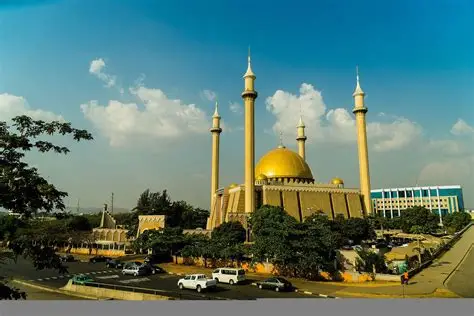
Findings by The PUNCH show that about 78 Ministries, Departments and Agencies (MDAs) of the Federal Government have proposed nearly N400 billion in the 2026 budget for the construction and rehabilitation of community halls, mosques, traditional rulers’ palaces, village market squares and civic centres.
A significant portion of the allocation is reportedly dedicated to projects that analysts describe as non-developmental or low-impact, including the supply of grains, motorcycles and tricycles, sponsorship of community thrift societies, construction of museums and mini-stadia, and other local community interventions.
The agencies examined include the Ministry of Defence Headquarters, Nigerian Air Force, Air Power Centre of Excellence, Nigerian Defence Academy, Technical Aid Corps, Federal Ministry of Information and National Orientation, Federal Ministry of Industry, Trade and Investment, Federal Institute of Industrial Research Oshodi, National Building and Road Research Institute, National Productivity Centre, Industrial Training Fund, and the Office of the Auditor-General for the Federation, among others.
Economic analysts have questioned the priority given to many of the projects, arguing that allocating hundreds of billions of naira to numerous small-scale interventions could reduce funding available for critical sectors such as healthcare, education, security, roads, electricity and other major infrastructure projects.
They also warned that many of the projects appear fragmented, lack clear developmental impact, and may weaken fiscal discipline and public accountability.
Concerns were further raised over budget items that appear unrelated to the statutory responsibilities of some agencies.
For example, the National Building and Road Research Institute, Lagos, reportedly included projects such as the construction of village halls in Akukwa, Anambra State; an international market in Birniwa, Jigawa State; traditional rulers’ palaces in parts of Rivers State; refurbishment of the palace of the Agbana of Isanlu in Kogi State; market stalls in Gubio; a multipurpose hall in Sanga, Kaduna State; and the remodelling of five mosques in Kebbi, Ekiti and Jigawa states.
Analysts said these projects, valued at over N4 billion, appear to have little connection to the institute’s core mandate.
Similarly, the National Productivity Centre reportedly proposed support for Ijaw musicians, construction of an Emir’s palace in Yobe State, refurbishment of Obas’ palaces in Ogun State, and construction of an abattoir in Akko, Gombe State.
The National Mathematical Centre was also listed as funding the construction of a Sociology Department building at Ahmadu Bello University, Zaria, a project critics say falls outside its primary responsibility.
A consultant economist and former central banker, Chukwunonso Ihuma, blamed weak oversight by the National Assembly, alleging that lawmakers often insert projects into agency budgets during the appropriation process.
He advocated a return to zero-based budgeting, where every expenditure must be justified from scratch rather than carried over from previous budgets.
According to Ihuma, projects such as markets, palaces and civic centres are typically the responsibility of state and local governments or community associations, not federal agencies.
President Bola Tinubu signed the 2026 Appropriation Bill, which provides for N68.32 trillion in total expenditure. He also approved an extension of the implementation period for the 2025 budget from March 31, 2026, to June 30, 2026.
In July 2026, the Senate further extended the implementation of the capital component of the 2025 budget to September 30, 2026, citing the need to prevent project abandonment and ensure full use of released funds.
The Nigerian Institute of Social and Economic Research (NISER) said successful implementation of the 2025 budget would require stronger fiscal and monetary coordination, improved revenue mobilisation and structural reforms to address inflation, exchange-rate volatility and social inequality.
The Chief Executive Officer of the Centre for the Promotion of Private Enterprise (CPPE), Dr. Muda Yusuf, said the end of Ways and Means financing has created fiscal pressure for the government, forcing it to seek alternative revenue sources.
Under former President Muhammadu Buhari, Ways and Means borrowing reportedly rose to about N30 trillion before it was securitised.
Analysts also described several assumptions in the 2026 budget as overly optimistic. The budget projects N36.87 trillion in revenue, an oil price benchmark of $75 per barrel, oil production of 1.84 million barrels per day, GDP growth of 4.28 to 4.68 per cent, and N15.81 trillion for debt servicing.
Critics argue that Nigeria is still struggling with the implementation of the 2025 budget while already debating the 2026 budget, warning that unrealistic projections and poorly prioritised spending could undermine public confidence and economic planning.
