

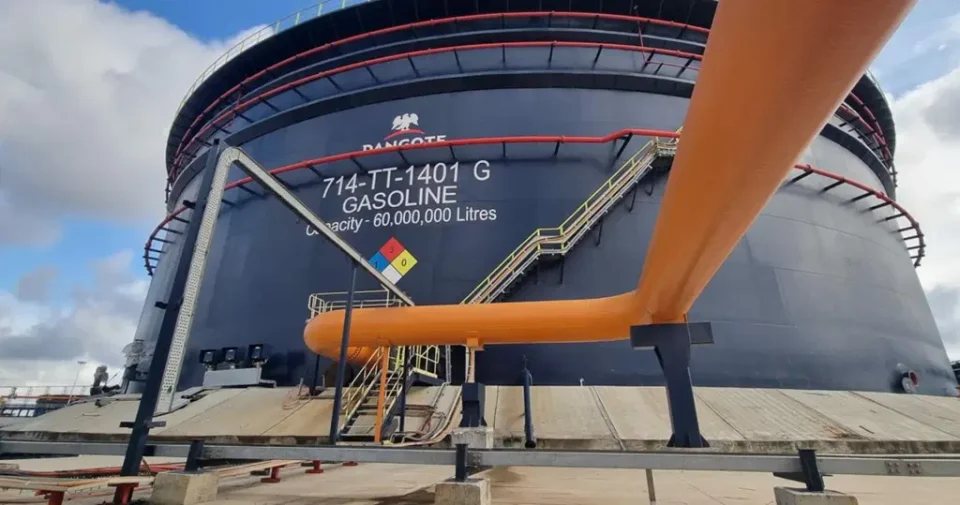
The Dangote Petroleum Refinery says its decision to resume selling Premium Motor Spirit (PMS) in naira was aimed at preventing fuel shortages and stabilising prices after some importers allegedly withheld petrol supplies.
A management official of the refinery, who spoke anonymously, said the move was not because the issue of crude oil supply had been resolved, but was taken in the national interest.
According to the official, some fuel importers deliberately delayed releasing their products in anticipation of higher petrol prices, prompting the refinery to abandon its brief dollar-denominated sales policy.
The refinery recently announced the resumption of naira sales, fixing its gantry price at ₦1,215 per litre and the coastal price at ₦1,602,495 per metric tonne. The decision reversed an earlier policy of selling petrol in U.S. dollars, which had unsettled the downstream petroleum sector and attracted intervention from the Federal Government.
Independent marketers had earlier suspended purchases from the refinery, arguing they could not obtain enough foreign exchange to pay for fuel priced in dollars.
The refinery had defended its earlier decision, explaining that it was forced to adopt dollar sales after receiving insufficient crude oil under the Federal Government’s naira-for-crude arrangement and sourcing additional crude from the international market in foreign currency.
The company said discussions with the Federal Government are ongoing and expressed hope that both sides would reach a mutually beneficial agreement.
The refinery official also criticised the practice of exporting crude oil while importing refined petroleum products, arguing that such an approach undermines local refining efforts.
Before the Dangote refinery commenced operations in 2024, Nigeria relied heavily on imported petrol due to the poor state of the refineries in Port Harcourt, Warri and Kaduna, a situation that contributed to recurring fuel shortages and years of fuel subsidy payments.
Since the refinery began production, the downstream sector has become more competitive, while the Nigerian National Petroleum Company Limited (NNPC Ltd.) has ended implicit fuel subsidies, helping to eliminate the long queues that once characterised filling stations.
Last week, some depot owners raised petrol prices to as high as ₦1,275 per litre after the refinery temporarily suspended fuel loading. However, following the announcement of the new ₦1,215 per litre gantry price, many depots reduced their rates to remain competitive.
According to Petroleumprice.ng, depot prices ranged between ₦1,215 and ₦1,220 per litre on Sunday, while retail pump prices across the country were selling for between ₦1,260 and ₦1,300 per litre, depending on location.
The latest increase in petrol prices has been linked to renewed tensions in the Middle East, which pushed global crude oil prices above $100 per barrel on Thursday before settling at about $96 per barrel on Friday amid concerns over attacks on commercial vessels in the Red Sea.
Higher international oil prices could increase Nigeria’s export earnings and government revenue, but they may also raise the cost of refined fuel imports, fuel inflation and place additional pressure on consumers if domestic supply remains inadequate.
