

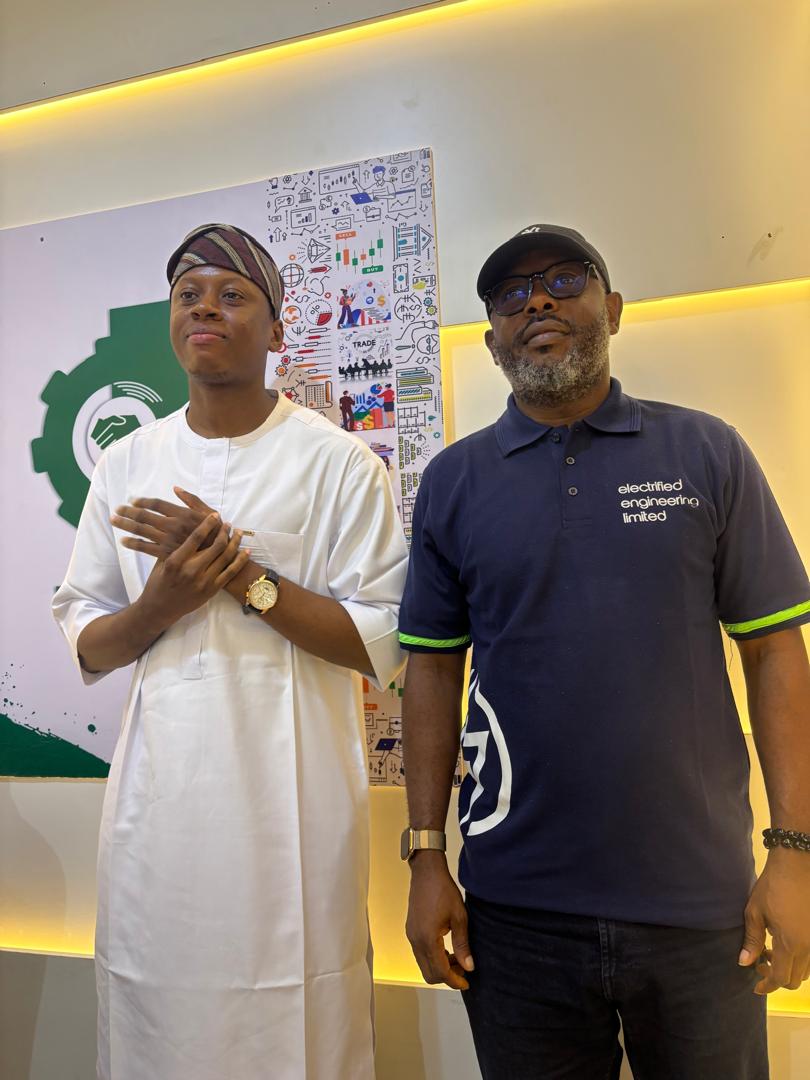
Electrified Engineering Limited (EEL), a Nigerian renewable energy and facilities management company, has unveiled plans to expand its operations beyond Nigeria while introducing flexible payment arrangements aimed at making solar energy solutions more accessible to households and businesses.
The company’s representatives, Gift Okanigbuan and Pedro Abdulrahman, disclosed this during an interview on Trade FM’s Breakfast Business Briefing, where they discussed the company’s operations, financing initiatives, challenges in the renewable energy sector and its long-term expansion plans.
Established in June 2021 by a group of power technocrats with backgrounds in electrical engineering, Electrified Engineering Limited was founded in response to Nigeria’s persistent electricity challenges. The company aims to provide sustainable and environmentally friendly alternatives to conventional power generation, particularly fossil-fuel-powered generators.
Operating within the renewable energy and engineering, procurement and construction (EPC) space, EEL provides energy solutions to households, small and medium-sized enterprises (SMEs) and large establishments, with safety and sustainability identified as key priorities.
Speaking on how the company determines the appropriate solar solutions for customers, the representatives explained that EEL conducts preliminary site assessments and power audits to establish customers’ energy requirements, identify critical appliances and determine the appropriate system capacity based on their needs and budgets.
They stressed that proper assessment is essential to ensuring customers receive suitable installations and value for their investments, rather than purchasing systems that may be inadequate for their energy requirements.
On the challenges of extending renewable energy solutions to remote communities, the company identified poor road infrastructure, logistical difficulties and the shortage of trained technical personnel as major obstacles.
To address these challenges, EEL said it partners with and trains local personnel in communities where it operates, equipping them to provide first-level technical support when faults occur. The company also deploys remote monitoring technology that enables its technical team to monitor installed systems and guide local personnel through troubleshooting processes.
Addressing concerns about the high initial cost of solar installations, the representatives revealed that the company has introduced a flexible financing arrangement requiring customers to make a 20 per cent initial deposit, with the outstanding balance spread over an agreed period.
According to them, the initiative is designed to reduce the financial burden associated with adopting renewable energy, particularly for businesses and SMEs that may be unable to afford the full installation cost upfront.
The company disclosed that it is currently funding the initiative with its resources while engaging financial institutions and potential foreign investors to secure additional financing to expand the programme.
The representatives also revealed plans to develop the arrangement further, with a long-term target of allowing businesses to access solar systems with an initial payment of as little as 10 per cent and spread the remaining cost over a period of up to 60 months.
On common mistakes associated with solar installations, EEL identified inadequate assessment of energy requirements and the engagement of inexperienced installers as major problems affecting system performance.
The company explained that improperly sized systems can result in insufficient power supply, forcing customers to spend additional money on replacement batteries, inverters and solar panels.
It therefore advised households and businesses to prioritise professional energy assessments and proper system design before investing in solar installations.
The representatives further emphasised that regular maintenance is essential to the lifespan and efficiency of solar systems. They explained that EEL uses remote monitoring technology to track system performance, identify potential faults and determine when periodic maintenance is required. They also noted that physical inspections and regular cleaning of solar panels remain necessary, particularly in dusty environments.
On technological developments in the renewable energy industry, the company highlighted its use of artificial intelligence for research, product evaluation and innovation, alongside continuous staff training and engagement with suppliers to remain informed about developments in solar technology, battery storage and energy management.
Looking beyond Nigeria, EEL disclosed that it is exploring opportunities across other African markets through strategic partnerships. The company identified Cameroon, Ghana and Rwanda as potential markets, noting that renewable energy adoption offers opportunities not only in areas with unreliable electricity but also in countries where customers are seeking to reduce their electricity expenses.
The representatives explained that hybrid solar systems, which integrate solar panels, battery storage and conventional electricity sources, can help businesses reduce their dependence on grid electricity and diesel generators by prioritising solar power.
Speaking on the company’s long-term ambitions, Okanigbuan said EEL aims to become one of Africa’s most trusted energy solutions companies within the next five years, while expanding access to renewable energy through more affordable financing options.
Abdulrahman added that the company aspires to become a leading name in solar energy, with customer satisfaction, transparency and reliable service forming the foundation of its operations.
The company encouraged interested households and businesses seeking renewable energy solutions to connect with it through its social media platforms, including Instagram, X and LinkedIn, or through its official website.
