

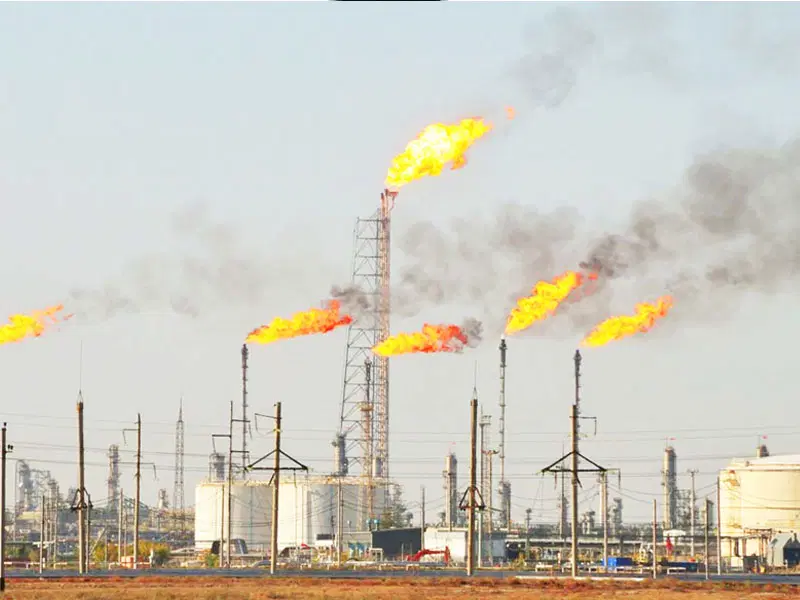
Nigeria’s plan to become a gas-powered economy by 2030 is facing growing challenges, with persistent gas flaring by oil companies resulting in an estimated 3,100 gigawatt-hours (GWh) of lost electricity generation potential in May 2026.
The development comes amid conflicting figures released by the Nigerian Upstream Petroleum Regulatory Commission (NUPRC) and the National Oil Spill Detection and Response Agency (NOSDRA) on the volume of gas flared during the month.
While the NUPRC reported that 17.6 million standard cubic feet (MMSCF) of gas was flared in May, NOSDRA estimated the figure at 30.7 million standard cubic feet (MSCF).
According to NOSDRA, the gas flared during the period had an estimated value of $107.5 million, while the companies responsible—including several international oil firms—could face penalties totaling $61.4 million.
The agency said gas flaring from onshore oilfields rose by 62.3 per cent, reaching 22.3 MSCF, compared to 8.4 MSCF flared from offshore operations.
NOSDRA also estimated that the flared gas released about 1.6 million tonnes of carbon dioxide into the atmosphere.
The agency noted that gas flaring has continued in Nigeria since the 1950s, despite repeated government efforts to reduce the practice because of its environmental and economic impact.
The Federal Government has consistently promoted its “Decade of Gas” initiative, launched in 2021, with the goal of transforming Nigeria into a gas-driven economy by 2030 through increased gas utilisation for electricity generation, industrial development and exports.
A government report cited by Vanguard identified expanded gas use for power generation and increased investment across the gas value chain as key priorities under the initiative.
However, available data suggests that despite increased investment in the sector, gas flaring remains widespread, raising concerns that additional funding has not translated into significant improvements in gas production and utilisation.
The report also linked Nigeria’s inability to consistently generate more than 4,000 megawatts (MW) of electricity to inadequate gas supply for Electricity Generation Companies (GenCos).
Meanwhile, the Renevlyn Development Initiative (RDI) has called on the Federal Government to impose a complete ban on gas flaring.
The organisation argued that many oil companies operating in the Niger Delta prefer paying financial penalties instead of ending the practice.
RDI’s position follows data from the Nigerian Oil Spill Monitor, covering March 2012 to 2025, which showed that oil companies paid an estimated $646 million in gas-flaring penalties in 2025—the highest amount recorded in the past five years.
