
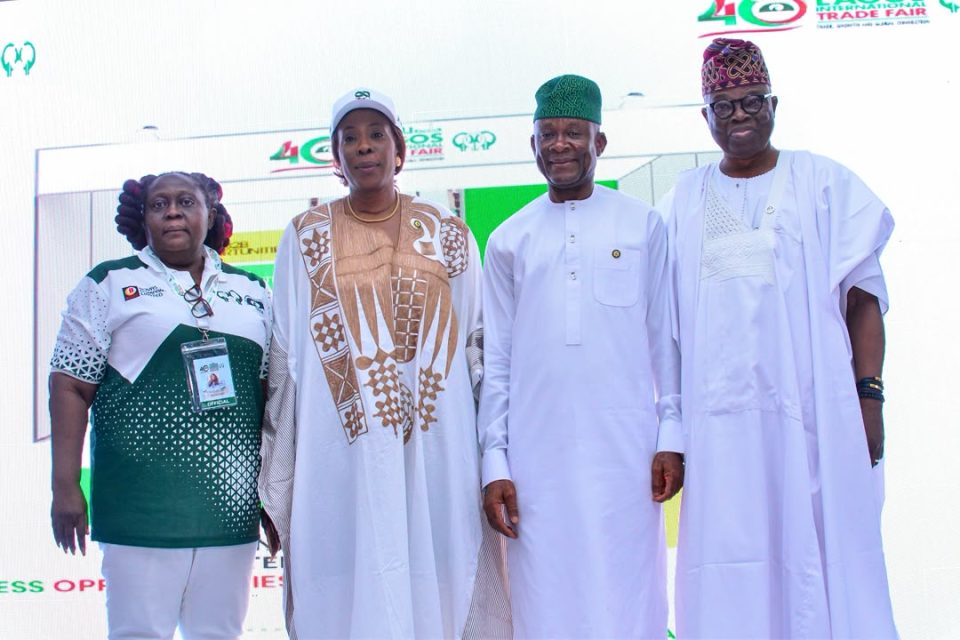
President Bola Tinubu has declared the 40th Lagos International Trade Fair open, announcing that Nigeria’s gross external reserves have risen to 55.07 billion dollars, the highest level in 18 years, while urging businesses to expand local production, boost exports and take advantage of opportunities under the African Continental Free Trade Area (AfCFTA).
Tinubu, who spoke on Friday at the opening ceremony of the 10-day fair at Tafawa Balewa Square, Lagos, said the improvement in the country’s economic indicators reflected the impact of reforms introduced by his administration since assuming office in May 2023.
Represented at the event by the Minister of State for Industry: Sen. John Owan Enoh, the President disclosed that net external reserves had also risen above 40 billion dollars from less than four billion dollars in 2023.
He added that headline inflation had declined from a peak of over 34 per cent to 14.63 per cent in September 2026, while the economy recorded 4.43 per cent growth in the second quarter of the year.
According to him, foreign exchange market reforms had helped restore stability and improve business confidence, while sustained trade surpluses, increased exports and reduced imports of refined petroleum products had strengthened the economy.
Tinubu also said the Federal Government had introduced modernised and harmonised tax laws to reduce the burden on businesses and improve the ease of doing business.
Acknowledging the difficulties Nigerians had experienced as a result of the reforms, he thanked citizens for their patience and sacrifices, expressing optimism that the country was better positioned to translate economic stability into shared prosperity.
The President stressed the need for Nigeria to move beyond dependence on a single commodity by strengthening domestic production, expanding non-oil exports and developing local industries.
He disclosed that non-oil exports exceeded 6.1 billion dollars in 2025, while capital importation reached approximately 21 billion dollars.
Tinubu described the AfCFTA market of about 1.4 billion people as a major opportunity for Nigerian businesses but said the country must improve product standards, port operations, customs clearance and border processes to compete effectively across the continent.
On industrial development, he announced that the Federal Executive Council had approved the National Industrial Policy to strengthen manufacturing, develop local value chains and transform Nigeria’s raw materials into finished products.
He identified agro-processing, textiles and garments, automotive components, pharmaceuticals and creative industries as priority sectors, adding that the government supported more than 115,000 micro, small and medium-sized enterprises in 2025.
The President also reaffirmed the administration’s commitment to improving access to finance, electricity and markets for small businesses, describing them as critical drivers of economic growth and employment.
He further encouraged businesses to embrace digital trade and electronic commerce, while announcing that Nigeria would host the Intra-African Trade Fair for the first time in 2027 in partnership with the African Export-Import Bank, Afreximbank.
Tinubu urged exhibitors to maximise the business-to-business and business-to-government platforms introduced at this year’s fair, stressing that its success should be measured by the business agreements, investments and partnerships secured.
He also called on Nigerians to patronise locally manufactured goods, noting that increased demand for domestic products would support industries and create jobs.
In his address, Lagos State Governor, Babajide Sanwo-Olu, reiterated his administration’s commitment to strengthening manufacturing capacity, attracting productive investments and expanding exports through the Lagos State Industrial Policy 2025–2030.
Sanwo-Olu, whose address was delivered by the Commissioner for Commerce, Cooperatives, Trade and Investment, said the policy was designed to establish a more competitive and sustainable industrial economy through infrastructure development, industrial financing, priority sectors, business clusters and workforce development.
He said Lagos was building on its position as Nigeria’s commercial hub to strengthen its role in production, innovation, investment and exports.
The governor identified the Blue and Red Rail Lines, ongoing road and transport investments, improved electricity infrastructure and digital connectivity as important interventions aimed at reducing business costs and strengthening industrial productivity.
He also highlighted Lagos State’s first-place ranking in the 2025 Presidential Enabling Business Environment Council Subnational Ease of Doing Business Report, with a score of 85.6 per cent.
On export development, Sanwo-Olu disclosed that the Lagos State Export Readiness Programme, implemented in partnership with Afreximbank and ImpactHer, had supported 253 small and medium-sized enterprises in preparing to access international markets.
He added that 20 Trade Champions had helped showcase Made-in-Lagos products at the Intra-African Trade Fair.
The governor urged international investors to consider establishing manufacturing operations, developing local supply chains and transferring technology in Lagos rather than focusing solely on selling products in the Nigerian market.
He also called on local businesses, particularly young entrepreneurs and MSMEs, to use the trade fair to connect with prospective buyers, secure financing and establish sustainable commercial partnerships.
Earlier, the President and Chairman of Council of the Lagos Chamber of Commerce and Industry (LCCI), Engr. Leye Kupoluyi, called on the Federal Government to address persistent challenges confronting Nigerian businesses, including unreliable electricity, limited access to finance, inefficient logistics, insecurity and inconsistent government policies.
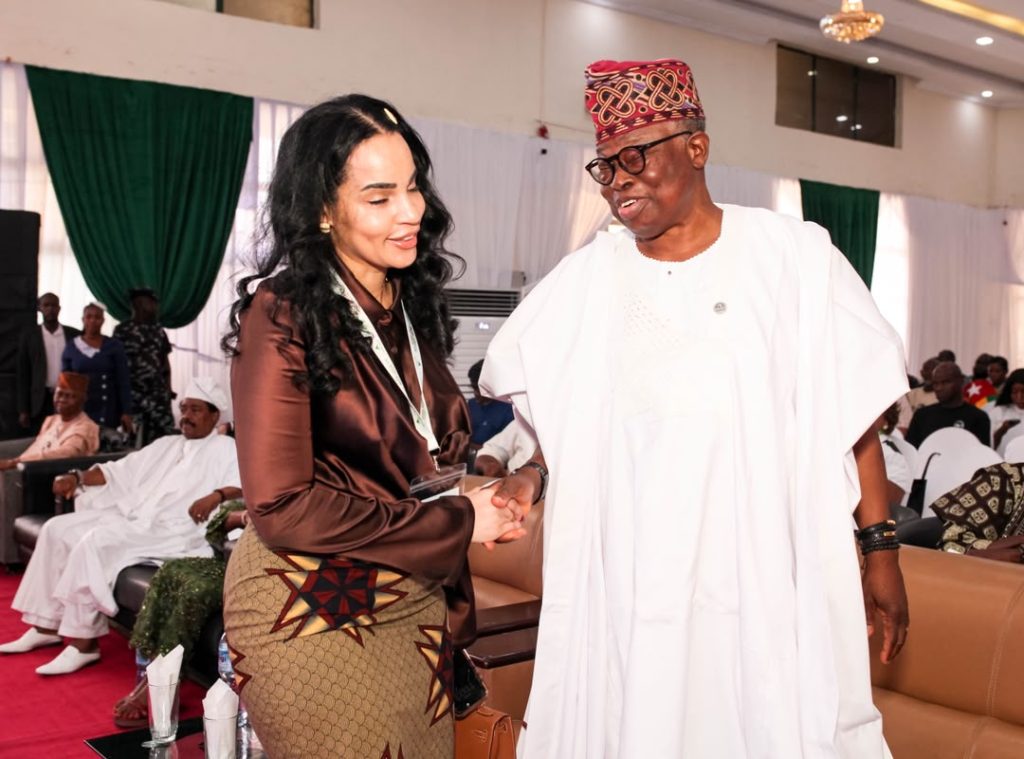
Kupoluyi said an enabling business environment was essential to strengthening local production, attracting investments, improving competitiveness and generating employment.
He noted that although Nigerian businesses had continued to demonstrate resilience despite prevailing economic difficulties, their capacity to expand depended largely on reliable infrastructure, accessible financing and predictable government policies.
According to him, the success of economic reforms should be measured by their impact on everyday business operations.
The LCCI president also emphasised the need for stronger consultation between the government and the private sector, urging authorities to implement practical measures that would reduce the cost of doing business, particularly for small and medium-sized enterprises.
Describing the 40th edition of the trade fair as a significant milestone, Kupoluyi said the event remained an important platform for connecting producers with consumers, introducing businesses to new markets and facilitating commercial relationships across industries and borders.
He disclosed that more than 1,000 exhibitors from several African countries and other parts of the world were expected to participate in the fair.
Kupoluyi particularly highlighted the Africa Hall as an important initiative for promoting intra-African trade and strengthening business relationships under the AfCFTA.
He also disclosed that the Japan External Trade Organization (JETRO) had confirmed more than 100 Japanese exhibitors for this year’s edition, urging Nigerian businesses to explore distributorship agreements, partnerships and opportunities to diversify their product offerings.
The LCCI president further revealed that preliminary findings from the Chamber’s pre-fair survey showed that preparations for the event had already generated economic activities and employment opportunities, particularly through the construction of exhibition stands, which engaged hundreds of local artisans.
He added that the Chamber had sustained its free-entry policy for visitors throughout the 10-day event since 2022 to improve accessibility and increase opportunities for exhibitors to reach potential customers.
Kupoluyi commended the Federal and Lagos State Governments, participating states, diplomatic missions, sponsors and other stakeholders for supporting the trade fair over the past four decades.
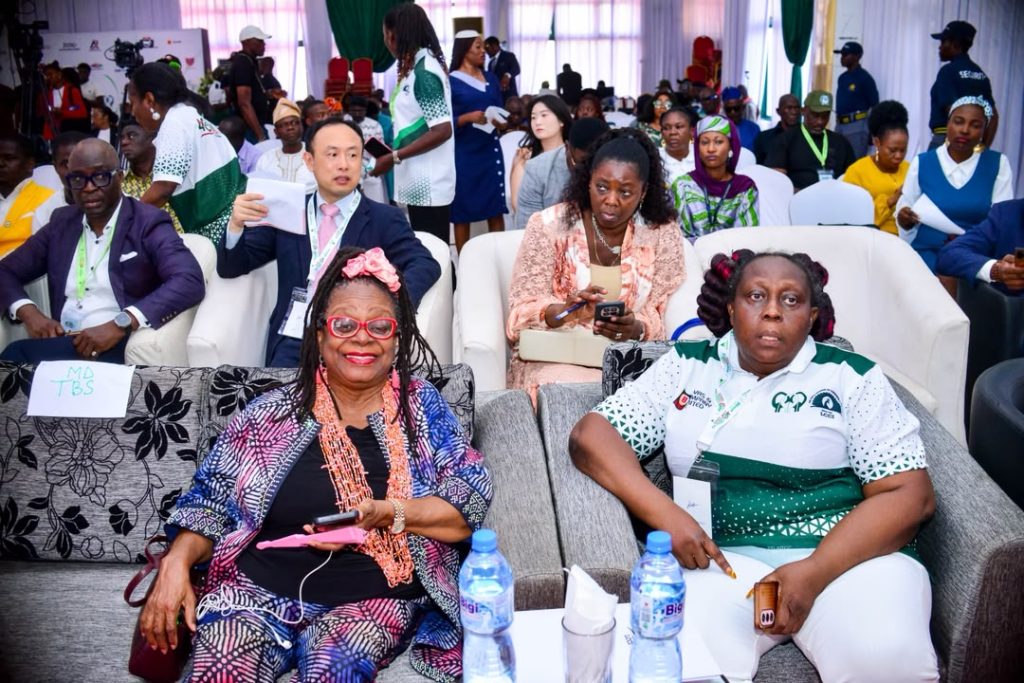
The 40th Lagos International Trade Fair, which runs from November 6 to 15, 2026, is being held under the theme, “Trade, Growth and Global Connection.” It brings together manufacturers, investors, entrepreneurs, businesses and trade partners from Nigeria and more than 20 countries to explore investment opportunities, strengthen commercial relationships and expand regional and international trade.
