

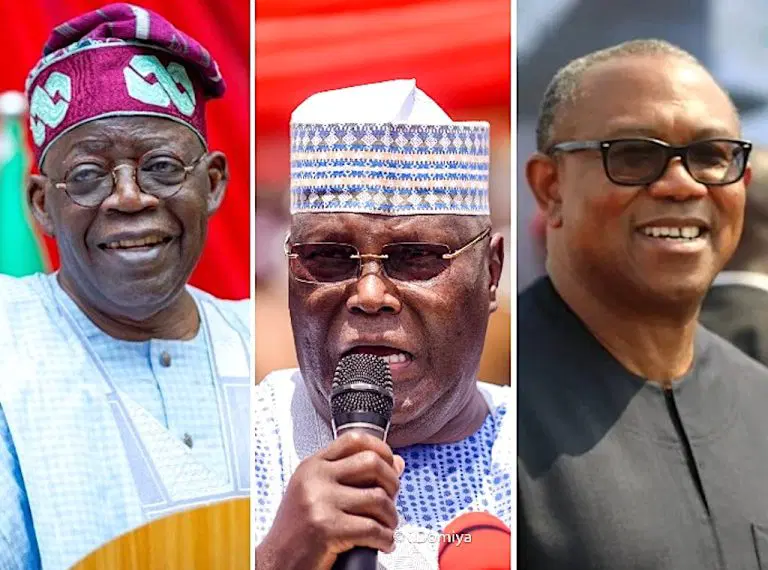
Political parties and candidates preparing for the 2027 general elections are set to navigate significant campaign challenges ahead of polls for the presidency, 469 National Assembly seats, 28 governorship positions and 993 state assembly seats.
At least eight states have already announced campaign permit fees ranging from ₦20 million to ₦200 million for billboards, posters and other outdoor advertising materials. More states are expected to announce their charges, which are increasingly becoming important sources of internally generated revenue.
According to the timetable released by the Independent National Electoral Commission, INEC, campaigns for the presidential and National Assembly elections begin today, August 19, while campaigns for governorship and state assembly elections will commence on September 9.
The presidential and National Assembly elections are scheduled for January 16, 2027, while the governorship and state assembly polls will hold on February 6, 2027.
Several political parties yesterday expressed readiness for the 151-day campaign period.
President Bola Tinubu of the All Progressives Congress, APC; Alhaji Atiku Abubakar of the African Democratic Congress, ADC; Mr Peter Obi of the Nigeria Democratic Congress, NDC; and 22 other presidential candidates joined other political actors at the signing of a peace accord in Abuja.
The agreement, facilitated by the National Peace Committee, NPC, in partnership with The Kukah Centre, commits candidates and parties to peaceful and issue-based campaigns.
President Tinubu warned against the use of artificial intelligence to spread misinformation, as well as ethnic and religious sentiments, while stressing that elections should not be treated as a do-or-die affair.
Peter Obi, meanwhile, urged Nigerians to reject candidates who violate the peace agreement.
States Announce Campaign Permit Fees
Eight states — Abia, Kogi, Anambra, Enugu, Bauchi, Ebonyi, Oyo and Kano — have announced fees for campaign-related outdoor advertising.
In Abia State, the Abia State Structures for Signages and Advertising Agency, ABSSAA, fixed the charges at ₦200 million for presidential candidates, ₦150 million for governorship candidates, ₦100 million for senatorial candidates, ₦50 million for House of Representatives candidates and ₦20 million for State House of Assembly candidates.
Kogi State set its fees at ₦150 million for presidential candidates, ₦50 million for senatorial candidates, ₦30 million for House of Representatives candidates and ₦5 million for State House of Assembly candidates.
Enugu State imposed a ₦150 million comprehensive fee covering campaign materials, billboards and branded vehicles.
Anambra, Bauchi, Ebonyi, Kano and Oyo also announced charges starting from ₦20 million, depending on the elective position being contested.
The high fees have sparked concerns among opposition parties, particularly over whether such charges could restrict political competition and free expression.
INEC Begins Voter Register Clean-Up
INEC says it is strengthening its operational capacity ahead of the 2027 elections and plans to deploy approximately 1.4 million ad hoc personnel to more than 176,000 polling units across the country.
The commission said it is using the Automated Biometric Identification System, ABIS, under the Continuous Voter Registration, CVR, framework to detect duplicate registrations and maintain a verified National Register of Voters.
INEC Chairman, Professor Joash Amupitan, disclosed this while receiving the Pre-Election Assessment Mission, PEAM, delegation of the International Republican Institute, IRI, led by former United States Assistant Secretary of State for African Affairs, Ambassador Jendayi Frazier, at the commission’s headquarters in Abuja.
Amupitan identified security threats, localised electoral violence, vote-buying, hate speech, disinformation and Foreign Information Manipulation and Interference, FIMI, as major risks to voter confidence.
He said recent off-cycle governorship elections and legislative by-elections had provided INEC with opportunities to test its logistics, security coordination and technology ahead of the 2027 polls.
The INEC chairman also assured the international delegation that the commission would maintain neutrality, transparency and full cooperation throughout the electoral process.
Voter Register Expected to Cross 100 Million
INEC also projects that the number of registered voters in Nigeria could exceed 100 million before the 2027 general elections.
National Commissioner and Chairman of the Information and Voter Education Committee, IVEC, Mallam Mohammed Kudu Haruna, disclosed this in Abuja during a Joint Implementation Meeting involving the Departments of Voter Education and Publicity, VEP, and Gender and Inclusivity, G&I.
Haruna said the voter register had already surpassed 93 million and was expected to cross the 100 million mark following the completion and finalisation of the latest nationwide CVR exercise.
He said the increase would further strengthen Nigeria’s position as Africa’s largest electoral democracy.
With 151 days to the first phase of the 2027 elections, Haruna urged INEC information officers to develop effective communication strategies to encourage eligible Nigerians to participate.
Tinubu, Atiku, Obi and Others Sign Peace Accord
Political leaders and presidential candidates have pledged to conduct peaceful and issue-based campaigns ahead of the 2027 elections.
The National Peace Accord, signed in Abuja, seeks to prevent political competition from escalating into violence, intimidation, misinformation, hate speech and ethnic or religious incitement.
Although Tinubu and Atiku were represented by nominees, Peter Obi and several other presidential candidates attended the event. INEC Chairman, Professor Joash Amupitan, was also present.
Chairman of the National Peace Committee and former Head of State, General Abdulsalami Abubakar, represented by former Chief of Defence Staff, General Martin Luther Agwai, said political campaigns had increasingly shifted from debates over policies and manifestos to personal attacks and character assassination.
He warned that such rhetoric could create a toxic political environment and incite citizens against political parties, candidates and the state.
Abubakar recalled that the National Peace Accord was introduced in 2019 to encourage peaceful political competition and issue-based campaigns.
He said the latest version had been strengthened by linking its provisions to the Constitution, the Electoral Act and other laws governing elections.
The committee, he added, would also employ preventive diplomacy, stakeholder engagement, citizen participation, legal compliance, field monitoring and accountability throughout the electoral cycle.
Tinubu Rejects Ethnic and Religious Politics
President Bola Tinubu, represented by Secretary to the Government of the Federation, Senator George Akume, urged political parties and candidates to avoid using ethnicity and religion as instruments for winning elections.
Tinubu said signing the peace accord represented a commitment to place Nigeria’s interests above individual and partisan ambitions.
He also highlighted improvements in the country’s electoral process through technology, particularly the Permanent Voter’s Card and the Bimodal Voter Accreditation System, BVAS.
According to him, these developments have helped reduce voting manipulation, ballot stuffing and ballot snatching.
Tinubu noted that Nigeria had conducted three off-cycle governorship elections in Anambra, Ekiti and Osun states between October 2025 and August 15, 2026, with different parties emerging victorious.
He said local and international observers had described the elections as free, credible and transparent.
The President urged political parties to campaign on ideas and policies rather than ethnic or religious sentiments.
He also pledged the commitment of the APC to peaceful and transparent elections, rejecting violence, hate speech, misinformation, including AI-generated misinformation, and other forms of incitement.
Tinubu urged Nigerians, civil society organisations, international partners and the media to work together to strengthen democratic institutions.
Obi Calls for Sanctions Against Peace Accord Violators
Peter Obi called on Nigerian voters to punish politicians who breach the National Peace Accord by voting against them.
The NDC presidential candidate said political leaders seeking public office must demonstrate the qualities expected of those who aspire to leadership.
Obi also called for a credible 2027 election in which every vote would count.
He condemned the violence recorded during the recent Osun State governorship election, saying no Nigerian should lose his or her life because of an election.
Obi said he remained committed to participating in the electoral process because he wants to contribute to changing it.
The Kukah Centre’s Project Manager, Asabe Ndaye, described the peace accord as a public commitment by political parties and candidates to peaceful political competition, democratic accountability, respect for the rule of law and the will of the people.
She said the committee had in March 2026 brought electoral stakeholders together and presented legal annotations to the agreement to clarify the consequences of violating its provisions.
2023 Peace Accord Recorded Several Breaches
The National Peace Committee presented data on violations recorded during the 2023 electoral cycle.
Ndaye said the largest category of violations involved the commitment to issue-based campaigns, accounting for 43 per cent.
The provision against insults and violence recorded 13.5 per cent violations, while fake news and disinformation accounted for nine per cent.
She said 58 per cent of violations involving issue-based campaigns were attributed to party spokespersons and affected 22 states.
Kaduna, Plateau, Kano, Lagos, Rivers and Benue were among the states identified as having significant violations.
Ndaye warned that political language could become a risk factor in an already tense electoral environment.
2,510 Security Incidents Recorded
The Election Security Information, ESI, Hub established by the Peace Committee recorded 2,510 security incidents between June 2025 and August 2026.
Ndaye identified Zamfara, Borno, Kaduna, Niger, Benue and Plateau as some of the most affected states, with banditry, kidnapping, terrorism and other security challenges posing serious threats.
The hub also documented 381 electoral offences during the period, with significant incidents reported in the Federal Capital Territory, Osun, Oyo and Lagos.
The major electoral threats included vote-buying, political violence, thuggery, physical attacks, intimidation, misinformation, party disputes, electoral malpractice and voter suppression.
Ndaye urged stakeholders to address tensions arising from party primaries, defections, political realignments, court cases and nomination disputes before they develop into larger conflicts.
ADC: We Won’t Be Rushed Into Campaigns
The African Democratic Congress, ADC, said it would not be pressured into immediately launching full-scale campaigns despite the official opening of the campaign period.
National Publicity Secretary, Bolaji Abdullahi, said the commencement of the campaign window only gives parties the legal option to begin campaigning.
He noted that the January 2027 election was still about five months away, allowing parties to plan their activities strategically.
However, Abdullahi expressed concern over the increasing cost of political advertising, particularly the fees being imposed for presidential campaign billboards.
On the reported ₦150 million charge for presidential campaign adverts in Cross River State, he said the party would review the situation and respond appropriately.
Labour Party Says It Is Ready
The Labour Party, LP, said it was prepared for the 2027 campaign season.
Its National Publicity Secretary, Ken Asogwa, said the party was ready to campaign for all elective positions, from the presidency to the National and State Assemblies.
He said the party’s presidential candidate participated in the signing of the National Peace Accord in Abuja.
Asogwa also criticised what he described as unreasonable billboard charges imposed by some southern governors, saying such policies could restrict opposition parties and freedom of expression.
He further warned against giving state governors excessive powers, particularly in relation to the proposed state police.
The LP spokesman said the party would conduct issue-based campaigns without attacking individuals and claimed that the party had a strong organisational structure across Nigeria.
NDC Promises Strategic Campaign
The Nigeria Democratic Congress, NDC, also declared its readiness for the 2027 campaigns.
Its National Publicity Secretary, Osa Director, said the party planned to run an effective campaign driven by stakeholders.
He stressed that the lifting of the campaign ban did not mean every party had to begin full-scale campaigning immediately, noting that the presidential election was still about five months away.
Director also condemned the high billboard charges imposed by some state governments, describing them as undemocratic and a restriction on free expression.
SDP Plans Nationwide Campaign Structure
The Social Democratic Party, SDP, said it was developing a Pan-Nigeria campaign structure ahead of the 2027 elections.
Its National Publicity Secretary, Araba Rufus Aiyenigba, said the party’s presidential candidate, Prince Adewole Adebayo, had already been travelling across the country to engage voters.
He said the party was building a nationwide campaign team made up of prominent Nigerians and patriots who would bring fresh ideas aimed at securing victory in the 2027 election.
