

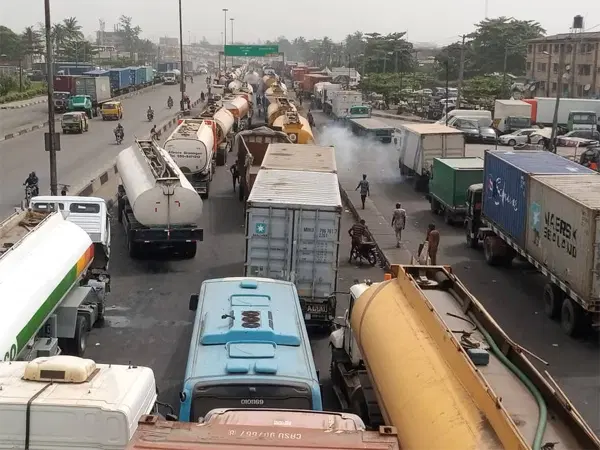
Stakeholders have blamed oil marketers, tanker operators, transport unions and some enforcement agencies for the recurring traffic congestion along the Apapa and Kirikiri corridors in Lagos, saying the situation continues to disrupt businesses and daily activities.
The persistent gridlock has affected thousands of commuters, residents and businesses operating within the Apapa-Kirikiri industrial zone, with many spending hours navigating roads that serve as major access routes to the nation’s ports and petroleum depots.
Industry stakeholders said poor logistics planning, inadequate truck holding facilities, indiscriminate roadside parking by fuel tankers, weak enforcement of traffic regulations and alleged corrupt practices have contributed significantly to the crisis.
They noted that while the downstream petroleum sector remains vital to the distribution of petrol, diesel, aviation fuel and other petroleum products across the country, poor coordination of tanker movements has turned major highways into waiting areas for trucks.
The congestion has also led to increased transportation costs, delays in cargo evacuation from the ports, damage to road infrastructure and disruptions to commercial activities in the area.
Investigations showed that roads linking Apapa, Kirikiri, Coconut and Tin Can Port are frequently occupied by long queues of fuel tankers waiting to load products from nearby depots.
Instead of using designated holding bays, many trucks reportedly park along public roads, reducing multi-lane highways to a single lane and severely restricting the movement of other vehicles.
Several petroleum depots operated by major marketers are located around the Naval Base, Apapa and Mile 2-Kirikiri corridor, attracting a constant flow of tanker traffic.
While traffic around the Naval Base axis remains relatively manageable, stakeholders said congestion is more severe along the Mile 2-Kirikiri route.
They also noted that although some depots have truck holding bays, many of the facilities are no longer large enough to accommodate the growing number of tankers.
In addition, stakeholders alleged that some available parking facilities are underutilised because certain independent marketers, tanker operators, drivers, unions and enforcement personnel allegedly benefit from illegal roadside operations through unauthorised payments.
They called for stricter enforcement of traffic regulations, improved logistics planning and better coordination among government agencies and industry operators to restore free movement along the Apapa and Kirikiri transport corridors.
