

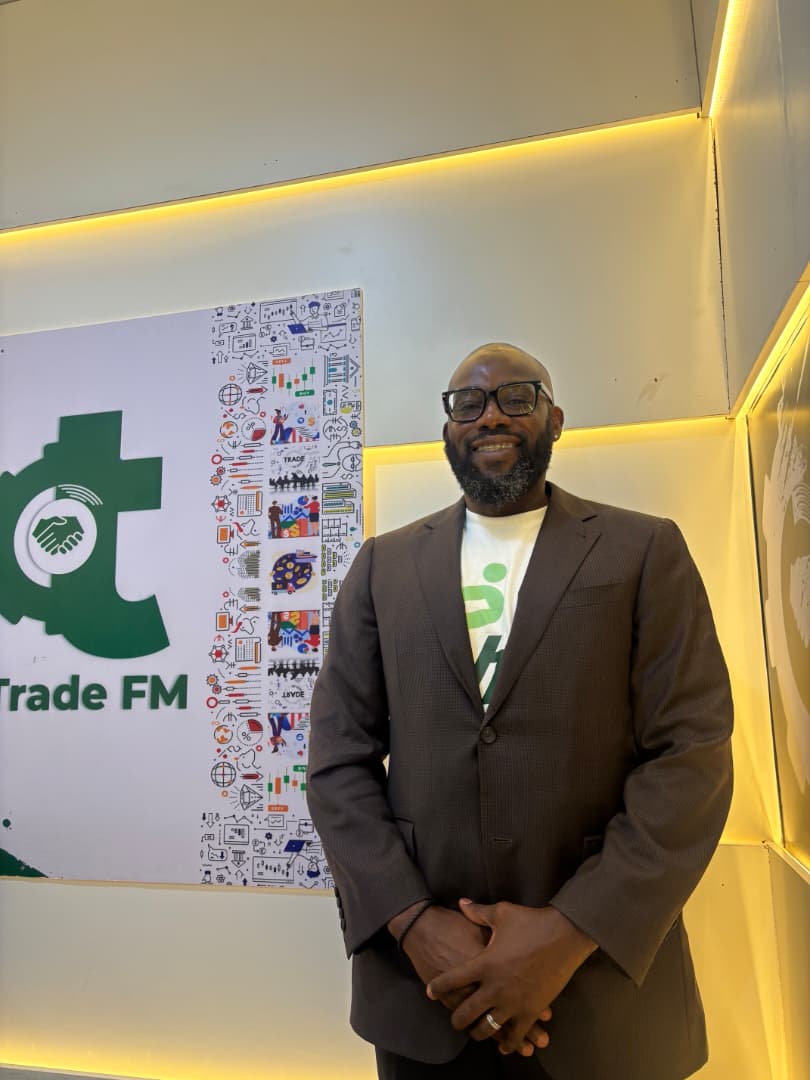
Michael Ailuelohia, founder of Phlo Nigeria Limited, says government incentives, investment in textile manufacturing and stronger support for indigenous brands are critical to building a competitive Nigerian activewear industry.
Nigerian entrepreneur and founder of Phlo Nigeria Limited, Mr Michael Ailuelohia, has called on the Federal Government to strengthen support for indigenous apparel manufacturers through tax incentives, duty waivers and investments in local textile production.
Ailuelohia said Nigeria’s inability to produce certain specialised fabrics locally remains a major challenge for businesses seeking to manufacture high-performance activewear, urging the government to create an enabling environment for the development of technical textile manufacturing.
He made the call while speaking on the Ask the Expert segment of Trade FM’s Breakfast Business Briefing, where he discussed the growth of Phlo, the opportunities in Nigeria’s activewear market and the lessons he had drawn from his experience working with international energy companies.
According to him, the absence of local capacity to manufacture technical fabrics, particularly those made from recycled polyester, limits the ability of Nigerian brands to develop products that meet international performance standards.
“Today, there is no textile company in Nigeria that can make fabric from recycled polyester. It’s not there. We don’t have that capacity,” he said.
He suggested that the government could encourage investors to establish factories locally by offering tax breaks for a specified number of years and waiving duties on imported machinery and equipment required to produce specialised fabrics.
“These are the kind of things that the government can step in and help businesses, brands, entrepreneurs and people who want to go into that area to make technical apparel available to brands like Phlo,” he said.
Ailuelohia also called for greater recognition of Nigerian apparel brands in the country’s sporting industry, arguing that indigenous manufacturers should be given opportunities to supply kits for national teams.
“It’s about time that local brands start kitting our national teams. And why not?” he asked.
He urged Nigerian apparel manufacturers to improve their quality and performance standards to compete for opportunities to outfit the Super Eagles, Super Falcons and the country’s athletes at international competitions.
“I don’t want Phlo to be the only brand in that space. I invite apparel brands: up your game, up your quality, up your performance standards, so that we can be a force,” he said.
The entrepreneur added that the ultimate goal should be to have Nigerian brands producing world-class sportswear for the country’s national teams, stressing that the government must support efforts to prioritise locally made products.
From international energy sector to entrepreneurship
Ailuelohia, who previously worked with multinational companies including Schlumberger and TotalEnergies, said his transition into entrepreneurship was a natural progression, driven by his professional experience and longstanding passion for fitness.
He explained that his career in the energy industry exposed him to engineering, project management, business development, asset management and commercial negotiations, while his interest in fitness provided an additional avenue for business development.
The founder disclosed that he was already a certified personal trainer while working in the corporate sector, running an online fitness training business outside his regular working hours.
According to him, leaving TotalEnergies provided an opportunity to combine his interests in building businesses and promoting physical movement.
“It wasn’t so much of a transition. It actually gave me the opportunity when it was time to leave TotalEnergies. It was a natural transition to do two things at a time, one of which is building businesses and the other, movement,” he said.
He said his experience in the international energy sector also strengthened his conviction that African entrepreneurs could establish brands capable of competing with international companies in quality, performance and durability.
“I think that Africa has matured. We have entrepreneurs, we have the people, we have the entrepreneurial spirit that we need to be able to put quality brands out there to challenge international brands in terms of quality, performance and durability,” he stated.
He added that his decision to establish Phlo was informed by the desire to build an indigenous brand that could deliver products Nigerians would be proud of.
Why Phlo was established
Explaining the philosophy behind the brand’s name, Ailuelohia said Phlo was derived from two concepts: balance and movement.
He explained that the balance component was inspired by pH balance, while the movement aspect came from the word ‘flow’.
“Phlo actually stands for balanced movement because there is nothing you do, there is no movement you do that you don’t have to be in balance. Whether you’re walking, running, riding a bicycle or practising Taekwondo, you have to be in balance,” he explained.
He said the brand was established to address what he considered a gap in Nigeria’s activewear market, particularly the tendency to prioritise appearance over functionality and performance.
Distinguishing between fashion and activewear, Ailuelohia maintained that performance apparel must offer more than attractive designs, noting that its materials and construction must support physical activities.
He explained that leggings should stretch with the body and retain their shape during exercises, while high-impact sports bras must provide adequate support and comfort.
He added that specialised activewear materials could also incorporate sweat-wicking and antibacterial properties, which require deliberate product development.
“There’s a lot more to activewear than just being beautiful. These materials that are used to make it are technical materials. Some may have sweat-wicking capabilities. You don’t just get that in any material. You have to design it and build it into these materials,” he said.
He traced the inspiration for Phlo to an incident involving a female client he was training at a gym in Lagos.
According to him, the client was performing weighted squats when her leggings became transparent, exposing the limitations of the material.
He said the experience made him uncomfortable and prompted him to ask where she had purchased the apparel, only to discover that it was produced by an indigenous Nigerian brand.
That incident, he explained, convinced him that Nigerian consumers deserved better-quality locally available activewear.
“For me, that was where Phlo was birthed because Nigerians deserve better than that. Nigerians deserve quality, and it’s not a question of affordability. Nigerians can afford quality, and Nigerians are discerning. They know quality when they see it,” he said.
Recycled materials and plans for local manufacturing
On the sourcing of materials, Ailuelohia said Phlo’s product development process was guided by specific performance and environmental requirements.
He disclosed that the brand’s current collection features sweat-wicking properties designed to help remove moisture from the body quickly, allowing customers to remain comfortable during exercise, particularly in Nigeria’s hot weather.
He also said the company had deliberately adopted an environmentally conscious approach by using recycled polyester in its products rather than relying entirely on newly produced polyester.
He explained that meeting these technical requirements necessitated partnerships with manufacturers capable of delivering the specified product standards.
However, he acknowledged that Phlo currently manufactures outside Nigeria because the technical capacity required to produce the specialised materials is not readily available locally.
He described the situation as another opportunity for the Nigerian textile industry, expressing the ambition to contribute to building local capacity for technical fabric production in the future.
“Our long-term goal is that we should be able to manufacture all technical materials here in Nigeria,” he said.
Phlo introduces customer protection policies to build trust
Addressing how the company intends to convince Nigerian consumers that an indigenous brand can deliver quality comparable to international activewear labels, Ailuelohia said building customer trust would remain central to its operations.
He noted that positive feedback from customers who had purchased the products had reinforced the company’s confidence in its quality standards.
However, he stressed that customer experience extended beyond the apparel itself to include website accessibility, customer service, responsiveness and return policies.
He disclosed that Phlo operates a 14-day return policy that allows customers to request refunds, exchanges or store credits, provided the purchases meet the company’s return conditions.
According to him, the policy is designed to give consumers greater confidence when purchasing from the brand, particularly those who may be uncertain about the quality of locally produced activewear.
“We believe in product development and we stand by it, and we have a 14-day return policy: refund, exchange, whatever you want,” he said.
He argued that many apparel businesses in Nigeria offer customers only exchanges or store credits rather than refunds, leaving buyers with limited options when dissatisfied with their purchases.
Ailuelohia also disclosed that the company had introduced what it calls the Phlo First Fit Promise, an initiative designed to address sizing concerns among first-time customers.
Under the arrangement, customers making their first purchase who encounter fitting problems, either because they selected the wrong size or received an incorrect size, are entitled to an exchange at no additional cost.
He said the initiative was another way of reducing the risks associated with purchasing apparel online and strengthening consumer confidence in the brand.
Pricing strategy focuses on value rather than compromising quality
On the challenge of balancing production costs with affordability, the entrepreneur said Phlo was focused on delivering value without compromising the technical properties of its products.
He explained that specialised features such as sweat-wicking capabilities and the use of recycled polyester increase production costs, but removing or reducing these features could affect the quality customers expect.
Rather than compromise on product standards, he said the company was working to control operational expenses and improve business processes to keep its products affordable.
“We would rather preach value. What we are doing is to ensure that we continue to give customers the value that is affordable,” he said.
He explained that poor business decisions, unnecessary expenditure and inadequate due diligence when selecting manufacturing partners could increase production costs, which would eventually be transferred to consumers.
For instance, he said manufacturers who fail to meet specified technical requirements could force businesses to repeat production processes, resulting in additional expenses.
He maintained that Phlo’s approach was to ensure efficient operations while offering products that compare favourably with international alternatives.
According to him, the brand remains affordable when compared with international activewear products offering similar quality and performance.
Lessons from TotalEnergies: discipline, risk management and partnerships
Reflecting on his experience working with multinational organisations, Ailuelohia identified discipline in execution, risk management, and teamwork and partnerships as three major lessons he had transferred into managing his business.
On discipline in execution, he said businesses must establish proper processes and ensure that every stage of operations is carefully managed and implemented.
He explained that having a business plan alone was insufficient without the discipline required to execute it effectively.
The second lesson, risk management, involves understanding the risks associated with an industry, assessing their potential consequences for the business, customers and the environment, and developing measures to mitigate them.
He cited Phlo’s decision to launch with women’s activewear before introducing men’s products as an example of a business decision informed by market research and risk assessment.
According to him, the company considered consumer behaviour and purchasing patterns before deciding which product category to introduce first.
He observed that women were generally more interested in coordinating different workout outfits, including leggings, sports bras, headbands and shoes, while men might be more inclined to prioritise comfort and functionality.
He also pointed to the growing culture of social media content creation, suggesting that consumers increasingly want variety in their workout outfits.
“That is why we said, let’s launch Phlo with the female wear first, and then the men’s wear will come later. That’s all about risk management. You need to know your market and manage your risk,” he explained.
The third lesson, he said, was the importance of teamwork and strategic partnerships, stressing that no business could achieve sustainable growth entirely on its own.
Drawing from the energy industry, he explained that major projects were often executed through joint ventures involving several companies that shared responsibilities, risks and profits.
He said Phlo had adopted a similar approach by being deliberate about its relationships with manufacturing partners, vendors and other business associates.
“There is no business, no brand that wants to go far that can go alone. You have to have partnerships,” he said.
He added that the quality of those partnerships could ultimately determine the success or failure of a business.
Advice to aspiring entrepreneurs
Offering advice to young Nigerians interested in establishing businesses, Ailuelohia cautioned against relying solely on monthly salaries to finance entrepreneurial ventures.
He said aspiring entrepreneurs must have sufficient capital or identify reliable sources of funding before commencing operations, adding that bringing investors into a business should not be seen as a threat to ownership.
He challenged the common tendency among entrepreneurs to retain complete ownership of their businesses at the expense of expansion opportunities.
“The mindset that a lot of entrepreneurs have is that they want to own the whole pie, 100 per cent. But I always say this: 100 per cent of zero is zero. One hundred per cent of nothing is nothing,” he said.
He illustrated his position by arguing that he would rather own a small stake in a billion-dollar company than retain complete ownership of a much smaller business.
“I would rather have 0.5 per cent of a one-billion-dollar company than have 100 per cent of a one-million-naira company,” he added.
He also advised aspiring business owners to understand the financial realities of their chosen industries before investing.
Using the fashion industry as an example, he explained that businesses must commit substantial capital to inventory before generating revenue from sales.
Beyond purchasing inventory, he said entrepreneurs must also provide working capital for salaries, marketing and other operational expenses.
He therefore urged young business owners to understand the economics of their industries and make adequate financial provisions before launching their ventures.
Ailuelohia further advised aspiring entrepreneurs to begin planning their businesses while still in paid employment rather than waiting until they resign or retire.
He disclosed that he started Phlo in 2025 while still working at TotalEnergies and only retired from the company in 2026.
“Start the process. Plan while you’re still in employment. Learn about the business, bring on the partners you need on board, and then ease yourself out gently,” he advised.
Phlo’s online presence
Ailuelohia disclosed that Phlo currently operates strictly as an e-commerce business, with customers able to purchase products through its online platform and have their orders delivered to their doorsteps.
Customers can access the brand’s website at www.phloafrica.com/shop, while its Instagram and TikTok handles are @phloafrica.
The entrepreneur said the company’s broader ambition was to build a Nigerian activewear brand capable of competing internationally while contributing to the development of local manufacturing capacity and creating more opportunities for indigenous businesses.
