

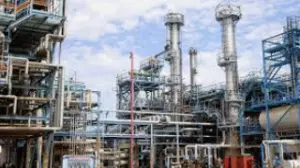
The Nigerian Society of Chemical Engineers, NSChE, has called on the Federal Government to privatise Nigeria’s inactive state-owned refineries through a transparent, competitive and time-bound process that gives credible private investors majority ownership and operational control.
The society’s National President, Engineer Bayo Olarewaju-Alo, made the recommendation at a press conference titled Nigeria’s Moribund Refineries Need New Governance.
Olarewaju-Alo argued that continued public spending on refinery rehabilitation should be replaced with an ownership structure that transfers operational responsibilities, investment obligations and execution risks to technically competent and financially capable private investors.
He said repeated efforts to rehabilitate the Port Harcourt, Warri and Kaduna refineries over more than two decades had failed to deliver consistent, commercially viable production.
According to him, a change in ownership and management would provide an opportunity to establish a more sustainable operating model and improve accountability in the refining sector.
The NSChE president proposed a 22-month timeline for completing the privatisation process. He said the exercise should cover asset assessments, investor prequalification, due diligence, competitive bidding, regulatory approvals and the eventual transfer of ownership and operational control.
He recommended that credible private investors acquire majority equity in the refineries, with enforceable investment obligations and professional management arrangements.
Under the proposal, the Federal Government could retain a minority, non-controlling stake to safeguard strategic public interests without remaining responsible for financing shortfalls or managing daily operations.
Olarewaju-Alo stressed that the objective should extend beyond simply selling the assets. He said the new arrangement must establish a governance and investment framework capable of delivering reliable production, commercial discipline, national economic benefits and public accountability.
He reiterated that substantial public resources had been committed to the rehabilitation of the Port Harcourt, Warri and Kaduna refineries over the years, yet the facilities had not achieved sustained and competitive production.
The society also called for binding investment commitments and clearly defined production targets to ensure that new owners meet their obligations.
Other recommendations included environmental safeguards, protection for the existing workforce, transparent allocation of outstanding liabilities and penalties for investors who fail to meet agreed performance requirements.
The NSChE maintained that a transparent privatisation process, supported by enforceable conditions and professional management, would provide a stronger foundation for improving the performance of Nigeria’s refining industry.
Credit: Vanguard
