

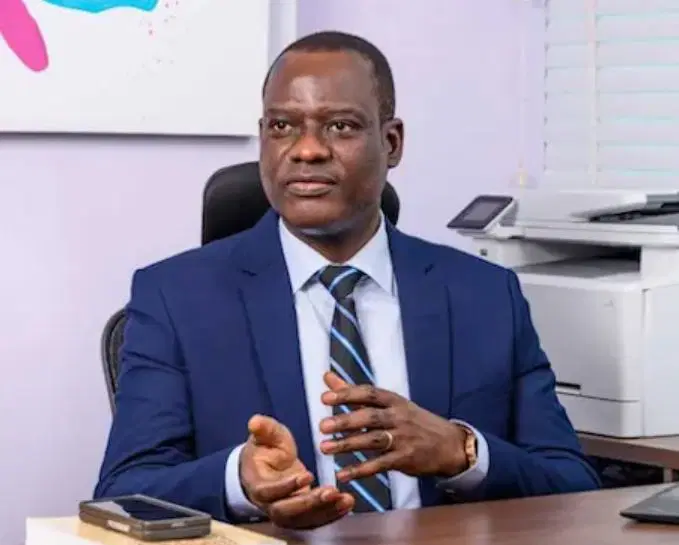
The Minister of Finance and Coordinating Minister of the Economy, Taiwo Oyedele, has warned that restoring petrol subsidies could trigger capital flight, weaken investor confidence and push the naira’s exchange rate to between ₦3,000 and ₦4,000 per dollar.
Oyedele made the statement during a press briefing at the International Monetary Fund and World Bank Annual Meetings in Bangkok, Thailand, on Monday, arguing that reversing the government’s economic reforms could create further pressure on the country’s financial markets and worsen living conditions.
His comments followed a proposal by the African Democratic Congress presidential candidate, Atiku Abubakar, to restore fuel subsidies if elected, as a measure to ease the economic hardship facing Nigerians.
However, the ADC Presidential Campaign Council challenged the minister to provide the economic models supporting his projections, accusing the Federal Government of using fear to discourage public debate about the consequences of removing the subsidy.
Oyedele: Subsidy reversal could weaken the naira
Oyedele said investors had repeatedly questioned whether the Federal Government would abandon its economic reforms as the next election cycle approaches.
He maintained that even an indication that President Bola Tinubu’s administration was considering bringing back fuel subsidies could unsettle financial markets, increase borrowing costs and put additional pressure on the naira.
According to the minister, a reversal could prompt foreign investors to withdraw their capital, while wealthy Nigerians, business owners and middle-class investors might also turn to the dollar to protect their assets.
He warned that increased demand for foreign exchange could further weaken the naira, making imports more expensive and increasing the cost of living for ordinary Nigerians.
Oyedele argued that the consequences of restoring the subsidy could ultimately make petrol more expensive in naira terms, undermining the relief the policy was intended to provide.
The minister also clarified that the Nigerian National Petroleum Company Limited’s temporary reduction in petrol retail margins should not be regarded as a return to fuel subsidy. He explained that reducing profit margins was a commercial decision rather than a payment financed by public funds.
President Tinubu announced the removal of the petrol subsidy on May 29, 2023, in Abuja, alongside the introduction of a floating exchange rate for the naira. The government said the national budget had no provision for continuing the subsidy from June 2023.
Tinubu insists subsidy removal will not be reversed
Meanwhile, President Bola Tinubu has reiterated that he has no regrets about removing the petrol subsidy, insisting that Nigeria will not return to the previous system.
He made the remarks at the forum Together till 2027: An Evening with Original City Boy, organised by the City Boy Movement in partnership with the Relax, Tinubu Is Fixing Nigeria movement at the Old Banquet Hall of the Presidential Villa in Abuja.
Tinubu praised young Nigerians supporting his administration, saying their commitment reminded him of the reasons he sought the presidency and strengthened his confidence in the country’s future.
He acknowledged that the past three years had been difficult but maintained that his administration had taken necessary decisions to reposition the economy.
Drawing a comparison with the biblical account of Moses leading the Israelites out of Egypt, the President rejected calls to restore the subsidy, arguing that the country must continue moving forward with its reforms.
Tinubu also cited China’s reported economic growth of approximately 4.6 per cent, saying Nigeria was on the right economic path and that citizens could look forward to a better future.
He urged his supporters to see the 2027 election as an opportunity to protect their own future rather than simply campaign for his re-election.
The President recalled the financial challenges his administration inherited, including debts owed to airlines, low foreign reserves and extensive currency printing. He said his government had accepted responsibility for those challenges and embarked on reforms, including changes to the tax system.
Tinubu also referred to his administration’s efforts to address prolonged university strikes, saying he had promised to improve the education system so students could complete four-year degree programmes within the expected period.
He praised the City Boy Movement for building a political structure with what he described as millions of verifiable members across states, local governments, wards and polling units.
The President also commended the group’s call centre and City Boy Care initiative, saying the organisation had developed ways to communicate with young Nigerians and respond to community needs.
He thanked youth support groups in Nigeria and abroad, including those in Lagos, Maiduguri, Karu, Akwanga, Sokoto, London, Houston and Toronto, for promoting his administration’s agenda.
Tinubu further reaffirmed his support for the Students Loan Act, which he signed in 2023, disclosing that more than one million students had received assistance through the Nigerian Education Loan Fund, NELFUND.
He praised his son, Seyi Tinubu, for organising young people through the City Boy Movement without seeking a political office or official title. He encouraged him to continue working harder and setting a positive example.
The President also urged young Nigerians to ensure that eligible voters obtained their Permanent Voter Cards and participated in the January 16, 2027, presidential election.
Shettima credits reforms with economic recovery
Vice President Kashim Shettima also defended the administration’s economic policies, arguing that the Nigerian economy could have collapsed if Tinubu had not taken what he described as far-reaching decisions.
Shettima said the economy recorded growth of 4.43 per cent in the previous quarter and that the country’s foreign reserves were hovering around $60 billion.
He acknowledged that Nigerians had experienced hardship but argued that conditions could have been worse without the government’s interventions.
The Vice President also expressed confidence that the administration would introduce measures to address agricultural challenges and reduce food prices in the coming weeks.
He urged young Nigerians to communicate the government’s policies and achievements to the public.
ADC challenges minister’s projections
Reacting to Oyedele’s warning, the Director of Media and Publicity of the ADC Presidential Campaign Council, Kola Ologbondiyan, challenged the minister to publish the economic model used to project that the naira could fall to ₦4,000 per dollar if fuel subsidies were restored.
Speaking to Vanguard, Ologbondiyan accused the Federal Government of fearmongering and insisted that Nigerians deserved evidence to support the claims.
He questioned how the government arrived at the projected exchange rate and called for the assumptions and calculations behind the forecast to be made public.
Ologbondiyan also argued that production subsidies should be assessed on their economic merits rather than dismissed through warnings about possible currency depreciation.
He described the projection as unrealistic and maintained that the government should provide verifiable evidence to support its position.
Credit: Vanguard
