

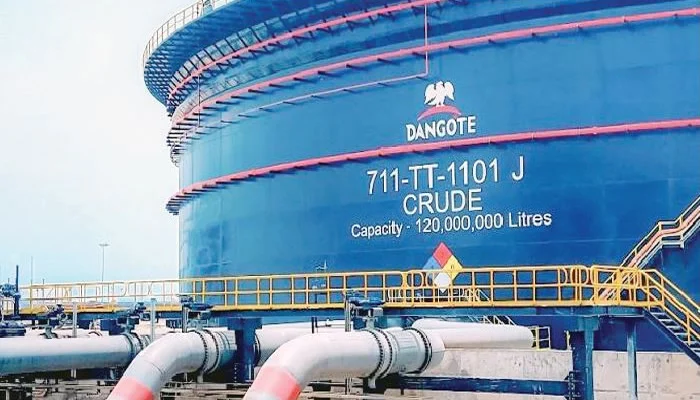
Dangote Petroleum Refinery has introduced a new dollar-based pricing structure for refined petroleum products, fixing the ex-depot price of Premium Motor Spirit (PMS), also known as petrol, at $0.779 per litre.
The revised pricing, which took effect on Monday, also sets Automotive Gas Oil (diesel) at $1.087 per litre, Aviation Turbine Kerosene (ATK) at $0.942 per litre, while coastal deliveries of petrol have been priced at $1,044.62 per metric tonne.
The move officially ends the refinery’s acceptance of naira payments for refined products, a system introduced after the October 1, 2024, launch of the Federal Government’s naira-for-crude initiative.
The transition marks a significant change in the refinery’s commercial operations and could influence pricing across Nigeria’s deregulated downstream petroleum market.
Previous Naira Invoices Cancelled
In a notice issued to petroleum marketers and customers, the refinery announced that all previously issued naira-denominated Proforma Invoices (PFIs) and Deal Recaps for gantry and coastal transactions are no longer valid.
The notice, signed by the refinery’s Group Commercial Operations, instructed customers not to make payments based on the cancelled naira invoices and confirmed that the new US dollar pricing took effect on July 13, 2026.
The refinery also clarified that the currency change does not apply to Liquefied Petroleum Gas (LPG) transactions.
Refinery Cites Currency Mismatch
Industry sources said the shift to dollar pricing was driven by an imbalance between the currency used to purchase crude oil and the currency used to sell refined products.
According to officials familiar with the development, the refinery now receives a larger share of its crude oil supplies from the Nigerian National Petroleum Company Limited (NNPCL) under dollar-denominated arrangements, while much of its refined products had continued to be sold locally in naira.
They explained that this mismatch increased the refinery’s exposure to foreign exchange risks, especially amid fluctuations in crude oil prices and exchange rates.
Sources added that the refinery considered it necessary to adopt a uniform pricing framework to reduce financial risks associated with operating in two different currencies.
Marketers, Consumers May Feel the Impact
The new pricing model is expected to affect petroleum marketers who purchase products directly from the refinery for nationwide distribution.
Industry observers say the eventual retail pump price of petrol will now depend on factors such as the prevailing naira-to-dollar exchange rate, international crude oil prices, transportation costs, logistics, regulatory charges and marketers’ operating expenses.
The Federal Government had introduced the naira-for-crude arrangement to support local refining, reduce pressure on foreign exchange demand and help stabilise fuel prices.
However, stakeholders have reported that implementation challenges in recent months have resulted in a growing proportion of crude supplies reverting to dollar-based transactions.
The latest development highlights the continued foreign exchange pressures facing Nigeria’s downstream petroleum sector and raises fresh questions about the future of the government’s naira-for-crude policy.
With Dangote Refinery now Nigeria’s largest supplier of refined petroleum products, industry stakeholders are expected to closely monitor how the new dollar-based pricing structure influences fuel prices across the country.
