

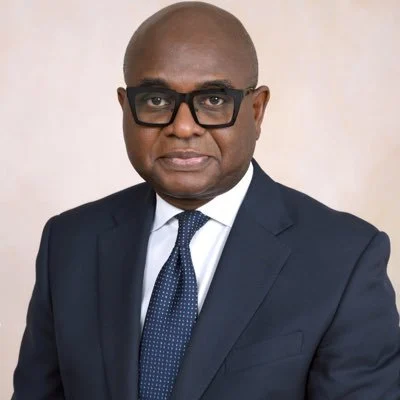
Former Deputy Governor of the Central Bank of Nigeria, Kingsley Moghalu, has denied being part of the policy team for African Democratic Congress presidential candidate Atiku Abubakar’s 2027 campaign.
Moghalu said in a statement posted on his X account on Thursday that he was neither consulted nor asked to approve the use of his name before it was announced as part of the campaign structure.
His statement followed the unveiling of Atiku’s Presidential Campaign Council, which included Moghalu among members of its Policy Team.
The team is headed by economist and banker Mohammed Hayatudeen, with Professor Mohammed Sagagi serving as deputy chairman.
Moghalu said he was surprised to see his name listed and made it clear that he had not accepted any role in the campaign.
He stated that he was “NOT” a member of Atiku’s policy team and had no official or unofficial advisory role in the campaign.
Moghalu, who contested the 2019 presidential election under the Young Progressives Party, said he left partisan politics in Nigeria in 2022.
He added that he remains non-partisan and is neither a member nor a sympathiser of any political party in Nigeria.
According to Moghalu, his current engagements include serving as president of the Institute for Governance and Economic Transformation, IGET Africa, which he described as a non-partisan public policy think tank and executive education academy.
He is also the Chief Executive Officer of Sogato Strategies, a geopolitical risk and regulatory strategy advisory firm.
Moghalu stressed that staying outside partisan politics did not mean withdrawing from national affairs, saying he remained committed to Nigeria’s progress.
He said his approach was based on “statesmanship, not partisanship.”
Atiku’s campaign structure was unveiled on Thursday, with Kashim Ibrahim-Imam named chairman, former Kaduna State Governor Nasir El-Rufai as deputy chairman, and Senator Austin Akobundu appointed Director-General and Campaign Manager.
The campaign said its Policy Team would focus on developing proposals around the cost of living, unemployment, insecurity and declining purchasing power.
Source: PUNCH
