

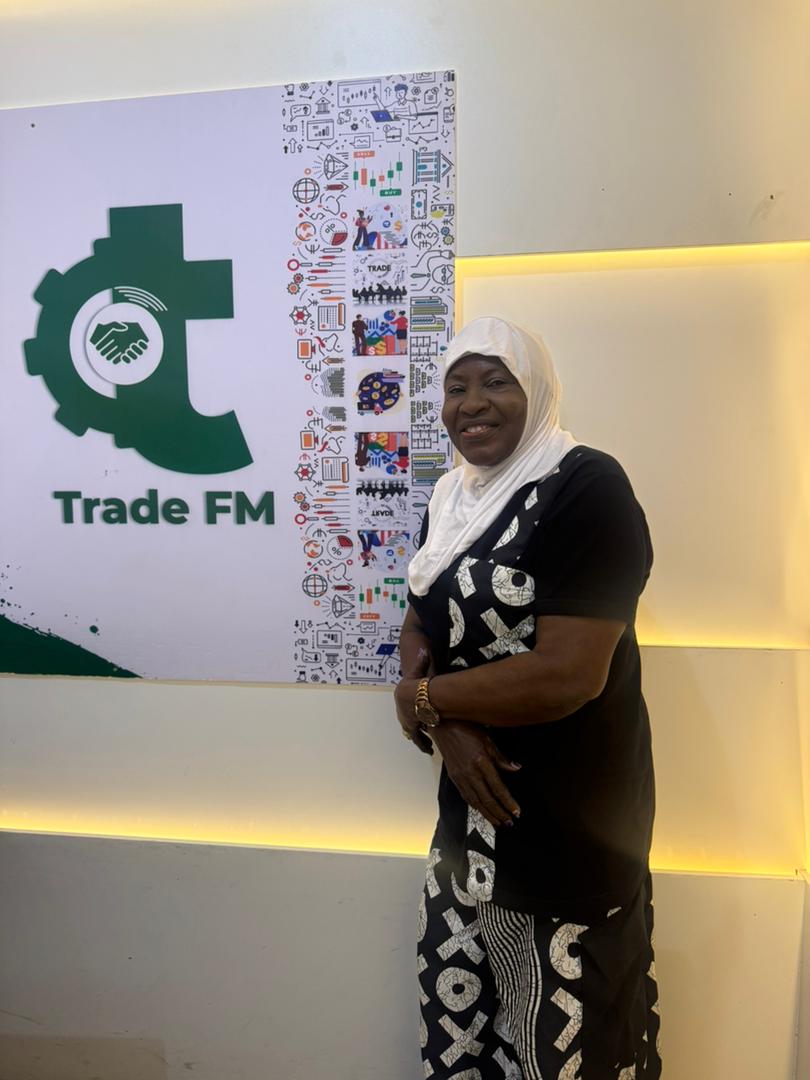
An agro-processing entrepreneur, Alhaja Moromoke Oladunni, has called for increased government support for women and small-scale businesses in the agro-processing sector, saying access to machinery and finance remains a major barrier to expansion.
Oladunni, who was a guest on the SME segment of Trade FM’s Breakfast Business Briefing, said women with viable ideas can build successful businesses in agro-processing by starting small, maintaining product quality and gradually expanding their operations.
According to her, opportunities abound for women in the production and processing of natural products, including coconut oil and herbal tea.
“If you are into production and you know what you are doing, you will make it,” she said, stressing that entrepreneurs do not necessarily have to begin on a large scale.
Oladunni advised aspiring business owners to start with the resources available to them and grow gradually, noting that financial support and access to equipment could help small-scale producers expand their operations.
She identified capital as one of the biggest challenges in agro-processing, saying entrepreneurs require funds to purchase raw materials, machinery and other equipment, as well as meet regulatory requirements.
Oladunni also highlighted the importance of product registration, saying the process of obtaining approval from the National Agency for Food and Drug Administration and Control can take time and requires products to meet established standards.
She said her coconut oil and turmeric green tea underwent several rounds of laboratory testing before they were eventually approved and registered.
The entrepreneur said proper packaging and labelling are equally important in building a successful brand, as they can improve the presentation of products and encourage consumer confidence.
Oladunni, whose business operates under the name Kissfront Production Company, said she previously produced coconut oil and turmeric green tea on a much larger scale.
She said her coconut oil was once widely patronised, including by government customers in Lagos State, but her business suffered a major setback following losses she attributed to the #EndSARS crisis.
According to her, machines and products worth more than ₦10 million were lost, significantly reducing her production capacity.
She said she previously had the capacity to produce about 1,000 bottles of products but now produces between 50 and 100 bottles because she lacks the funds and machinery required to return to large-scale production.
Oladunni said she now carries out much of her production manually after losing equipment used for processing coconut oil and producing and packaging tea.
Despite the setback, she expressed optimism that she would rebuild the business and called on the Lagos State Government and other relevant authorities to provide greater support for small-scale manufacturers.
She also urged agro-processors to prioritise quality and consumer safety, warning against the adulteration of food and other products in an attempt to increase profits.
Oladunni recalled witnessing turmeric being mixed with yellow corn during processing and described the practice as unacceptable.
She said producers must resist the temptation to compromise product quality and should be honest about the ingredients and processes used in manufacturing.
According to her, business owners should recognise that consumers depend on producers to provide safe and genuine products.
“Whatever you want to process, process it genuinely,” she said, urging entrepreneurs to avoid mixing products with unrelated substances simply to increase quantity or profit.
Oladunni said much of her experience in production was gained while learning and working in Ghana and Liberia, where she said she was taught the importance of honesty and producing genuine products.
She added that integrity was also essential for employees seeking to advance in their careers and eventually establish their own businesses.
According to the entrepreneur, workers should remain committed and trustworthy even when business owners are not physically present, as honesty can help build trust and create opportunities for professional and personal growth.
Oladunni said her own experience working with an employer in Liberia enabled her to gain practical knowledge and skills that later helped her establish her business in Nigeria.
She advised women and young people interested in agro-processing to focus on learning, maintaining high standards and building a reputation for honesty.
The entrepreneur also encouraged Nigerians to adopt healthier lifestyles and make better use of locally available agricultural and natural resources.
Despite the challenges she has faced, Oladunni said she remains determined to return to large-scale production, expressing confidence that with support, capital and the right equipment, her business can recover.
