

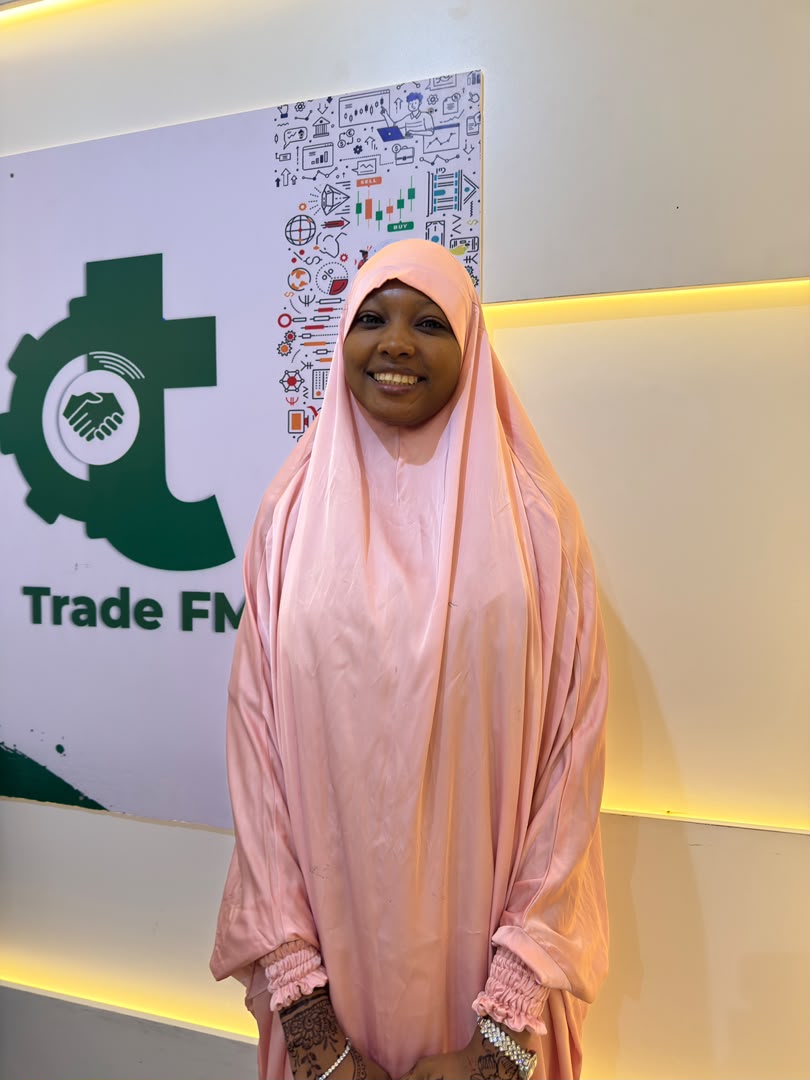
Marufat Ibrahim, founder of Shona Variety Store, has urged young Nigerians, particularly women, to overcome the fear of starting businesses, conduct proper market research and remain consistent in building sustainable enterprises.
Ibrahim gave the advice during an interview on the SME segment of Trade FM’s Breakfast Business Briefing, where she shared her entrepreneurial journey, the challenges of operating a clothing distribution business and her vision for empowering aspiring entrepreneurs.
Recounting how she ventured into the clothing business, Ibrahim said she started in 2020 after deciding to purchase her first bale of clothing and sell the items herself.
She explained that the decision, which initially appeared uncertain, became a turning point after she successfully sold out her first bale within two days.
“That was when I bought my first bale, and within two days, I finished selling it. I said to myself, this is something I can do. I started building on it, from one bale to two, from two to three, and from three to four. Then we expanded into selling full bales, half bales and slots,” she said.
Speaking on what determines the quality of clothing bales and how entrepreneurs can make informed purchasing decisions, Ibrahim stressed the importance of understanding the different categories of bales and identifying the target market before investing.
According to her, clothing entrepreneurs must understand that different bales are suited to different consumer groups, depending on their preferences, purchasing power and location.
“If you are selling in a student area, for example, you need to go for a bale like China bale. But if you are selling to working-class people, you need to go for a bale like UK bale. That determines the kind of bale or slot you want to buy,” she explained.
She advised beginners to prioritise research, noting that identifying potential customers and understanding where and how to reach them would help determine the type of clothing to purchase.
Ibrahim also disclosed that Shona Variety Store had expanded beyond fairly used clothing to include brand-new Nigerian-made, Chinese and Turkish garments in response to growing customer demand.
She said the decision was influenced by feedback from customers seeking new clothing options, as well as the need to remain competitive in a market where the prices of thrift and brand-new clothing are increasingly competing.
“Some of my customers demanded brand-new clothes, so we had to move into brand-new clothing as well to expand. It is about listening to them and giving them what they want,” she said.
The entrepreneur, however, expressed concern about the preference for foreign-made clothing among some Nigerian consumers, urging greater appreciation and patronage of locally manufactured garments.
“Most people will just start shouting, ‘I want foreign clothes, Turkey wear and this wear.’ Why not Nigerian-made wear? We should also be proud of what we are making,” Ibrahim added.
On what distinguishes her business from other clothing vendors, she identified customer engagement, honesty, timely delivery and continuous support for buyers as major competitive advantages.
She explained that her approach goes beyond selling clothing to helping customers understand the business, identify their target markets and develop strategies for making sales.
“If you want to buy from me, I will ask you, who are you selling to? Do you want to sell online or offline? After selling to you, I won’t just leave you alone. I will ask you, are you making sales? What is the problem? What can I do for you?” she said.
Ibrahim added that the business also places emphasis on maintaining relationships with customers and providing feedback and support beyond the initial transaction.
Explaining her commitment to entrepreneurship development, she said giving back to society was an important part of her business vision, stressing that the responsibility of empowering others should extend beyond the clothing industry.
She disclosed that she established an online entrepreneurship training programme around 2021, initially targeting women but later opening it to young people, men and other interested individuals.
According to her, the programme equips participants with practical knowledge of social media marketing, business development, consistency and the different platforms available for reaching customers.
She explained that participants are encouraged to understand how platforms such as Facebook, TikTok and Instagram work and identify which would be most suitable for their products and target audiences.
“The entrepreneurial programme is basically to empower people. They can learn how to navigate social media. If you are good at writing, Facebook is very good for you. If you are not camera-shy, you can use TikTok or Instagram,” she said.
Ibrahim maintained that starting a business should not be limited by the amount of money available, encouraging aspiring entrepreneurs to begin with the resources they have while developing their capacity to grow.
Addressing young Nigerians interested in clothing distribution but unable to afford full bales, she highlighted the availability of smaller packages known as slots.
She explained that the arrangement allows the business to divide larger bales into smaller quantities, making it possible for people with limited capital to participate in the trade.
“Instead of buying a full bale, which can cost between 500,000 and 600,000 naira, there is a slot package where we share bales for people who cannot afford a full bale,” she said.
Ibrahim disclosed that the store had offered packages of 55 pieces of clothing for as little as 12,000 naira, adding that smaller clearance packages were also available.
She said the initiative was designed to make the business accessible to more people while providing opportunities for them to earn income.
On the challenges confronting the business, Ibrahim identified transportation difficulties, road construction and the unpredictable quality of clothing bales as some of the major operational concerns.
She recalled that road construction around her business location between February and April this year made the movement of clothing bales particularly difficult, increasing operational costs.
“Taking bales in became very stressful because you know how heavy they can be. Some weigh 100 kilogrammes, while others weigh 55 kilogrammes. I had to call people to carry them on their heads and pay them. Even sending bales out to customers became difficult,” she said.
She also described the uncertainty associated with purchasing clothing bales, explaining that their contents do not always meet expectations when opened.
According to her, experience has taught her to manage such situations by carefully sorting the clothing items into different categories before distributing them to customers.
Ibrahim further acknowledged that prevailing economic conditions, including the high cost of living and changes in consumer purchasing power, had affected business operations.
She, however, said having a clear vision and mission remained essential to navigating difficult economic periods.
“We just have to endure and manage. I know that this is a phase. At the end of the day, we will also conquer this. When that moment comes, we should still be standing and doing the same business,” she said.
On customer relations, the Shona Variety Store founder maintained that respecting customers’ money and addressing complaints were central to building trust, particularly among buyers outside Lagos who depend on transportation services to receive their orders.
She said although some complaints relating to deliveries might be beyond the direct control of the business, customers must be listened to and appropriate solutions provided.
Ibrahim also explained that the store’s slogan, Quality You Truly Deserve, reflects its commitment to ensuring customers receive products that correspond with the amount they pay.
She said the business sells clothing in full bales, half bales and slots, with prices varying according to the different brands, origins and categories of clothing available.
Looking ahead, Ibrahim said she intends to expand the business into Nigerian-made clothing and garment production, while introducing complementary products such as shoes and bags.
She added that creating employment opportunities and supporting more entrepreneurs to establish and sustain their businesses would remain central to her long-term vision.
Offering further advice to aspiring business owners, particularly young women, Ibrahim identified consistency, research, calculated risk-taking and a clear business vision as essential ingredients for entrepreneurial success.
“We all have fear, but the thing is that you just have to put it aside. Anything you want to do, go for it. The little money you have, start with it and make sure you hold on to it,” she advised.
She added that entrepreneurs must understand the risks involved in business and conduct adequate research before committing their resources.
“If you are putting money into anything, it is a risk, so you should take calculated risks. Don’t just risk anything without calculating it. That calculation is your research. Make sure you do research on what you are doing,” Ibrahim said.
She urged young people not to wait until they had millions of naira before pursuing their business ideas, emphasising that consistency and a clear sense of purpose would help them navigate setbacks and achieve growth.
