

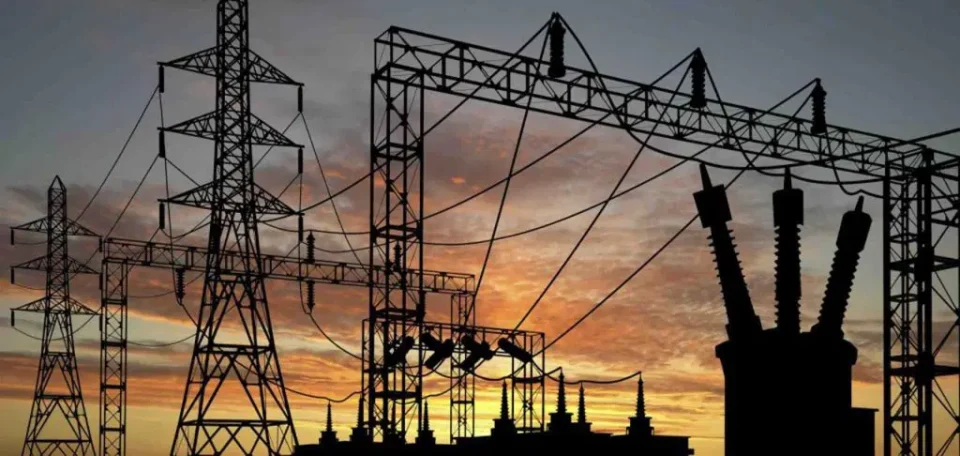
Recent developments in Nigeria’s electricity industry indicate that nearly N10 trillion in public funds has either been spent without delivering the expected results or remains tied up within the sector’s value chain through various intervention programmes.
The Minister of Power, Joseph Tegbe, said the Federal Government is undertaking a broad restructuring of the industry by tackling structural problems that have affected the sector for more than 40 years.
According to Tegbe, the reform agenda includes a technical audit of the national transmission network, harmonisation of federal and state electricity regulations, a grid stabilisation programme, measures to improve liquidity and sustainability, strategic asset centralisation, and a proposed super grid programme.
He expressed optimism that within two to three years, Nigerians would begin to see a more stable grid, lower technical losses, better market discipline, increased investor confidence, wider electricity access and stronger operational capacity.
Spending rises, generation remains low
An examination of government spending over the last 13 years shows that despite heavy financial interventions, electricity output has remained largely stagnant. Average generation has hovered around 4,500 megawatts (MW), far below the government’s 20,000MW target and the estimated 30,000MW needed for the country.
Since the November 2013 privatisation of the sector, successive administrations have introduced intervention funds, payment guarantees, debt settlement arrangements, multilateral loans and infrastructure financing aimed at improving power supply.
Major interventions include the CBN’s N213 billion Nigerian Electricity Market Stabilisation Facility, the N701 billion Payment Assurance Guarantee for generation companies, more than N200 billion under the National Mass Metering Programme, the N700 billion Presidential Metering Initiative, and the €2.3 billion Siemens Presidential Power Initiative.
Additional funding has come from over $2.4 billion in World Bank and African Development Bank-supported projects, as well as the recently introduced N4 trillion Presidential Power Sector Debt Reduction Programme (PPSDRP).
Despite these investments, electricity generation has remained far below national demand and only slightly higher than the level recorded shortly after privatisation.
Data from the Nigerian Electricity Regulatory Commission (NERC) show that in the first quarter of 2026, average available generation capacity from 28 grid-connected power plants was 4,457.96MW, while actual average hourly generation stood at 4,112.72MW, well short of the Federal Government’s 6,000MW target.
Liquidity crisis deepens
While power supply has remained inadequate, the financial challenges facing the electricity market have continued to worsen.
The Association of Power Generation Companies (APGC) said debts linked to the government’s failure to fully fund electricity subsidies had reached N6.2 trillion. The association said N4 trillion accumulated between 2015 and 2024, while another N2.2 trillion was incurred in 2025. The Federal Government has disputed this figure.
Minister of Finance and Coordinating Minister of the Economy, Taiwo Oyedele, said a verification exercise reduced confirmed electricity sector liabilities from about N4 trillion to N3.3 trillion after a detailed reconciliation of invoices and services.
However, APGC Executive Director Dr Joy Ogaji argued that generation companies were not involved in the reconciliation process and called on the government to disclose how the N3.3 trillion figure was reached.
She noted that GenCos owe gas suppliers about N4 trillion, questioning how operators would cover fuel, operations, maintenance and staff costs if the government’s verified debt is lower than that amount.
Figures from the Nigerian Bulk Electricity Trading (NBET) Plc show that between April 2025 and April 2026, the Federal Government received electricity subsidy invoices worth N1.859 trillion but paid only N76.95 billion, leaving outstanding obligations of about N1.78 trillion.
Government turns to bonds
To address the growing debt burden, the Federal Government has turned to the domestic bond market to finance payments to generation companies under the Presidential Power Sector Debt Reduction Programme.
About N333 billion has already been paid to GenCos, while a fresh N729 billion bond has been launched for additional settlements.
The new issuance, unveiled at an NBET investors’ forum in Abuja, is the second series under the N4 trillion programme and follows an earlier N501.02 billion bond issued this year.
Officials say the programme is expected to restore liquidity to the Nigerian Electricity Supply Industry (NESI), improve investor confidence and create conditions for new investment.
Stakeholders differ on subsidies
President of the Nigeria Consumer Protection Network, Kunle Olubiyo, said the actual subsidy burden may be lower than some of the figures being presented by market participants.
He argued that continued government involvement has encouraged inefficiency, inflated claims and revenue leakages within the electricity value chain.
Olubiyo called for full privatisation of the industry, saying it would force operators to improve efficiency, automate operations and reduce leakages that contribute to higher tariffs.
He urged the government to divest its remaining stakes in distribution companies, unbundle and privatise the Transmission Company of Nigeria (TCN), and limit its role to policy and regulation.
Also speaking, President of the Chartered Institute of Power Engineers of Nigeria (CIPEN), Engr. Israel Abraham, blamed poor performance on the appointment of non-technical professionals to manage critical institutions.
According to him, the electricity industry is highly technical and will continue to struggle unless competent professionals are placed in charge.
Tegbe insists reforms are underway
Speaking to journalists at the weekend, Power Minister Joseph Tegbe said the government is changing the direction of the sector through a comprehensive reform programme.
He said the goal is to make electricity more available, improve grid reliability, ensure financial sustainability and restore investor confidence so that power becomes a driver of national productivity rather than a constraint on economic growth.
Tegbe also praised President Bola Tinubu’s commitment to electricity sector reform, saying the administration has moved from policy discussions to practical implementation.
He added that the government is continuing the implementation of the Electricity Act, which allows states to develop electricity markets that reflect their economic realities, while promoting decentralisation to encourage innovation, competition and investment.
According to the minister, the administration is also advancing the Power Sector Bond initiative to clear longstanding obligations owed to generation companies, gas suppliers and other market participants.
