

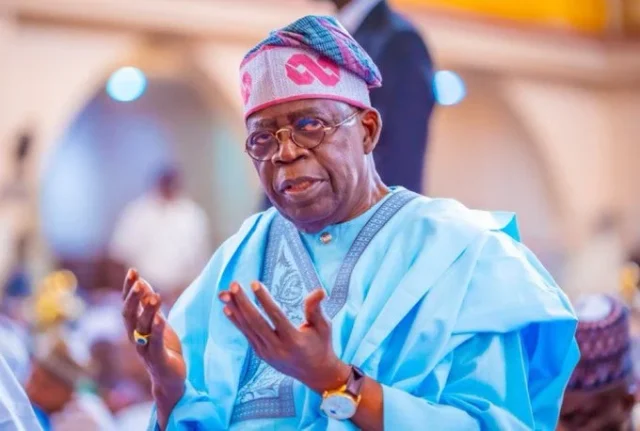
President Bola Tinubu has said the Federal Government refused to negotiate with or pay ransom to the gunmen who abducted schoolchildren and teachers in Oriire Local Government Area of Oyo State in May 2026.
Speaking on Thursday while receiving the Olubadan of Ibadanland, Oba Rashidi Ladoja, and other Oyo traditional rulers at the Presidential Villa in Abuja, Tinubu disclosed that the kidnappers demanded money as well as the release of detained members of their gang. He said both demands were rejected.
The President described the rescue operation, which ended on July 10, 2026, as an intelligence-driven military operation that succeeded without the payment of any ransom.
Tinubu explained that the security agencies were able to carry out the operation because they had detailed knowledge of the forest terrain where the victims were being held.
He also revealed that his recent directive to expand the Nigerian Army from eight to 12 divisions was a direct response to the Oriire abduction, saying the move would reduce response time and strengthen the military’s ability to tackle terrorism and banditry across the country.
According to the President, the crisis highlighted the need to review Nigeria’s security architecture, operational strategy and deployment pattern.
Tinubu further announced plans to strengthen local security by retraining and re-equipping forest guards so they can operate as frontline security personnel rather than being limited to wildlife enforcement.
He reiterated support for the creation of state police, adding that safeguards would be put in place to prevent abuse and that traditional rulers would have important roles in the structure.
The President linked the rise in kidnappings and terrorist attacks in Nigeria to worsening insecurity in neighbouring Mali, Burkina Faso and Niger Republic, noting that some of the criminals operating in Nigeria are not Nigerians.
He urged communities to become more active in intelligence gathering by monitoring their neighbourhoods and reporting suspicious individuals and activities to security agencies.
Tinubu also called on state governments to invest their increased federal allocations in road infrastructure, arguing that better road networks would improve living conditions and make it easier for security agencies to access remote areas.
He praised the armed forces for their role in rescuing the victims and asked traditional rulers to convey appreciation to soldiers and police officers serving in their communities.
The President said he would hold broader consultations with traditional leaders across the country to receive suggestions on improving security and governance.
Speaking on behalf of the Oyo delegation, Oba Rashidi Ladoja, Chairman of the Oyo State Council of Obas and Chiefs, said the visit was to thank President Tinubu and the armed forces for securing the release of the Oriire victims.
Ladoja also commended the Federal Government for ongoing and proposed road projects in Oyo State, including the Ibadan–Ijebu-Ode dualisation, Ogbomoso–Ilorin dualisation and the Badagry–Sokoto road through Ibarapa and Oke-Ogun.
The traditional council pledged grassroots support for the successful execution of the projects.
The Oriire school abduction occurred on May 15, 2026, when gunmen attacked Community Grammar School, Baptist Nursery and Primary School, and L.A. Primary School in the Esiele and Yawota communities, taking about 39 pupils and seven teachers hostage.
During the attack, mathematics teacher Michael Oyedokun was killed.
The rescue operation ended after 56 days in captivity, leading to the arrest of eight suspected abductors and the neutralisation of others. The Presidency described the operation as a combination of intelligence-led, kinetic and non-kinetic measures carried out without payment of ransom.
