

The Federal Government on Monday condemned the renewed xenophobic attacks on Nigerians and other African nationals in South Africa and called on the South African authorities to take urgent and concrete measures to stop the violence.
The development followed President Bola Tinubu’s decision not to personally receive a special envoy sent by South African President Cyril Ramaphosa.
Instead, Tinubu directed the delegation, headed by South Africa’s Minister of International Relations and Cooperation, Ronald Lamola, to meet with the Minister of State for Foreign Affairs, Ambassador Sola Enikanolaiye, who is expected to brief the President on the outcome of the discussions.
Presidency sources said the South African delegation arrived in Abuja on Friday with a message from President Ramaphosa, but no meeting with Tinubu was scheduled. One source said the President later instructed that the delegation should meet the Minister of State for Foreign Affairs.
Another source said Foreign Affairs Minister Bianca Odumegwu-Ojukwu, who is currently in Addis Ababa, Ethiopia, advised that it was not the appropriate time for the President to receive the envoy while attacks on Nigerians and their businesses were still ongoing.
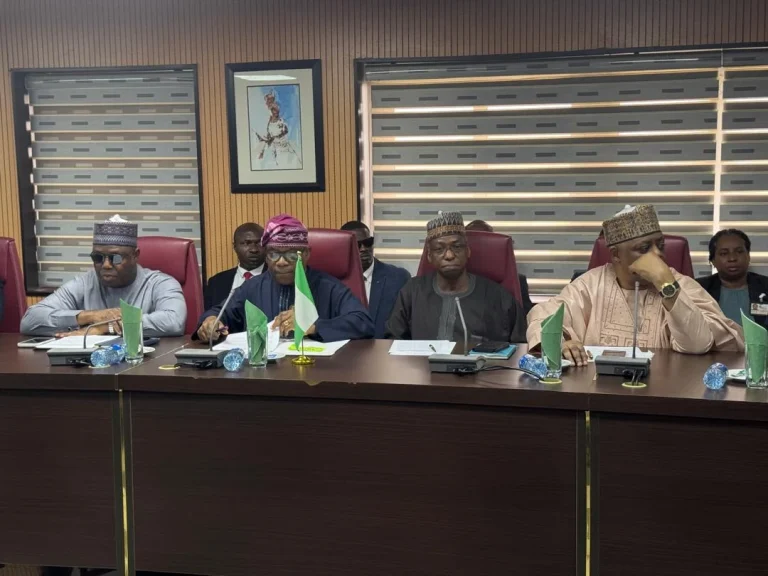
Receiving the delegation in Abuja, Enikanolaiye said Tinubu ordered the meeting to explore ways of addressing the attacks, stressing that the long-standing strategic relationship between Nigeria and South Africa should not be undermined by violence against African migrants.
The minister expressed disappointment over what he described as a recurring pattern of attacks dating back to 1995, 1998, 2006, 2015, 2016, 2019, 2021, 2024 and 2026.
He disclosed that 98 Nigerians have died in mob actions and hate-related attacks since 2022, describing the incidents as Afrophobia because Africans, particularly Nigerians, are the main victims.
Enikanolaiye emphasized that Nigeria does not support criminality, including drug trafficking, but insisted that anyone accused of an offence should be arrested, prosecuted and punished according to the law rather than subjected to mob justice.
He also alleged that some attacks had occurred in the presence of security agencies, raising concerns about the responsibility of state authorities.
Recalling the humanitarian impact of previous outbreaks, the minister said Nigeria had evacuated nearly 1,500 citizens from South Africa in earlier incidents.
The meeting came weeks after a fresh wave of xenophobic violence that began in April 2026, prompting Nigeria to approve evacuation flights for stranded citizens, with more than 1,000 Nigerians registering for voluntary repatriation.
Responding, Lamola said President Ramaphosa sent him to Abuja to reaffirm South Africa’s opposition to xenophobia, racism, homophobia and all forms of violence and discrimination.
He added, however, that South Africa would continue to enforce its immigration laws and deal with irregular migration and criminal activities within its borders.
Lamola described migration as a continental challenge that requires cooperation among African countries and expressed hope that continued dialogue between Abuja and Pretoria would help reduce the current diplomatic tension.
Relations between Nigeria and South Africa have worsened in recent weeks following repeated attacks on Nigerians and other foreign nationals. The House of Representatives has recommended the suspension of business permits for South African companies operating in Nigeria, while the Senate has sent a delegation to Pretoria to formally convey Nigeria’s displeasure over the attacks.
