

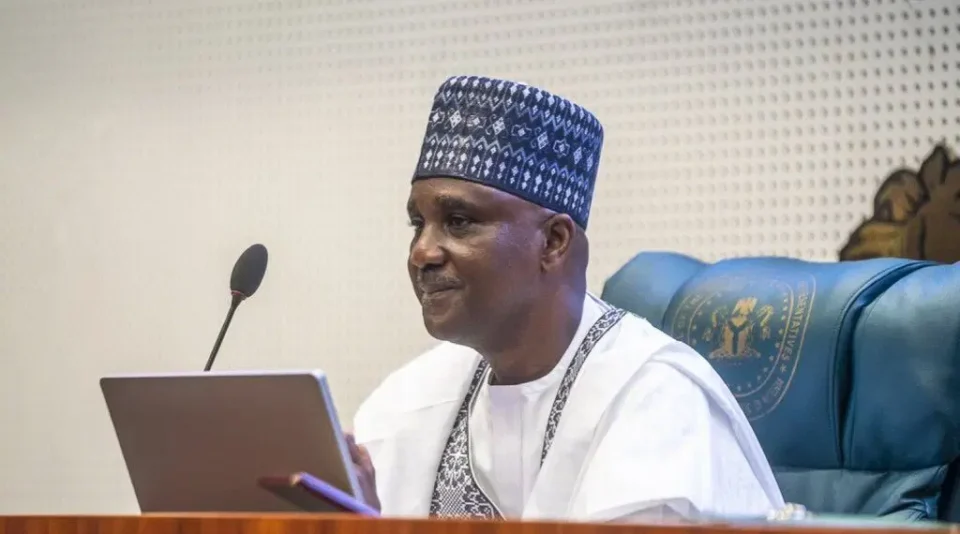
Speaker of the House of Representatives, Rep. Abbas Tajudeen, has defended the proposed State Police Bill, assuring Nigerians that the legislation contains constitutional safeguards to prevent governors or political actors from using state police as personal security outfits.
Abbas gave the assurance on Wednesday at the National Security Roundtable, held as part of activities marking the 2026 National Assembly Open Week in Abuja.
Addressing concerns over possible abuse of state police, the Speaker said the bill was deliberately designed to ensure accountability. He explained that state governors would not have the sole authority to appoint or remove Commissioners of Police.
According to him, appointments would be made based on recommendations from the National Police Council and would require confirmation by the State House of Assembly, while removal would only be possible with the support of two-thirds of lawmakers and on the grounds of proven misconduct.
Abbas also said the proposed amendment allows the Federal Police to intervene if a state police service becomes compromised, but only under clearly defined constitutional conditions, for a limited period and subject to judicial oversight.
He added that the Federal Government would not have the power to dissolve a state police service or suspend elected state institutions, describing the provisions as necessary to protect Nigeria’s federal system.
The Speaker commended President Bola Tinubu for transmitting an Executive Bill on state police to the National Assembly, describing it as the first time a sitting president had made the reform a key part of national security policy.
He argued that Nigeria’s centrally controlled policing structure is no longer adequate to tackle security challenges such as banditry, kidnapping, farmer-herder clashes and attacks on schools.
Under the proposal, the Nigeria Police Force would be renamed the Federal Police Service, while states that meet constitutional requirements would be allowed to establish their own police services after passing enabling laws and meeting operational standards approved by the National Assembly.
Abbas explained that the Federal Police Service would continue to handle terrorism, border security, federal offences and policing of the Federal Capital Territory, while state police would focus on maintaining law and order within their respective states.
He added that state police services would be supervised by independent State Police Service Commissions, receive direct funding and operate under strict rules prohibiting the use of police powers for political, ethnic or religious purposes.
The Speaker also advocated a phased implementation of the policy, beginning with the passage of a National Minimum Standards Act, and called for a sustainable funding framework to ensure state police services remain effective.
Other participants at the roundtable also supported broader security reforms. They included House Leader Prof. Julius Ihonvbere, former Chief of Defence Staff Gen. Lucky Irabor (retd.), Kaduna State Governor Uba Sani, Etsu Nupe Brig.-Gen. Yahaya Abubakar (retd.), and the United Kingdom’s Head of Development Cooperation, Ms Cynthia Rowe, who all stressed the need for stronger intelligence gathering, improved security coordination and greater community involvement in policing.
