

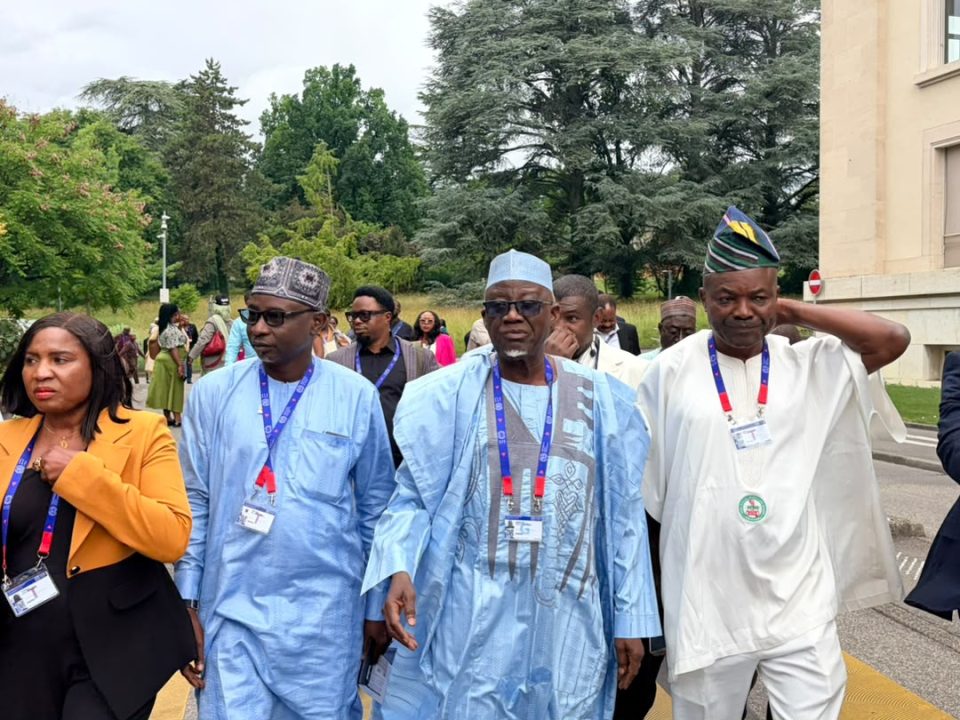
Discussions at the 114th Session of the International Labour Conference in Geneva have centred on the future of work, with governments, employers, and workers’ representatives calling for technology and artificial intelligence to support, rather than undermine, the dignity of labour.
Speaking from Geneva, labour leader Prince Emeka Kalu said the conference has placed significant emphasis on establishing international labour standards for the growing platform economy. According to him, innovation and social justice must go hand in hand to ensure that workers’ rights are protected in an increasingly digital world.
Kalou noted that while artificial intelligence and automation are transforming workplaces globally, they should be seen as tools that complement human effort rather than replace workers entirely.
He argued that AI is no threat to professionals if properly managed, describing it as a technological advancement that makes work easier and more efficient. However, he stressed that governments must regulate the use of AI and automation to ensure that workers are not displaced without adequate protections.
A major issue before the conference is the growing platform economy and the need to guarantee fair remuneration, social protection, occupational safety, data privacy, and the rights of workers to organise and engage in collective bargaining.
The Geneva discussions also come amid concerns over global projections that millions of jobs could be disrupted by automation and artificial intelligence in the coming years. Delegates are exploring ways to balance technological progress with employment security and decent working conditions.
Prince Kalu maintained that continuous training and skills development remain the best defence against changes in the labour market. He called on governments and employers to invest in workforce development, provide opportunities for reskilling, and adopt human-centred policies that promote productivity and economic growth.
He further emphasised that a well-trained, properly motivated, and fairly remunerated workforce is essential for sustainable economic development, adding that productivity, rather than workforce size alone, determines the strength of an organisation or economy.
For young entrepreneurs and workers, Kalu’s advice was to embrace the digital age while continuously improving their skills and adapting to technological changes. He maintained that the future of work should not be built on precarious employment but on extending the benefits of decent work to everyone, regardless of how or where they work.
As deliberations continue in Geneva, the central message emerging from the International Labour Conference is that technology should serve humanity, innovation should advance alongside social justice, and the future of work must protect the rights, welfare, and dignity of workers across the globe.
For Trade FM Breakfast Business Briefing, from Geneva, Switzerland.
