

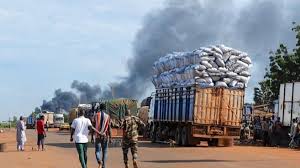
Mali’s commercial activity is facing severe disruption following a wave of coordinated attacks and escalating blockades attributed to Jama’at Nusrat al-Islam wal Muslimin (JNIM) and the Azawad Liberation Front (FLA). The incidents, which affected key urban and strategic locations including Bamako, Mopti, Gao, Kati and Sévaré, have intensified security risks for businesses and disrupted the country’s already fragile economic environment.
In the aftermath, Malian authorities launched counter-operations that led to multiple arrests, including individuals linked to the security forces. However, the bigger economic shock has come from the subsequent blockade of the capital’s western supply routes. The obstruction of the Kita–Bamako corridor has left supply chains under severe strain, limiting the movement of essential goods, food supplies, and water into the capital region.
Trade flows along key logistics corridors, particularly the Kayes–Bamako axis, have been significantly reduced, while transport activity on the Conakry–Bamako route is now increasingly exposed to attacks on cargo convoys. The situation is contributing to a broader strategy of economic pressure that has persisted since September 2025, targeting fuel and goods shipments in southern and western Mali. The growing instability is not only constraining domestic commerce but is also beginning to affect cross-border trade flows, raising concerns about wider regional economic spillovers across West Africa.
