

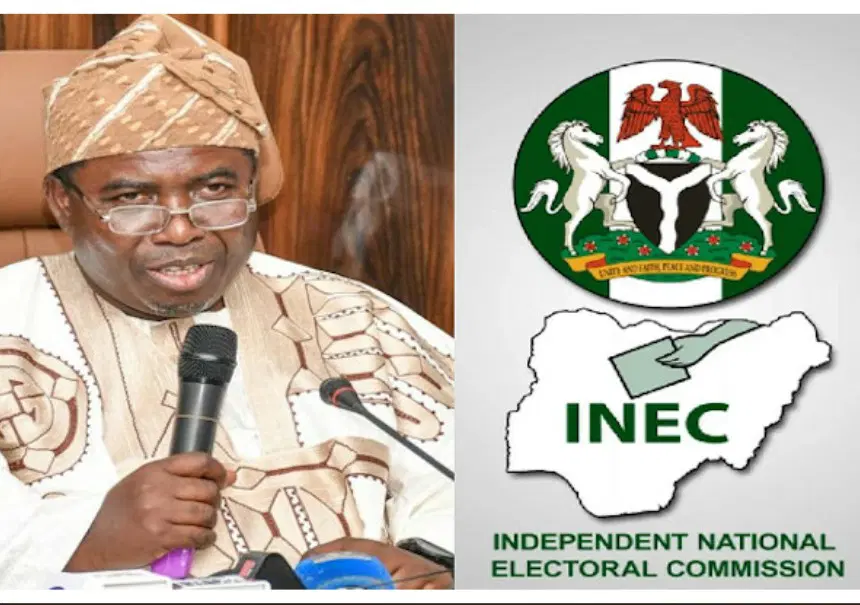
The Presidency has dismissed allegations that the Federal Government plans to pressure the Independent National Electoral Commission to postpone the January 16 presidential election, describing the claims as fake news.
Minister of Information and National Orientation, Mohammed Idris, said the government was unaware of any plan to change the election date and insisted that postponement was not under consideration.
His response followed an allegation by the African Democratic Congress Presidential Campaign Council that there was an attempt to influence INEC to alter the election timetable, with 80 days reportedly remaining before the poll.
In a statement issued by its Director of Strategic Communication, Phrank Shaibu, the ADC campaign council alleged that INEC Chairman, Professor Joash Amupitan, could be summoned to the Presidential Villa and instructed to change the date.
The council urged President Bola Tinubu to reject any such move and called on Amupitan to make any attempt to influence the commission publicly known.
It argued that Nigerians should be allowed to decide the administration’s performance through the ballot box, citing the rising cost of living, declining purchasing power and economic hardship experienced by citizens.
The council also acknowledged the Ebola outbreak as a serious public health concern but insisted that it should be addressed through appropriate health measures rather than used as a justification for delaying an election.
It cited the position of the Director-General of the Nigeria Centre for Disease Control that there was no current reason to postpone the poll. The council called on INEC to take necessary precautions to protect voters and election personnel.
It also urged domestic observers and international election monitors to scrutinise any proposal to change the election timetable, insisting that such a decision should be made openly and supported by published public health evidence.
At the time of the report, INEC had yet to comment on the allegation.
House of Representatives to assess INEC’s preparedness
Meanwhile, the House of Representatives has resolved to invite INEC to brief its relevant committee on preparations for the 2027 general elections.
The decision followed a motion sponsored by lawmakers Mansur Manu Soro and Abdussamad Dasuki, who raised concerns about operational challenges confronting the electoral commission.
Under the resolution, INEC is expected to appear before the committee within seven legislative days and present a detailed report on its readiness for the elections.
The briefing is expected to cover voter registration, the production and distribution of Permanent Voter Cards, election logistics, technology deployment, recruitment and training of personnel, electoral security, risk assessments and funding.
Lawmakers also want details of the commission’s budgetary allocations, funds released, outstanding payments and the possible impact of funding shortfalls on preparations.
The House expressed concern over reports from Continuous Voter Registration centres across the country indicating shortages of registration equipment and personnel, network difficulties, long waiting times and increased demand from citizens seeking to register or update their voter information.
According to the lawmakers, these challenges could limit participation, particularly among first-time voters, rural residents, students, workers and persons with disabilities.
They warned that failure to address the problems promptly could weaken public confidence in the electoral process and threaten the peaceful conduct of the 2027 elections.
The lawmakers also stressed the importance of voter education, effective logistics, technology deployment, security coordination and timely funding in ensuring credible and transparent elections.
They added that lessons from the recently concluded Ekiti State governorship election could help improve election administration, logistics management, technology use and stakeholder engagement ahead of the 2027 polls.
Source: Vanguard
