

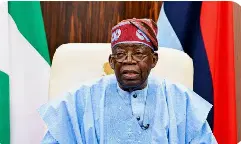
President Bola Ahmed Tinubu has outlined the next phase of his administration’s economic programme, with a focus on reducing living costs, creating productive jobs, expanding industries and strengthening Nigerian businesses.
Tinubu made this known in his Independence Day address to Nigerians on Thursday, saying the government was moving from economic reforms to ensuring that their gains translate into improved living conditions.
He said reducing the cost of producing and transporting goods would be a major priority, with measures including expanded mechanised irrigation and dry-season farming, improved access to seeds and fertiliser, greater agricultural mechanisation, and investment in storage and transportation.
The President also said the government was constructing and completing roads, railways and ports to improve connections between farms, factories and markets.
According to him, lower production and transportation costs should eventually result in reduced prices for consumers.
Tinubu said economic prosperity would also depend on creating productive employment and building stronger businesses, particularly as millions of young Nigerians enter the workforce each year.
He said the government would deploy Nigeria’s gas resources to support new industries, assist businesses seeking to revive factories and expand digital connectivity to underserved communities.
The President also pledged continued investment in skills development, infrastructure and financing for Nigerian businesses.
On social protection, Tinubu acknowledged that millions of Nigerians were still facing difficulties with food costs, school fees, medical expenses and transportation.
He said the government would strengthen direct support for vulnerable households and improve the National Social Register to ensure assistance reaches people who need it.
Tinubu also cited the Nigerian Education Loan Fund and CREDICORP as initiatives designed to improve access to education and consumer credit.
He said the Federal Government would continue working with state and local governments to improve primary healthcare, basic education and other essential public services.
The President said the reforms implemented over the past three years had addressed what he described as longstanding economic distortions, while the next phase would focus on building a more productive economy.
Tinubu said Nigeria’s economy grew by more than four per cent in 2026, while pointing to lower oil theft, declining inflation from its peak, stronger foreign reserves, greater stability in the foreign exchange market and more than $6 billion in non-oil export revenue in 2025 as signs of improving economic conditions.
He said the administration’s broader objective was to create an economy where farmers can produce at lower costs, manufacturers have access to reliable electricity, businesses can obtain credit and young Nigerians can find productive employment.
Tinubu acknowledged that achieving these goals would require time, discipline and sustained economic growth, alongside the creation of millions of productive opportunities.
Source: Vanguard
