

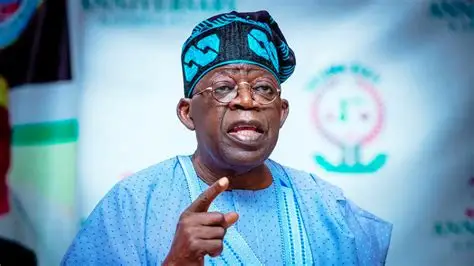
President Bola Tinubu has called for Africa to receive at least two permanent seats on the United Nations Security Council, with veto powers, as part of reforms to make the body more representative of the current global power structure.
Tinubu made the demand on Thursday while addressing the General Debate of the 81st Session of the United Nations General Assembly in New York.
Vice President Kashim Shettima delivered the President’s address.
Tinubu also called for Africa to have five non-permanent seats on the Security Council, arguing that the continent should have permanent representation in an institution whose decisions affect global affairs.
He said the proposed reforms were consistent with the Ezulwini Consensus and the Sirte Declaration.
The President said Nigeria was prepared to assume greater responsibilities in international peace and security, pointing to the country’s involvement in peacekeeping and mediation efforts in Liberia, Sierra Leone, Darfur, Mali and The Gambia.
He also highlighted Nigeria’s continued role in mediation, democratic governance, counter-terrorism and maritime security through ECOWAS, the African Union and Gulf of Guinea partnerships.
On climate change, Tinubu said developing countries should be allowed to pursue economic growth while reducing emissions.
He said Nigeria remained committed to the Paris Agreement and supported an equitable energy transition that considered historical responsibility and countries’ capacity to act.
Tinubu noted that Africa accounts for less than four per cent of global greenhouse gas emissions but faces significant consequences from climate change.
He said Nigeria’s Energy Transition Plan targets net-zero emissions by 2060 while expanding access to affordable and reliable energy.
The plan, according to the President, combines renewable energy, clean cooking, gas as a transitional fuel, climate-smart agriculture and nature-based solutions.
Tinubu also called for climate financing to be based on equity and shared responsibility, with developing countries receiving accessible and predictable funding.
AI and development
The President also urged responsible use of artificial intelligence, saying the technology could be applied either to harmful purposes or to improve lives.
He said Nigeria was investing in digital public infrastructure, broadband connectivity, innovation ecosystems, research institutions and technology entrepreneurship.
Tinubu invited international partners to work with Nigerian youths to apply AI to development.
Financial reforms and trade
The President called for changes to the international financial system, saying limited access to financing remains a major obstacle to sustainable development.
He advocated wider access to concessional financing and debt sustainability frameworks that take development needs into account.
Tinubu also backed private capital, blended finance, South-South cooperation and strategic partnerships to support sustainable development, climate adaptation and resilient infrastructure.
On trade, he highlighted the African Continental Free Trade Area as an opportunity to expand regional value chains, increase intra-African commerce and promote industrialisation.
He urged African countries to move from exporting raw materials towards value addition, manufacturing, technological innovation and knowledge-based growth.
Security and conflicts
Tinubu said Nigeria’s experience confronting Boko Haram, ISWAP and other armed groups showed that military action alone could not deliver lasting peace.
He called for greater international cooperation against terrorism, organised crime, cyberattacks and illicit financial activities.
The President also expressed concern about ongoing conflicts, including the war in Sudan, and urged urgent diplomatic efforts to protect civilians and ensure humanitarian access.
He reaffirmed Nigeria’s commitment to resolving disputes peacefully under the UN Charter and called for stronger peacekeeping, mediation, peacebuilding and institution-building.
Calls for UN reform
Tinubu’s demand comes amid renewed calls for changes to the UN Security Council.
UN Secretary-General António Guterres said Africa’s lack of permanent representation on the council was “unjust and indefensible” and called for reforms that reflect current global realities.
The Security Council has 15 members, including five permanent members — China, France, Russia, the United Kingdom and the United States — all of which have veto powers.
The African Union has been seeking at least two permanent seats with full privileges, including veto powers if the veto is retained, as well as five non-permanent seats.
Guterres has repeatedly supported reforms to international institutions, arguing that their structures should reflect the geopolitical realities of the present day.
Source: PUNCH
