

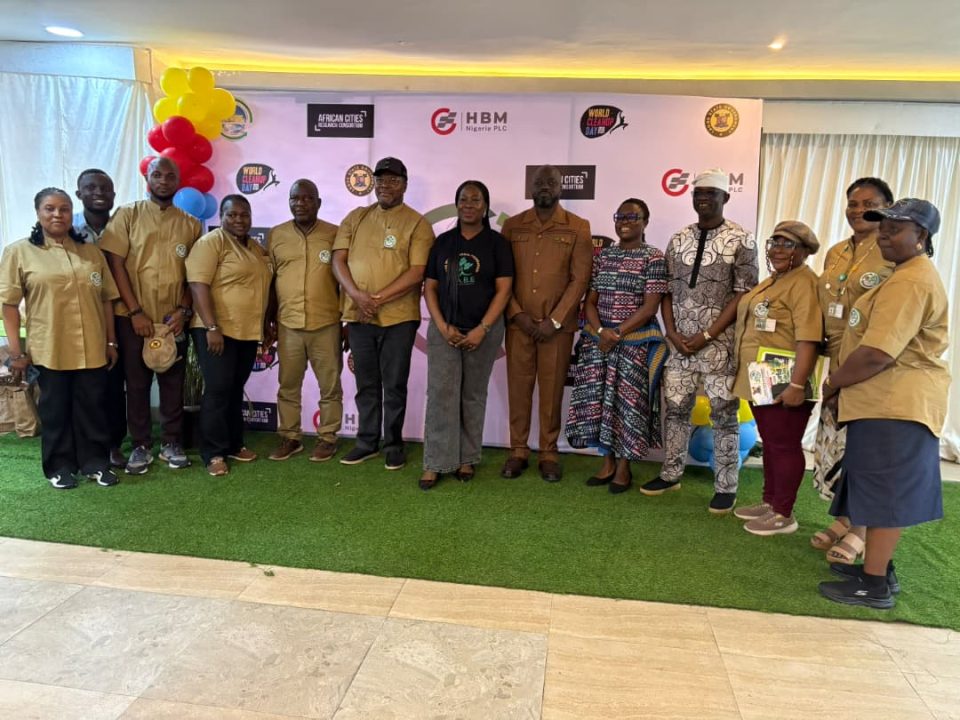
LAGOS — Marking World Cleanup Day 2026, state officials, academic researchers, and environmental advocates gathered to urge Lagos residents to rethink household waste management, warning that urban sanitation cannot rely solely on dumpsites and government collection fleets.
Under the global theme “From Clean Plates to Clean Cities,” the state government, in partnership with academic institutions and private actors, outlined a shift toward community-driven circular economy models— converting organic refuse into compost, green energy, and urban agriculture.
State Drives Source Segregation to Combat Drainage Blockages
Addressing delegates, a representative from the
Lagos State Ministry of Environment and Water Resources stressed that sustainable waste management begins at the source: in households, markets, and schools.
“A clean city does not begin only at dumpsites or with government waste collection trucks. It begins from the home, the market, and the way individuals handle the food and other waste they generate.” — Lagos State Ministry
of Environment and Water Resources
The ministry highlighted ongoing initiatives to promote waste segregation at source across the public and private sectors. State officials noted that proper household sorting reduces litter in urban drainage systems, mitigates seasonal flooding, and establishes the foundational supply chain needed to support green jobs and resource recovery.
The state acknowledged support from partners, including the African Cities Research
Consortium (ACRC) under its Resilient Urban Future Jobs programme, as well as private enterprises driving waste-to-wealth technologies.
Research Consortium Champions Action-Based Hubs in Ajegunle Agorodu
Delivering remarks on behalf of Prof.
Timilehinemi, Founding Director of the Centre for Housing and Sustainable Development (CHSD) at the University of Lagos, Dr Temilade Sasan called for a systems-thinking approach to urban sanitation.
Dr Sasan explained that CHSD—which houses the University of Manchester-led ACRC network— is deploying action research across five African capitals: Lagos, Accra, Nairobi, Harare, and Kampala.
“Waste management should not be treated as an isolated issue,” Dr Sasan noted. “It is deeply linked to food security, energy production, transportation, housing, and broad economic development.”
Pilot Initiatives in Action
Presenting technical framework details for the
Ajegunle Agorodu pilot, researcher Mr Deji Awesile identified food waste, plastic bottles, and paper as the dominant streams choking local infrastructure.
LAGOS COMMUNITY WASTE BREAKDOWN
Awesile proposed establishing neighbourhood level integrated waste hubs managed by Community Development Associations (CDAs) and local operators. Under this model:
- Informal Waste Pickers: Formalised, equipped, and retrained to collect organic matter alongside recyclables.
- Food Vendors: Boli and roasted corn sellers targeted as primary sources for bulk organic collection.
- Compost Generation: Recovered food waste converted on-site into soil nutrients for vertical, sack, and container farming.
Awesile appealed to the Lagos Waste
Management Authority (LAWMA) to set official operating standards for community hubs and urged the Ministry of Environment to allocate budgetary line items for scaling low-cost wardlevel infrastructure.
Market-to-Farm Loop: Biogas and Clean Energy
Expanding on commercial food chains, Mrs Temitope Okunu, CEO of the Freedom
International Foundation, presented a framework titled “From Market to Bin to Farm.” Okunu stressed the need to intercept edible surplus food for human redistribution before it reaches waste channels, while channeling inedible agricultural residues into anaerobic digestion systems.
Okunu highlighted a market-based co-digestion plant operating in Lagos that processes organic market refuse to yield electricity, cooking biogas, and liquid digestate fertilizer. Participating market traders have operated for months using site-generated energy without purchasing external grid power or generator fuel.
Stopping Waste Contamination
Okunu cautioned against mixing organic items with recyclable plastics:
“Recyclable materials carry high economic value when clean. However, once plastics become heavily contaminated with stew, oil, or pepper, their commercial value drops significantly, making processing extremely difficult.”
Through field programs like the Eco Schools project and door-to-door vendor outreach in Magodo and the CMD road corridor, Okunu’s organization trains food vendors and students to segregate waste at the point of origin, while upcycling discarded plastics into commercial items like furniture ottomans.
Call to Action: The 30-Day Challenge
Closing the proceedings, stakeholders urged municipal councils to release unused land allocations, issue operational permits, and support informal worker integration.
Rather than relying solely on external food relief, organizers emphasized that providing communities with land access, composting equipment, and processing skills yields longterm economic independence.
Okunu left participants with an immediate directive for the coming month: “What can we change in the next 30 days?”
