
The Lagos State Government has unveiled an ambitious plan to transform healthcare delivery through digital technology, artificial intelligence (AI), health data integration and stronger public-private partnerships, with the goal of positioning the state as a leading centre for medical innovation and the bioeconomy in Africa.
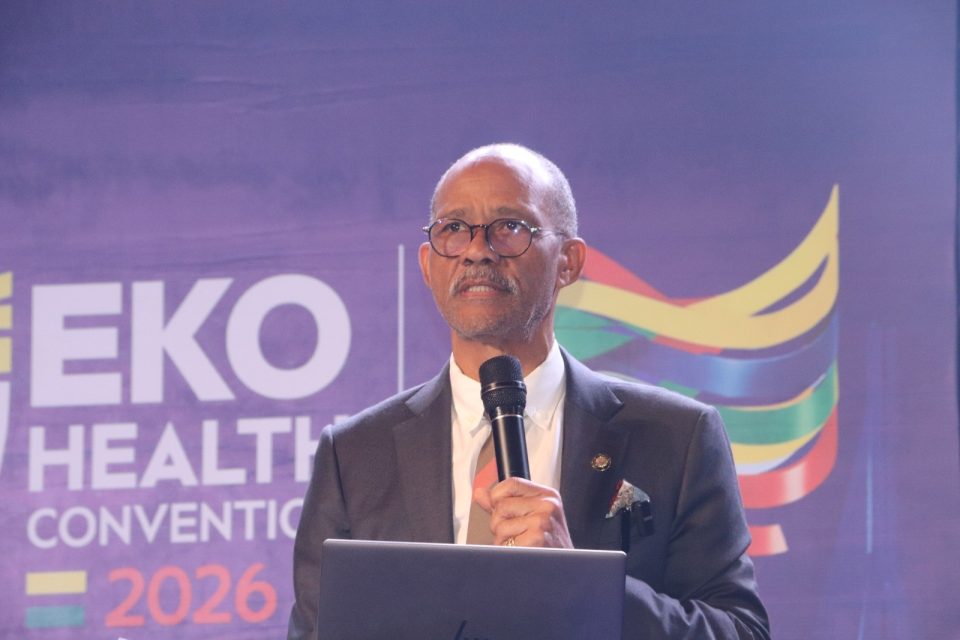
The vision was unveiled during the second day of the Eko Health Convention 2026, held at the Oriental Hotel, Lagos, where policymakers, healthcare professionals, technology experts, development partners and innovators examined strategies for improving healthcare through digital transformation and sustainable collaboration.
Delivering the keynote address, the Commissioner for Health, Prof. Akin Abayomi, said the future of healthcare extends far beyond electronic medical records, noting that the real value of digital health lies in the generation and analysis of high-quality data capable of driving scientific research, precision medicine, innovation and economic growth.
According to him, the Lagos Smart Health Information Platform (SHIP) will serve as the backbone of the state’s digital health ecosystem by connecting patient records, laboratory investigations, biological information and other critical health data into a unified system.
Abayomi explained that the platform would enable Lagos to build comprehensive population health intelligence while deploying artificial intelligence and machine learning to accelerate scientific discoveries, improve disease surveillance and enhance healthcare planning.
“Data has become king,” the commissioner said, adding that digital health infrastructure has become just as essential to modern societies as roads, electricity, telecommunications and financial systems.
He further disclosed that Lagos is pursuing a broader vision of developing a thriving bioeconomy powered by biotechnology, pharmaceuticals, genomics, biosciences and artificial intelligence. According to him, the strategy would enable the state to move beyond conventional healthcare towards preventive care, precision medicine, regenerative medicine and healthy longevity.
Abayomi said the transformation would also create demand for a new generation of professionals, including biomedical researchers, computational scientists and health data experts.
He highlighted several flagship projects supporting the vision, including the proposed University of Medicine and Health Sciences, the Lagos State Medical, Industrial and Innovation Zone (LASMIIZO) in the Lekki Free Trade Zone, the Smart Health Information Platform and the Lagos BioShield initiative.
While LASMIIZO is expected to combine medical manufacturing, research and healthcare innovation, the BioShield initiative is designed to strengthen the state’s preparedness against future infectious disease outbreaks.
“For Lagos, we do not want to be left behind. We want to participate in the advancement of science and embrace digital technologies,” he said.
Opening the second day of the convention, the Special Adviser to the Governor on Health, Dr. Kemi Ogunyemi, stressed that the rapid growth of Lagos’ population has made digital transformation an urgent necessity.
She recalled how the Ebola outbreak and the COVID-19 pandemic exposed weaknesses in disconnected health information systems, with many patients unable to access their medical histories when seeking treatment at different health facilities.
Ogunyemi maintained that digital transformation should focus primarily on improving healthcare outcomes for residents rather than simply deploying new technologies.
She explained that SHIP would eliminate fragmented record-keeping by creating a centralised health information repository capable of supporting trend analysis, artificial intelligence applications, disease surveillance and more efficient allocation of health resources.
She also noted that digital innovations such as e-pharmacies are already expanding access to essential medicines, family planning services and healthcare counselling across the state.
According to Ogunyemi, the government’s immediate priorities include completing ongoing flagship health projects, deepening digital transformation through artificial intelligence and surveillance systems, expanding universal health coverage and strengthening investment in healthcare workers and strategic partnerships.
She emphasised that government alone cannot achieve the desired transformation, calling on private sector organisations, technology innovators, healthcare professionals, development agencies and communities to work together in building a more resilient health system.
Permanent Secretary of the Lagos State Ministry of Health, Dr. Dayo Lajide, described the convention as a collective achievement made possible through the support of Governor Babajide Sanwo-Olu, Deputy Governor Dr. Kadri Obafemi Hamzat, First Lady Dr. Claudiana Ibijoke Sanwo-Olu, government agencies, development partners, sponsors, exhibitors, innovators and members of the media.
She singled out the Special Adviser on Health, Dr. Ogunyemi, for coordinating the event from conception to completion and commended healthcare workers and media practitioners for promoting the convention. Lajide also announced that preparations for the 2027 edition had already commenced.
Speaking on the importance of digital infrastructure, the Permanent Secretary of the Lagos State Ministry of Innovation, Science and Technology, Mr. Adeyinka Shorungbe, said seamless information exchange remains central to an efficient healthcare system.
He stressed the need to connect primary, secondary, tertiary and private healthcare facilities so that patients can access their medical records regardless of where they receive treatment.
Shorungbe encouraged healthcare professionals to actively collaborate with technology developers in designing solutions to challenges within the health sector. He also urged innovators to leverage funding opportunities available through the Lagos State Science, Research and Innovation Council (LASRIC), while emphasising the importance of cybersecurity, data governance, workforce development and sustainable partnerships.
Chief Executive Officer of Mobihealth International, Dr. Funmi Adewara, described the future of healthcare as a “click-and-brick” model that combines digital healthcare services with physical medical facilities.
She noted that telemedicine has already demonstrated its value across Lagos through community-based, campus and primary healthcare telehealth centres but urged the state to move beyond pilot programmes by integrating reimbursement mechanisms through Ilera Eko, ensuring interoperability with SHIP and investing in digital connectivity and workforce training.
Health Informatics Director of the PHIS3 Project at APIN Public Health Initiatives, Mr. Gibril Gomez, said every patient interaction has the potential to generate valuable public health intelligence when health information is captured digitally and securely shared across systems.
He explained that connected health information systems would significantly improve disease surveillance, healthcare planning and policy decision-making.
Also speaking, Founder of Africa Hub for Innovation and Development, Dr. Kunle Kakanfo, said artificial intelligence could help address Nigeria’s shortage of healthcare professionals by improving clinical productivity.
However, he cautioned that AI deployment must be accompanied by robust governance frameworks, including institutional oversight committees, proper validation processes, accountability mechanisms and safeguards against algorithmic bias and inaccurate clinical outcomes.
Chief Executive Officer of the Lagos State AIDS Control Agency, Dr. Folakemi Basirat Animashaun, said the disruption in international HIV funding beginning in 2025 compelled Lagos to strengthen domestic ownership of its HIV response.
She explained that the state increased investment in commodity procurement, treatment continuity, prevention programmes, community engagement and evidence-based resource mobilisation, describing the funding challenge as an opportunity to build a more resilient healthcare system.
Managing Director of Digital Health Platforms Limited, Mr. Femi Olapegba, explained that SHIP was developed to eliminate fragmentation created by multiple electronic medical record systems, laboratory platforms, telemedicine applications and paper-based records operating independently.
Built on the internationally recognised HL7 FHIR interoperability standard, he said the platform will connect hospitals, laboratories, pharmacies, primary healthcare centres, health maintenance organisations, regulators and patients into a single digital ecosystem.
According to him, SHIP will provide every resident with a SHIP Care Number while supporting summary care records, electronic referrals, e-prescriptions, emergency access to critical medical information and financial management dashboards.
He added that the platform is also being expanded to agencies including the Lagos State Blood Transfusion Service, HEFAMAA and the Lagos State Traditional Medicine Board to ensure a comprehensive record of residents’ healthcare journeys.
During a panel discussion on sustainable health partnerships beyond donor funding, stakeholders agreed that lasting improvements in healthcare require stronger government ownership, community participation and innovative co-financing mechanisms.
Executive Secretary of the Lagos State Primary Health Care Board, Dr. Temitope Balogun-Alo, revealed that Lagos has established 81 round-the-clock primary healthcare centres through investments in infrastructure, recruitment of more than 900 healthcare workers and implementation of a hub-and-spoke service delivery model.
She noted, however, that further expansion would depend on sustained investments in staffing, security, ambulance services and operational funding.
Other panelists, including representatives of CHAI, APIN, the US Centres for Disease Control and Prevention (CDC) and Ibeju-Lekki Local Government, called for stronger local ownership of health programmes, disability inclusion, improved disease surveillance, better health financing, community engagement and greater use of data for decision-making.
The convention concluded with a call for greater interoperability across healthcare systems, stronger referral pathways, institutionalisation of successful digital innovations, measurable accountability and improved patient experiences.
Reflecting on the event, Executive Secretary of the Lagos State Blood Transfusion Service, Dr. Bodunrin Osikomaiya, said Eko Health Convention 2026 had shifted the conversation from innovation to integration, with digital health and strategic partnerships emerging as key drivers of Lagos’ next phase of healthcare transformation.
She expressed optimism that the momentum generated during the convention would shape the state’s healthcare agenda ahead of the 2027 edition.
