

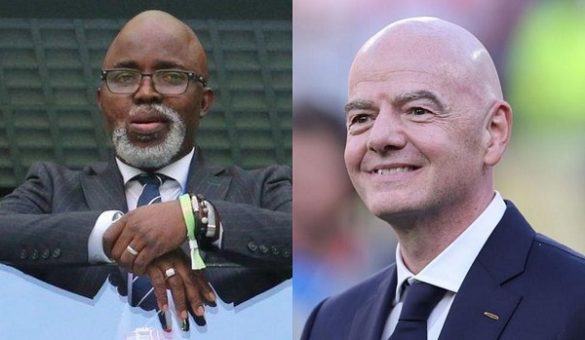
Former Nigeria Football Federation president Amaju Pinnick has defended FIFA’s proposal to sell a 20 per cent stake in the commercial rights of the FIFA World Cup and other tournaments, saying the idea should be evaluated on its merits rather than dismissed as controversy.
Pinnick, who is the Deputy Chairman of FIFA’s Men’s National Teams Competitions Committee, said FIFA President Gianni Infantino has consistently introduced reforms that have benefited football associations around the world.
FIFA on Tuesday announced plans to open a minority stake in the commercial rights of the World Cup and other competitions to private investors. The proposal has attracted criticism from UEFA and several other stakeholders.
Speaking on The Morning Show on Arise Television on Thursday, Pinnick said the initiative is intended to increase revenue for FIFA’s member associations and not to weaken the global game.
He admitted he had not yet received official communication on the proposal but insisted that Infantino does not make major decisions without extensive consultation.
Pinnick recalled meeting Infantino during the Swiss administrator’s campaign for the FIFA presidency in Rwanda, where Infantino promised to increase FIFA funding for national associations.
According to Pinnick, football associations were then receiving $200,000, and Infantino said the amount would rise to $1.25 million if he became FIFA president. Pinnick said he initially doubted the promise, but after Infantino’s election the increased payments were implemented, with each association receiving about $6 million during a FIFA cycle.
He stressed that the current proposal is only a suggestion that FIFA’s member associations can either approve or reject through the organisation’s decision-making process.
Pinnick also compared the initiative with earlier commercial reforms introduced by former FIFA president João Havelange, which were later continued under Sepp Blatter.
He argued that the proposal could reduce the dependence of national football associations on government funding. According to him, Infantino has indicated that member associations could receive $20 million if the plan is approved, while additional support could still be accessed through the FIFA Forward Programme.
Using Nigeria, Niger, Ghana and South Africa as examples, Pinnick said such funding could allow associations to operate more independently.
He added that the real concern should be transparency, accountability and the management of the funds, including the credibility of the companies or consortiums involved and the mechanisms FIFA would use to monitor the process.
Pinnick concluded that rather than condemning the proposal outright, stakeholders should focus on ensuring the integrity of the funding structure and the proper use of any revenue generated.
