

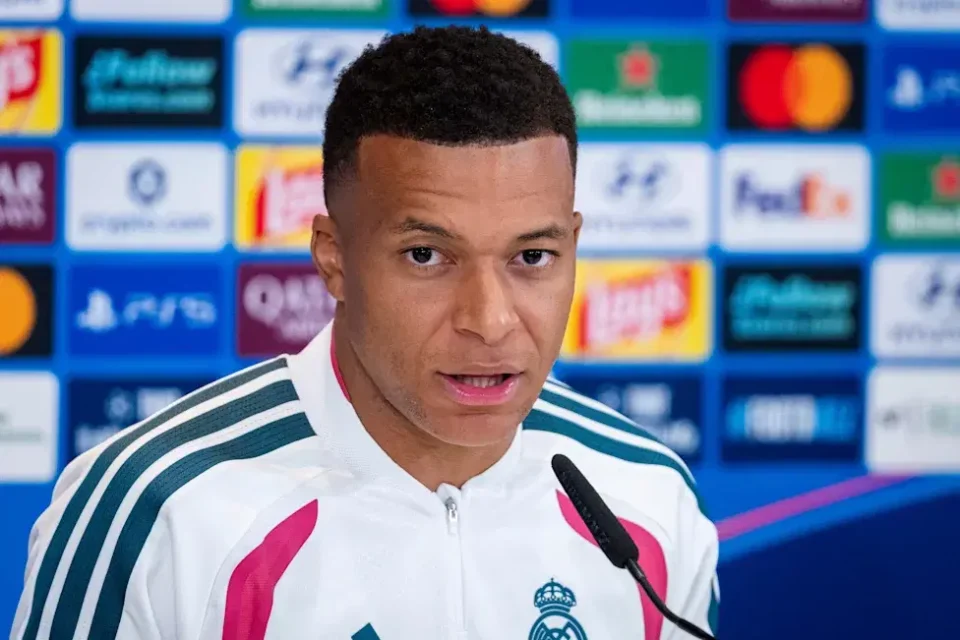
China has said it takes seriously an apology issued by French football star Kylian Mbappé following remarks about former Chinese leader Mao Zedong that sparked widespread criticism on social media and led to the suspension of Spanish football broadcasts in the country.
The controversy erupted after Mbappé joked about an internet meme featuring his face superimposed on the image of what he described as a Chinese dictator, apparently referring to Mao. The clip appeared in an interview with the French programme The Bridge, which has since been taken down.
Mockery of Mao, whose rule has been associated with the deaths of millions of people, remains a highly sensitive subject in China.
Mbappé, the France national team captain, issued an apology on Tuesday in French, Chinese and English, acknowledging that his remarks were poorly judged and had hurt people in China and Chinese communities around the world.
Speaking at a regular briefing on Wednesday, Chinese Foreign Ministry spokesperson Guo Jiakun said the authorities took the apology seriously.
Spain’s La Liga also expressed regret over the offence caused to Chinese fans by the footballer’s comments. However, the controversy has already had commercial and broadcasting consequences.
Chinese beverage company Dongpeng, which used artificial intelligence-generated images of Mbappé in advertising campaigns during this year’s World Cup, announced on Tuesday that it had ended its partnership with the player. Dairy companies Mengniu and Milkground also reportedly terminated their associations with him.
China Media Group, which oversees state broadcaster CCTV, suspended broadcasts of La Liga, one of the world’s leading football competitions.
Mbappé’s club, Real Madrid, also came under criticism in China for not issuing a public apology over the incident. A related criticism of the club reportedly ranked fifth on the Chinese search engine Baidu on Wednesday.
The state-run Global Times criticised Real Madrid in an editorial, accusing the club of failing to condemn or discipline the player over his conduct.
The 27-year-old footballer continued to face criticism from Chinese social media users, with some posts containing racist language. One user on Weibo described the remarks as hurtful to China and its people.
The original joke was reportedly unavailable on China’s tightly controlled social media platforms. Both Xiaohongshu and Weibo also restricted Mbappé’s accounts, which had attracted more than one million followers on the former platform. Weibo reportedly displayed a notice stating that restrictions were imposed for violating laws or community rules.
Reports also suggested that international brands Dior and Hublot had removed content featuring Mbappé from their Weibo pages, although searches by AFP for his Chinese name returned no results on the brands’ accounts.
The controversy has also raised questions about the footballer’s commercial presence in China. During a visit to an Adidas flagship store in Beijing’s Sanlitun shopping district, AFP found Real Madrid jerseys on sale but none bearing Mbappé’s name.
The striker has previously enjoyed significant popularity in China, where his image has featured on billboards, soft drinks and social media promotions. Chinese fans sometimes call him “Guigui”, meaning “turtle”, because of his perceived resemblance to a character from the Teenage Mutant Ninja Turtles franchise.
China has previously taken action against foreign sporting organisations over political or cultural controversies. In October 2019, the country suspended sponsorship arrangements with the National Basketball Association and its state broadcaster stopped airing NBA games for a year after Houston Rockets executive Daryl Morey posted a message supporting freedom in Hong Kong.
An opinion piece published by the official People’s Daily said respecting other societies’ history, culture, customs and national sentiments was a fundamental principle of international interaction.
Source: Vanguard
