

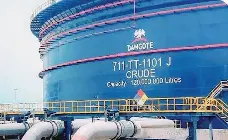
The Dangote Petroleum Refinery has been credited with driving a sharp increase in Nigeria’s seaborne petroleum product exports, which have risen sevenfold since 2023, according to the United States Energy Information Administration (EIA).
The EIA said Nigeria’s seaborne petroleum product shipments averaged 561,000 barrels per day (bpd) in the second quarter of 2026, compared with an annual average of 79,000 bpd in 2023.
The agency said the surge has strengthened Nigeria’s position in the global petroleum products market, particularly as supply constraints have affected several other regions.
According to the EIA, the increase was largely linked to the commencement of operations at the Dangote Petroleum Refinery in January 2024.
Data from energy intelligence company Vortexa showed that of the 561,000 bpd shipped during the second quarter of 2026, about 350,000 bpd were exported, compared with an annual average of 46,000 bpd in 2023.
The EIA said increased refinery output has also changed Nigeria’s domestic petroleum market by reducing reliance on imported refined products while increasing local supply.
The agency noted that before the Dangote refinery began operations, Nigeria’s state-owned refineries collectively shipped less than 100,000 bpd of petroleum products for both domestic and international markets.
Shipments increased substantially after the Dangote refinery became operational and rose further following maintenance and expansion work completed in February 2026.
The refinery’s crude distillation capacity was increased from 650,000 bpd to 700,000 bpd after the expansion, allowing it to produce and supply more petroleum products.
The EIA also said disruptions to petroleum supplies through the Strait of Hormuz created additional demand for refined products from alternative sources, contributing to the increase in Nigeria’s shipments.
Within Nigeria, petroleum product shipments reached 211,000 bpd in the second quarter of 2026, up from 81,000 bpd in 2025 and 33,000 bpd in 2023.
The figures highlight the growing role of the Dangote refinery in supplying Nigeria’s domestic fuel market while also positioning the country as a larger exporter of refined petroleum products.
