

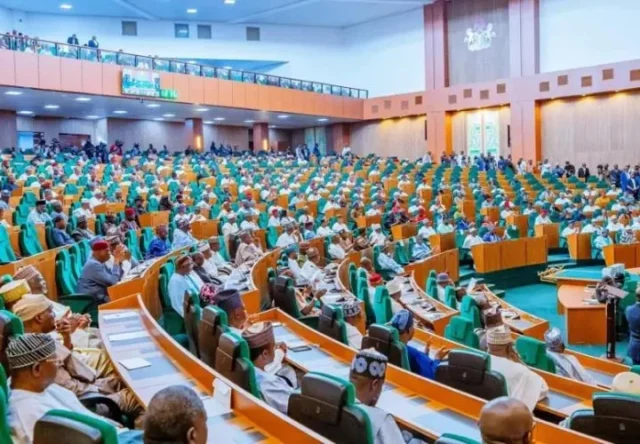
The House of Representatives on Thursday approved the Constitution Alteration Bill seeking to establish State Police across Nigeria, despite a protest and walkout by members of the minority caucus, who argued that the legislative process was not properly followed.
The bill, transmitted to the National Assembly by President Bola Tinubu, is part of the Federal Government’s efforts to decentralise policing and improve security across the country.
If harmonised with the Senate’s version, endorsed by at least two-thirds of the 36 State Houses of Assembly, and signed into law by the President, the amendment will provide the constitutional basis for the creation of State Police Services.
Presenting the report of the House Committee on Constitution Review, Deputy Speaker Benjamin Kalu, who also chairs the committee, described the proposal as one of the most significant constitutional reforms in Nigeria’s security sector.
Kalu said the amendment would strengthen community policing, improve intelligence gathering and enable state governments to respond more effectively to evolving security threats. He noted that issues such as recruitment, training, funding, accountability and operational standards would be addressed through subsequent legislation.
The session, however, turned contentious during consideration of the bill after Speaker Tajudeen Abbas adopted a voice vote instead of conducting a clause-by-clause vote, as requested by members of the opposition.
Before the vote, Abbas announced that 311 lawmakers had indicated support for the bill, comprising 211 members of the All Progressives Congress (APC), 65 lawmakers from other political parties physically present and 35 members participating virtually. He noted that constitutional amendments require the support of at least 240 members, representing two-thirds of the 360-member House.
Following the Speaker’s declaration that the “ayes” had prevailed, members of the minority caucus staged a walkout, insisting that the Constitution and House Standing Orders require every clause of a constitutional amendment bill to be debated and approved separately.
Addressing journalists after leaving the chamber, Minority Caucus spokesman Afam Ogene questioned both the procedure used to determine the number of members present and the decision to pass the bill through a voice vote.
Similarly, Minority Leader Frederick Agbedi said the caucus supports the establishment of State Police but opposed what it described as a breach of due legislative process. He argued that lawmakers were denied the opportunity to scrutinise and amend individual clauses of the bill before its passage.
In a letter dated July 22, 2026, addressed to the Speaker, the minority caucus reaffirmed its support for State Police but called for the bill to be recommitted for further legislative review.
The lawmakers said the current proposal contains constitutional and institutional gaps, including concerns over governance, jurisdiction and implementation.
They also raised concerns about funding, warning that state governments may struggle to finance police operations without additional resources. The caucus recommended transferring 15 per cent of the Federation Account allocation currently received by the Federal Government to states to support the proposed policing structure.
The minority lawmakers further urged the House leadership to subject the bill to a technical review involving constitutional lawyers, security experts, state governments and fiscal authorities, insisting that their position was aimed at strengthening—not opposing—the creation of State Police.
