

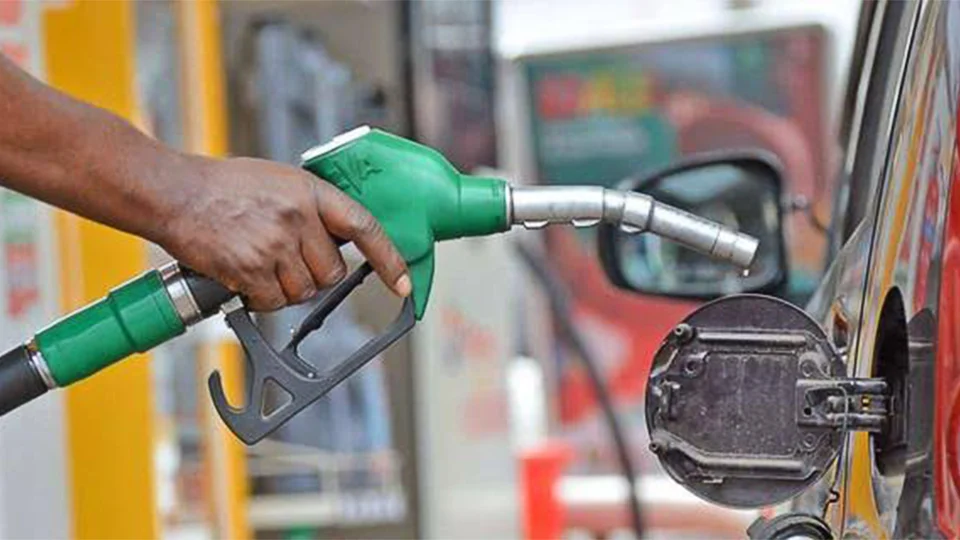
Independent petroleum marketers have projected that the pump price of Premium Motor Spirit (PMS), also known as petrol, could fall below N800 per litre as the Federal Government intensifies efforts to reduce fuel prices across the country.
The projection came on Monday during a stakeholders’ meeting on cost-reflective petrol pricing convened by the Federal Government at the headquarters of the Nigerian Midstream and Downstream Petroleum Regulatory Authority (NMDPRA) in Abuja.
The meeting brought together key players in the downstream petroleum sector, including representatives of the Dangote Petroleum Refinery, the Federal Competition and Consumer Protection Commission (FCCPC), the Independent Petroleum Marketers Association of Nigeria (IPMAN), the Major Energy Marketers Association of Nigeria (MEMAN), the Depot and Petroleum Products Retailers Association of Nigeria (DAPPMAN), the Depot and Petroleum Products Marketers Association of Nigeria (DAPPMA), the Nigerian Association of Road Transport Owners (NARTO), TotalEnergies, Eterna Plc, Matrix Energy Group, and officials of the NMDPRA.
The engagement followed growing concerns over the gap between falling global crude oil prices and the relatively high pump prices of petrol in Nigeria.
Although international crude oil prices have declined following easing geopolitical tensions in the Middle East, particularly involving Iran and the United States, domestic petrol prices have not fallen at the same pace.
Speaking at the meeting, IPMAN National President, Abubakar Maigandi, urged the Federal Government to restore importation rights for independent marketers, arguing that increased competition would further reduce petrol prices.
He also called for continued support for local refineries, particularly the Dangote Petroleum Refinery, while maintaining that marketers should still be allowed to import petroleum products when necessary.
“Our major concern is that if products are to be distributed, let IPMAN buy products directly from the Dangote refinery and then, if we request importation, let IPMAN import by themselves. What we are trying to encourage is our local refinery. Let the government allow the local refinery to function properly and assist those who intend to refine products too,” he said.
Maigandi assured Nigerians that independent marketers were ready to reduce petrol prices further, noting that prices had already been cut by about N125 per litre nationwide.
“At any time when there is a reduction in price, we are ready to reduce the price to even below N800 per litre, not even N900. It depends on the way we buy the product from the private depot owners and the Dangote refinery,” he said.
He added that Dangote Refinery’s decision to allow independent marketers to purchase products directly would further improve competition and lead to lower prices.
Government seeks cost-reflective pricing
Speaking after the closed-door meeting, the Minister of State for Petroleum Resources (Oil), Senator Heineken Lokpobiri, said the Federal Government remains concerned that current petrol prices do not reflect prevailing international crude oil prices.
According to him, discussions with marketers focused on ensuring that the benefits of lower global crude prices are passed on to Nigerian consumers.
“My own opinion is that the petrol prices are not cost-reflective; they are not reflective of the cost of crude oil,” Lokpobiri said.
He explained that while crude oil prices rose sharply when Brent crude exceeded $118 per barrel, petrol prices increased almost immediately. However, despite crude prices falling significantly, pump prices have not declined proportionately.
The minister said the government had directed marketers to develop practical measures that would result in lower petrol prices but declined to give a timeline for when consumers should expect further reductions.
Marketers warned against excessive pricing
Before the meeting, Lokpobiri warned marketers against using profits from old fuel inventories purchased at higher prices as justification for maintaining high pump prices.
He stressed that as marketers replenish stocks at lower replacement costs, the savings should be reflected promptly in ex-depot and retail prices.
“Temporary gains realised from inventories acquired at higher prices should not become the basis for sustaining elevated pump prices after replacement costs have declined,” he said.
The minister added that deregulation was introduced to promote competition, improve efficiency, and protect consumers—not to encourage excessive pricing or market distortions.
He warned that maintaining high fuel prices beyond prevailing market realities could worsen inflation and undermine the country’s economic recovery.
Lokpobiri noted that international crude oil prices rose above $118 per barrel in April following geopolitical tensions but have since dropped to around $71 per barrel.
Despite this decline, he said, domestic petrol prices have not fallen in line with market conditions.
“While there has been some reduction, the adjustment has not been commensurate with the decline in underlying market conditions,” he stated.
He also called for the speedy operationalisation of the National Strategic Stock, describing it as essential for strengthening Nigeria’s energy security and reducing future price shocks.
NMDPRA seeks collaborative solution
Earlier, the Authority Chief Executive of the NMDPRA, Rabiu Umar, said the meeting was convened on the directive of the minister to address growing concerns over petrol pricing.
He recalled that a similar engagement with operators in the domestic gas sector recently led to a significant reduction in Liquefied Petroleum Gas (LPG) prices.
Umar expressed optimism that the same collaborative approach would deliver similar results in the petrol market.
He acknowledged that although global crude oil prices have declined significantly, domestic retail prices have not adjusted accordingly.
“Deregulation is not a licence for market distortion or unfair consumer pricing. It is intended to drive efficiency, maximise value, and protect the public interest,” he said.
According to Umar, the objective of the meeting was not to dictate petrol prices but to work with industry stakeholders to develop practical solutions that balance business sustainability with consumer protection.
