

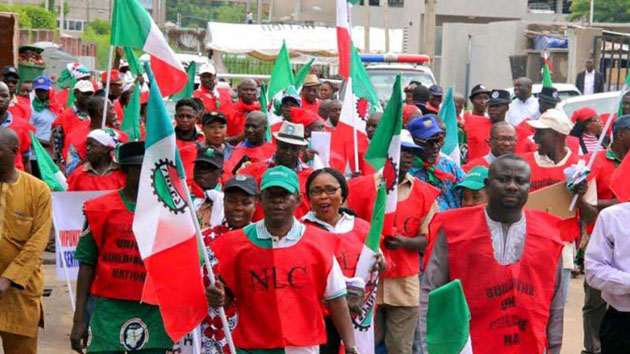
As the January 1, 2026, implementation date for the Federal Government’s new tax reforms approaches, the Nigeria Labour Congress (NLC) and the Association of Small Business Owners of Nigeria (ASBON) have vowed to reject the laws, describing them as “distorted” and “unjust.”
The NLC, in a statement on Sunday, declared that workers would resist any tax framework formulated and passed without their inclusion. The union’s Acting National Secretary, Benson Upah, emphasized that labour, as the “largest tax-paying community” in the country, was not consulted or carried along during the drafting and passage of the contentious laws.
“There has been no sensitisation or public enlightenment directed at the NLC or the labour community. This is an affront and a clear disrespect to the citizens,” Upah told The PUNCH.
Echoing this sentiment, NLC President, Joe Ajaero, cautioned the government against rushing to implement tax laws “riddled with errors and political manipulation.” He urged a more “inclusive, transparent and consultative approach,” stressing that “Any tax system that does not include workers in its formulation and passage into law remains an unjust tax.”
Ajaero called for “tax justice,” where the tax burden is fairly distributed, the wealthy pay their fair share, and regressive taxes are removed.
Small Businesses Join Rejection
The business community has aligned with labour’s position. The President of ASBON, Femi Egbesola, warned that implementing the complex laws without adequate understanding among Nigeria’s estimated 40 million Micro, Small, and Medium Enterprises (MSMEs) would trigger resistance and risk “colossal failure.”
“The majority of the SMEs do not really understand the tax reform and law. You can only align with what you understand,” Egbesola stated, calling for the implementation to be suspended.
Context of Economic Hardship
The strong opposition emerges against a backdrop of severe economic strain on Nigerian workers and businesses. The removal of the fuel subsidy in May 2023, the depreciation of the Naira, and persistent inflation have eroded incomes and living standards.
While a new national minimum wage of N70,000 was approved in 2024, labour leaders argue it is inadequate against soaring costs, with food alone consuming roughly 80% of an average worker’s monthly income. This is compounded by insecurity, underfunded public services in health and education, and rising costs of essential alternatives like power and water.
Threat of Revolt and Path Forward
The NLC has issued a clear warning. Benson Upah stated that the processes of tax collection and utilization must be transparent, “if not, we will revolt, not just us, but the people, the citizenry will revolt.”
The unions are demanding an immediate suspension of the January 1 implementation date. They insist on a comprehensive nationwide enlightenment campaign to educate workers and business owners on the contents of the laws, followed by genuine consultation before any enforcement.
The Federal Government is yet to issue an official response to this ultimatum from two critical segments of the economy, setting the stage for a major confrontation as the new year begins.
